Queer Places:
16 Hyde Park Pl, St George's Fields, London W2 2LP, United Kingdom
Formosa Place, Cookham, Maidenhead SL6 9QT, UK
Marlborough College, Bath Rd, Marlborough SN8 1PA, United Kingdom
University of Cambridge, 4 Mill Ln, Cambridge CB2 1RZ
Pen y Pass, Caernarfon LL55 4NW, UK
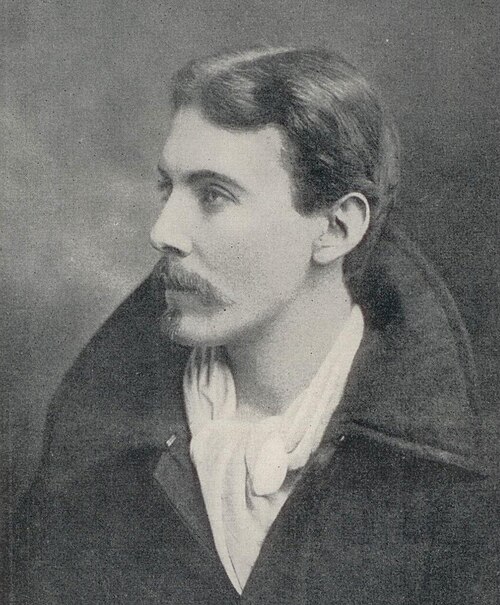 Geoffrey Winthrop Young (October 25, 1876 – September 6, 1958) was born in Kensington on 25 October 1876, the middle son of Sir George Young, 3rd
Baronet, and Alice Eacy Kennedy. Raised at Formosa Place at Cookham in Berkshire, he was educated at Marlborough College before matriculating at Trinity
College, Cambridge. While studying Classics at Cambridge, he won the Chancellor's Medal for English Verse two years in a row and authored The
Roof-Climber's Guide to Trinity, a humorous guide to urban climbing across the university's architecture. Young was elected a member of the
Cambridge Apostles during his time at Trinity College. Through the society and his Trinity circle, he
formed close intellectual and social ties with prominent Cambridge contemporaries and fellow Apostles, including his lifelong friend
G. M. Trevelyan.
Geoffrey Winthrop Young (October 25, 1876 – September 6, 1958) was born in Kensington on 25 October 1876, the middle son of Sir George Young, 3rd
Baronet, and Alice Eacy Kennedy. Raised at Formosa Place at Cookham in Berkshire, he was educated at Marlborough College before matriculating at Trinity
College, Cambridge. While studying Classics at Cambridge, he won the Chancellor's Medal for English Verse two years in a row and authored The
Roof-Climber's Guide to Trinity, a humorous guide to urban climbing across the university's architecture. Young was elected a member of the
Cambridge Apostles during his time at Trinity College. Through the society and his Trinity circle, he
formed close intellectual and social ties with prominent Cambridge contemporaries and fellow Apostles, including his lifelong friend
G. M. Trevelyan.
During the Edwardian era leading up to World War I, Young emerged as one of the prominent British mountaineers of his generation. He established
multiple first ascents and major routes in the Alps, including the "Younggrat" on the Zermatt Breithorn, the west ridge of the Gspaltenhorn, the west
face of the Weisshorn, the south face of the Täschhorn, and the Mer de Glace face of the Aiguille du Grépon. In 1911, alongside H. O. Jones and guide
Josef Knubel, he ascended the Brouillard ridge of Mont Blanc and completed the first full traverse of the west ridge of the Grandes Jorasses. In Britain,
he opened new routes in Wales, the Lake District, and Northumberland, served as president of the Climbers' Club starting in 1913, and organized the
influential Pen-y-Pass climbing gatherings in Snowdonia from 1907 to 1914.
During World War I, Young worked initially as a war correspondent for the Daily News before serving as a conscientious objector with the Friends'
Ambulance Unit (FAU) on the Italian front. On 31 August 1917, during the Battle of Monte San Gabriele on the Isonzo Front, he suffered severe injuries
that resulted in the amputation of his left leg above the knee. Despite this, he walked sixteen miles over two days to avoid capture by Austrian forces.
Following the war, using a specialized artificial peg leg of his own design, he returned to mountaineering and successfully ascended the Matterhorn in
1928.
In 1918, Young married Eleanor Slingsby, who supported his return to climbing. The couple had two children, Jocelin (born 1919) and Marcia (born
1925). In 1920, he authored Mountain Craft, a comprehensive 300-page instructional manual on mountaineering. Alongside his literary and athletic
endeavors, Young worked for the Rockefeller Foundation and collaborated closely with German educator Kurt Hahn, assisting Hahn's emigration to Britain in
1934. Their collaboration was foundational to the development of outdoor adventure education, directly influencing the creation of the Outward Bound
movement, the Duke of Edinburgh's Award scheme, and the International Award scheme. During World War II, Young served as president of the Alpine Club and
led efforts that established the British Mountaineering Council in 1945.
Young's personal life and bisexuality are documented in Alan Hankinson's biography Geoffrey Winthrop Young: Poet, Educator, Mountaineer. Geoffrey
Winthrop Young and George Mallory shared a close personal friendship, climbing partnership, and intellectual
bond that profoundly shaped both of their lives. Young met George Mallory at Cambridge in February 1909, when Mallory was an undergraduate history
student at Magdalene College and Young was an established 32-year-old mountaineer and alumnus. Recognizing Mallory’s natural athletic ability and
aesthetic grace on rock faces, Young became a key mentor, refining Mallory’s technical climbing skills and introducing him to elite British
mountaineering networks. That summer following their meeting, Young took Mallory to the Alps. They completed major ascents together, including
challenging routes around the Mont Blanc massif and Valais peaks. Young regularly featured Mallory as a standout lead climber during his famous Easter
climbing parties at Pen-y-Pass in Snowdonia, Wales. Young introduced Mallory to John Percy Farrar, president of the Alpine Club, who later selected
Mallory for the pioneering British Mount Everest expeditions of the early 1920s. Following Young's leg amputation in 1917, he wrote a famous letter to
Mallory stating that he planned to continue climbing using an artificial limb, relying on close friends like Mallory to support his return to the crags.
Young, Mallory, and their mutual friend David Pye shared progressive educational ideals. They actively discussed co-founding an innovative, progressive
school, with Mallory going so far as to draft a preliminary prospectus for the institution prior to his death on Everest in 1924. Their correspondence
reveals deep affection, shared poetic and philosophical sensibilities, and mutual trust that extended beyond climbing into their home lives and
families.
On 6 September 1958, Young died of stomach cancer at a nursing home in Kensington, London. He was not buried in a conventional grave; following his
cremation, his ashes were scattered over the mountain peaks above Pen-y-Pass in Snowdonia, Wales.
References:
- Hankinson, Alan. Geoffrey Winthrop Young: Poet, Educator, Mountaineer. London: Hodder & Stoughton, 1995.
- Oxford Dictionary of National Biography (ODNB). "Young, Geoffrey Winthrop (1876–1958), mountaineer and educationist" by Peter Bicknell / ODNB Editors.
- The Alpine Journal. "In Memoriam: Geoffrey Winthrop Young (1876–1958)." Alpine Journal, Vol. 64 (1959), pp. 107–114.
- The Times. "Obituary: Mr. Geoffrey Winthrop Young." The Times (London), September 8, 1958.
- Young, Geoffrey Winthrop. The Roof-Climber's Guide to Trinity. Cambridge: E. Johnson, 1899.
- Young, Geoffrey Winthrop. Wall and Roof Climbing. London: Edward Arnold, 1905.
- Young, Geoffrey Winthrop. From the Trenches: Louvain to the Aisna, My First Record of the War. London: T. Fisher Unwin, 1914.
- Young, Geoffrey Winthrop. Mountain Craft. London: Methuen & Co., 1920.
- Young, Geoffrey Winthrop. On High Hills: Memories of the Alps. London: Methuen & Co., 1927.
- Young, Geoffrey Winthrop. Collected Poems. London: Methuen & Co., 1936.
- Young, Geoffrey Winthrop. The Grace of Forgetting. London: Country Life, 1953 (Autobiographical memoirs covering his First World War service).
- Young, Geoffrey Winthrop (ed.). Snowdon Biography. London: J. M. Dent & Sons, 1957.
- The Alpine Club Archives (London): Holds extensive correspondence, manuscript records, and administrative papers relating to Young's presidency and climbing career.
- Trinity College Library & Archive Centre (Cambridge): Contains Young's university papers and early records relating to Cambridge night-climbing.
- Rockefeller Archive Center (Sleepy Hollow, NY): Preserves records from Young's work as a consultant in the humanities for the Rockefeller Foundation (1925–1933).
- King's College Archive Centre (Cambridge): Holds Young's correspondence with contemporaries such as John Maynard Keynes.
- Bodleian Library (Oxford): Holds correspondence between Young and publishers Sidgwick & Jackson.
- Gillman, Peter and Leni. The Wildest Dream: The Biography of George Mallory. London: Headline, 2000 (Details Young's close relationship and climbing partnerships with George Mallory).
- Bicknell, Peter. "In Memoriam: Eleanor Winthrop Young (1897–1994)." Alpine Journal, Vol. 100 (1995), pp. 336–337.
Support this project
This website is a passion project researched, developed, and funded entirely by me. If you find the content valuable and would like to help support the ongoing research and hosting costs, any contribution is deeply appreciated.
Thank you for keeping this independent resource alive!
My books on Amazon: Elisa Rolle's books
BACK TO HOME PAGE