Queer Places:
Massachusetts Institute of Technology, 77 Massachusetts Ave, Cambridge, MA 02139, United States
University of California, Berkeley, CA, United States
Little Chapel by the Sea, 65 Asilomar Ave, Pacific Grove, CA 93950, United States
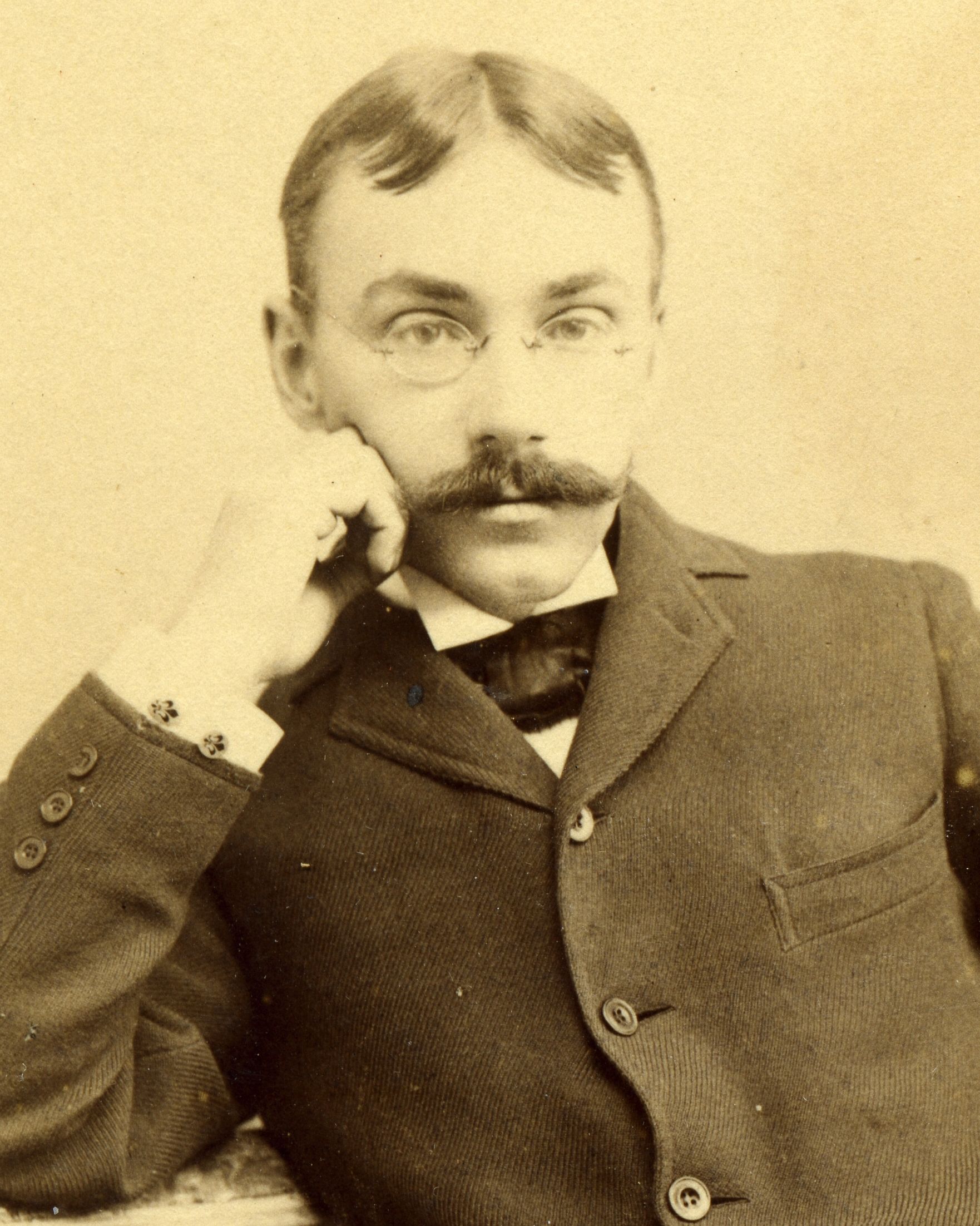 Frank Gelett Burgess (January 30, 1866 – September 18, 1951) was born on January 30, 1866, in Boston, Massachusetts, into a conservative New England
background. He attended the Massachusetts Institute of Technology, graduating with a Bachelor of Science degree in 1887. Following his graduation,
Burgess relocated to San Francisco, seeking a more vibrant bohemian lifestyle. Initially employed as a draftsman for the Southern Pacific Railroad, he
subsequently worked as an instructor of topographical drawing at the University of California, Berkeley, beginning in 1891. His academic tenure at
Berkeley concluded in 1894 following his involvement in the toppling of one of San Francisco's pro-temperance Cogswell fountains on New Year's Day.
Frank Gelett Burgess (January 30, 1866 – September 18, 1951) was born on January 30, 1866, in Boston, Massachusetts, into a conservative New England
background. He attended the Massachusetts Institute of Technology, graduating with a Bachelor of Science degree in 1887. Following his graduation,
Burgess relocated to San Francisco, seeking a more vibrant bohemian lifestyle. Initially employed as a draftsman for the Southern Pacific Railroad, he
subsequently worked as an instructor of topographical drawing at the University of California, Berkeley, beginning in 1891. His academic tenure at
Berkeley concluded in 1894 following his involvement in the toppling of one of San Francisco's pro-temperance Cogswell fountains on New Year's Day.
Leveraging his departure from the university, Burgess immersed himself in San Francisco's literary circles. In 1895, he co-founded the iconoclastic
literary magazine The Lark, which became a central pillar of the San Francisco Bay Area literary renaissance of the 1890s. Within the pages of The Lark,
Burgess published his most famous nonsense poem, "The Purple Cow," in 1895. Despite his enduring fame from the verse, Burgess grew weary of its
ubiquitous success, eventually writing verses expressing his regret. Alongside The Lark, Burgess and his associates created experimental offshoots such
as the wallpaper-printed Le Petit Journal des Refusées.
Burgess later moved to New York City, where he continued his literary career writing for prominent publications such as The Smart Set, Collier's, and
Century. He traveled frequently to France and became fluent in French, eventually using his knowledge to introduce Proto-Cubist art to the United States
through his influential 1910 essay "The Wild Men of Paris," which featured early reproductions of works by artists including Pablo Picasso and Henri
Matisse. Throughout his career, Burgess produced a diverse body of work, ranging from serious war accounts and novels adapted into silent and sound films
to children's literature featuring his signature "Goops" characters.
In his broader cultural impact, Burgess coined several enduring terms and concepts, most notably the word "blurb" in 1906 for promotional book
descriptions and the usage of "bromide" to describe trite, unimaginative people. He also established the San Francisco Boys' Club Association in 1891,
creating the first organization of its kind west of the Mississippi River. In his personal life, Burgess married Maida Castelhun Darnton in 1893, and
following her passing, he married actress and writer Estelle Loomis in 1914, remaining with her until her death in 1947. Gelett Burgess passed away on
September 18, 1951, in Carmel-by-the-Sea, California, and was inurned at the Little Chapel by the Sea in Pacific Grove.
References:
Other references:
- The Bancroft Library, University of California, Berkeley: Houses official papers, original manuscripts, graphic illustrations, and selected correspondence documenting Burgess’s early academic career and his association with the San Francisco Bay Area literary renaissance.
- Dictionary of Literary Biography, Volume 11: American Humorists, 1800–1950: Edited by Stanley Trachtenberg (Gale, 1982), featuring the foundational biographical essay "Gelett Burgess" by John Wenke.
- What a Lark!: Reminiscence and critical overview by fellow contributor Carolyn Wells, published in The Colophon, Part 8, edited by Elmer Adler, Burton Emmet, and John T. Winterich (New York, 1931).
- The San Francisco Call: Contemporary reports documenting Burgess’s time in California, his role at UC Berkeley, the notorious New Year’s Day 1894 "Cogswell Fountain" toppling incident, and his subsequent resignation.
- The Architectural Record (May 1910): Contains the original publication of Burgess's influential essay "The Wild Men of Paris," detailing his interviews with Henri Matisse, Pablo Picasso, and Georges Braque to introduce Proto-Cubist art to American audiences.
- The Lark (1895–1897): The complete run of the iconic 16-page monthly little magazine co-founded and edited by Burgess, containing the first appearance of "The Purple Cow".
- Le Petit Journal des Refusées (1896): The rare wallpaper-printed, irregularly cut parody journal created as a spin-off of The Lark.
- Are You a Bromide? (1906): Published by B.W. Huebsch, notable for first coining the words "bromide" and "blurb".
Support this project
This website is a passion project researched, developed, and funded entirely by me. If you find the content valuable and would like to help support the ongoing research and hosting costs, any contribution is deeply appreciated.
Thank you for keeping this independent resource alive!
My books on Amazon: Elisa Rolle's books
BACK TO HOME PAGE
