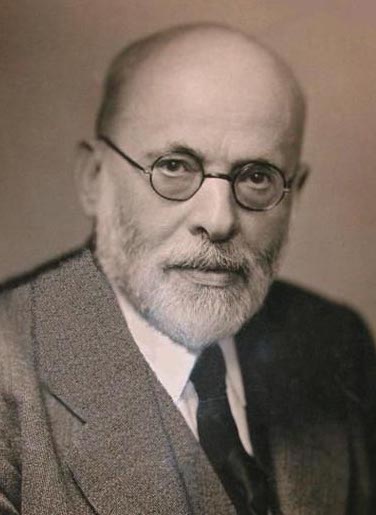
 Gaetano Salvemini (September 8, 1873 - September 6, 1957) was a prominent Italian historian, writer, and anti-fascist politician whose life and work left
an indelible mark on modern Italian politics and historiography.
Gaetano Salvemini (September 8, 1873 - September 6, 1957) was a prominent Italian historian, writer, and anti-fascist politician whose life and work left
an indelible mark on modern Italian politics and historiography.Queer Places:
Harvard University (Ivy League), 2 Kirkland St, Cambridge, MA 02138
Cimitero Comunale di Trespiano, Via Bolognese, 449, 50139 Firenze FI
Gaetano Salvemini (September 8, 1873 - September 6, 1957) was a prominent Italian historian, writer, and anti-fascist politician whose life and work left
an indelible mark on modern Italian politics and historiography.
Born into a family of modest means in Molfetta, Apulia, his father, a former Redshirt with Giuseppe Garibaldi, and his socialist mother deeply influenced his lifelong commitment to radical social reform and political justice. Salvemini studied at the University of Florence, where he immersed himself in socialism and historical research, later earning a degree in literature. In 1901, he was appointed Professor of Medieval and Modern History at the University of Messina. Tragedy struck during the devastating 1908 Messina earthquake when he lost his wife, five children, and his sister.
Professionally and politically, Salvemini emerged as a leading meridionalist, fiercely championing the moral and economic rebirth of Southern Italy and fighting against political corruption. He initially joined the Italian Socialist Party (PSI), but left in 1911 in protest against the party's indifference toward Italy's military campaign in Libya. That same year, he founded the weekly political review L'Unità, which served as a crucial voice for militant Italian democrats. During the First World War, he favored Italy's intervention on the side of the Entente powers, viewing it as a path to national self-determination and the defeat of anachronistic empires, while serving as a volunteer soldier for the first two years of the conflict. By 1916, he had returned to academia as a professor of modern history in Pisa and subsequently Florence, where he developed concretismo, a pragmatic intellectual approach combining Enlightenment values, liberalism, and socialism.
Following the First World War, Salvemini served briefly as an independent radical deputy in the Italian Chamber of Deputies from 1919 to 1921. Although initially slow to recognize the severity of Benito Mussolini's rising fascist movement, he quickly became a steadfast opponent following the fascist takeover and the 1924 assassination of socialist politician Giacomo Matteotti. He co-founded the clandestine anti-fascist newspaper Non mollare in January 1925. Facing severe threats to his life by fascist squads—whose violence claimed the life of his lawyer—Salvemini fled Italy in 1925. Stripped of his Italian citizenship in 1926, he began a long and influential period of exile in France, England, and ultimately the United States. While abroad, he co-founded the resistance organization Giustizia e Libertà and published groundbreaking analyses of Mussolini's regime, including The Fascist Dictatorship in Italy in 1927.
In 1934, Salvemini accepted a position to teach Italian civilization at Harvard University, where he remained until 1948. In the United States, he became a central figure among anti-fascist exiles, co-founding the Mazzini Society, advising American government agencies on Italian affairs, and advocating for a democratic, republican future for Italy. Notably, during his time in exile and academic circles, he maintained significant intellectual and personal links within broader cultural networks, including connections to Anglo-Italian literary figures like the Anglo-Italian author Vernon Lee, reflecting his wide-ranging engagement with European intellectuals. He acquired United States citizenship in 1940 to better influence American wartime and postwar policies, though he remained deeply concerned that conservative restoration efforts would prevail in post-Mussolini Italy.
Although a United States citizen, Salvemini returned to Italy in 1948 to resume his professorship in Florence, though he grew disillusioned with the political dominance of Christian Democracy and the influence of the Catholic Church during the early Cold War. He spent his final years in Sorrento continuing to critique Italian public institutions, education, and bureaucratic inefficiencies, before passing away on 6 September 1957. Remembered as one of the earliest and most resolute opponents of fascism, Salvemini successfully bridged rigorous academic scholarship with active political resistance, embodying his personal motto: "Do what you have to do, come what may."
References:
Support this project
This website is a passion project researched, developed, and funded entirely by me. If you find the content valuable and would like to help support the ongoing research and hosting costs, any contribution is deeply appreciated.
Thank you for keeping this independent resource alive!
My books on Amazon: Elisa Rolle's books