Queer Places:
Welfenmausoleum, Berggartenstraße, Hanover, Region Hannover, Lower Saxony (Niedersachsen) 30419 Germany
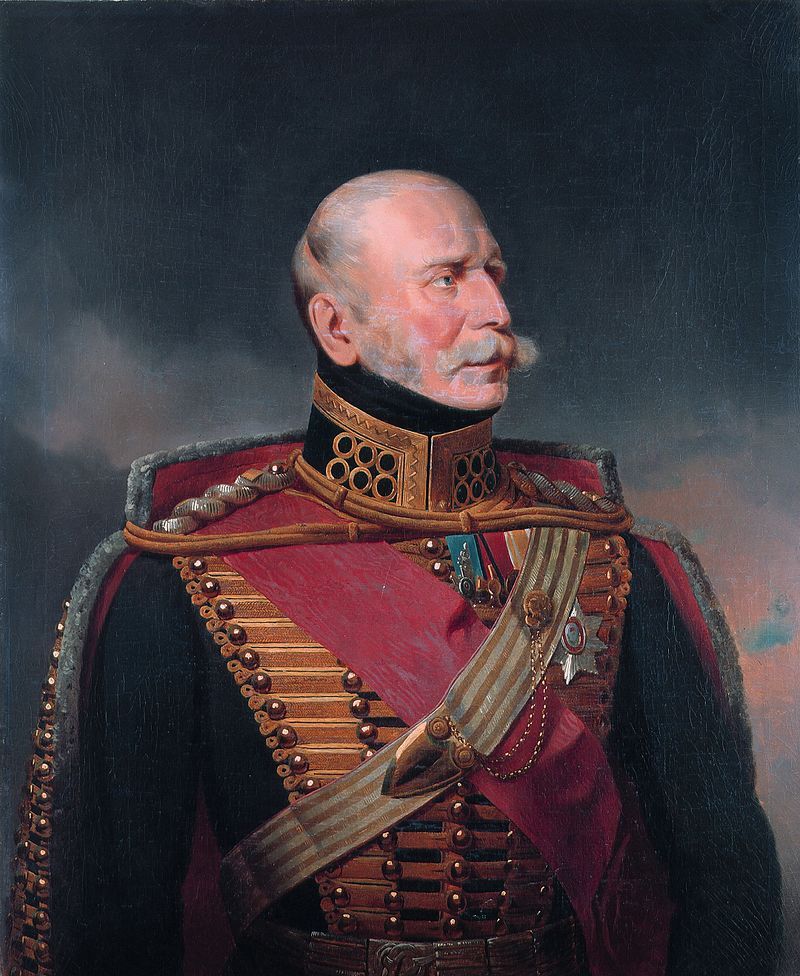 Ernest Augustus, Duke of Cumberland and Teviotdale (June 5, 1771 – November 18, 1851) and later King of Hanover, was one of the most polarizing and scandal-ridden figures
of the British Regency era. A staunch ultra-conservative Tory and son of King George III, his life was marked by persistent, often vicious rumors that shadowed his political
career and his reputation.
Ernest Augustus, Duke of Cumberland and Teviotdale (June 5, 1771 – November 18, 1851) and later King of Hanover, was one of the most polarizing and scandal-ridden figures
of the British Regency era. A staunch ultra-conservative Tory and son of King George III, his life was marked by persistent, often vicious rumors that shadowed his political
career and his reputation.
The claims regarding the Duke's sexuality and his involvement in the "Vere Street affair" and the death of his valet were largely products of a highly partisan and often
hostile press. In early 19th-century Britain, political opponents frequently used accusations of "unnatural" behavior or moral depravity to discredit members of the royal
family.
In 1810 the Duke’s valet, Joseph Sellis, was found dead with his throat cut shortly after an apparent attempt on the Duke’s life. While the official inquest ruled it a
suicide following a failed murder attempt by Sellis, intense public speculation suggested the Duke had murdered his servant to cover up a clandestine sexual relationship.
These rumors were later used in libelous pamphlets and books to smear the Duke’s character for decades.
Always in 1810, following the prosecution of the "Vere Street Coterie"—a group of men arrested for sodomy at a known queer haunt—the public execution of participants
became a morbid spectacle. Reports that the Duke of Cumberland was spotted in the crowd observing the hangings were used by his enemies to imply his own involvement in or
sympathy with the subculture he publicly condemned.
The suggestion that Ernest Augustus presided over a "gay court" in Hanover originates from the same atmosphere of political libel that characterized his life in Britain.
During his time in Britain, the Duke was an ardent opponent of liberal reforms and the Catholic Emancipation Act. Consequently, he was a primary target for Whig
journalists and radical pamphleteers who sought to destroy his reputation through scandal.
There is no credible historical evidence to support the claim that he engaged in same-sex relationships or maintained a "gay court" in Hanover. His marriage to Frederica
of Mecklenburg-Strelitz, while controversial for other reasons, resulted in a lasting union and the birth of a son, George V.
The Duke frequently pursued legal action against those who published such claims, winning libel cases that established these narratives as false or defamatory in a court
of law.
In summary, while the Duke of Cumberland was undoubtedly an unpopular and controversial figure, the "queer history" associations linked to him are largely historical tall
tales or political smear campaigns designed to capitalize on the sensational scandals of the era.
<
References:
Other references:
- https://en.wikipedia.org/wiki/Ernest_Augustus,_King_of_Hanover
Support this project
This website is a passion project researched, developed, and funded entirely by me. If you find the content valuable and would like to help support the ongoing research and hosting costs, any contribution is deeply appreciated.
Thank you for keeping this independent resource alive!
My books on Amazon: Elisa Rolle's books
BACK TO HOME PAGE
