Queer Places:
Cimitero Evangelico degli Allori, Via Senese, 184, 50124 Firenze FI
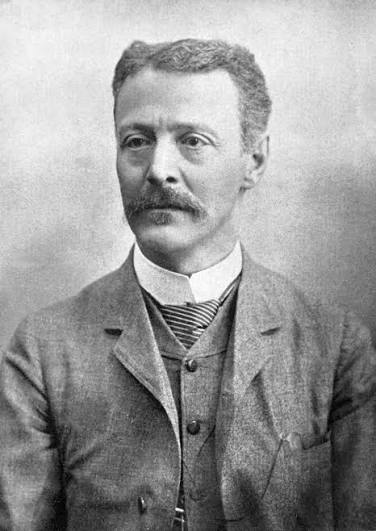 Enrico Nencioni (January 1, 1837 – August 25, 1896) was born in Florence on January 1, 1837, the son of Angiolo Nencioni and Carolina Mangani, a Sienese woman who founded
and directed a prominent women's educational institute. During his youth, he attended the Scolopi Piarist school of San Giovannino in Florence, where he formed a
foundational, lifelong friendship with the future Nobel laureate and poet Giosuè Carducci, alongside fellow student Giuseppe Chiarini. In 1856, Nencioni aligned himself with
the literary circle known as the "Amici Pedanti" (Pedantic Friends), spearheaded by Carducci. However, even within this strict classical group, Nencioni distinguished
himself by showing an open admiration for foreign romantic and modern traditions—particularly English and German literature—setting him apart from his peers' more rigid
traditionalism.
Enrico Nencioni (January 1, 1837 – August 25, 1896) was born in Florence on January 1, 1837, the son of Angiolo Nencioni and Carolina Mangani, a Sienese woman who founded
and directed a prominent women's educational institute. During his youth, he attended the Scolopi Piarist school of San Giovannino in Florence, where he formed a
foundational, lifelong friendship with the future Nobel laureate and poet Giosuè Carducci, alongside fellow student Giuseppe Chiarini. In 1856, Nencioni aligned himself with
the literary circle known as the "Amici Pedanti" (Pedantic Friends), spearheaded by Carducci. However, even within this strict classical group, Nencioni distinguished
himself by showing an open admiration for foreign romantic and modern traditions—particularly English and German literature—setting him apart from his peers' more rigid
traditionalism.
Following the dissolution of the early literary group, Nencioni spent roughly two decades working as a private tutor, notably serving in Siena for the counts Gori
Pannillini. During these years away from the metropolitan centers, he immersed himself deeply in foreign texts, cultivating a rare expertise in Anglo-American letters. His
life pivoted when he began forming connections within the vibrant Anglo-Florentine and expatriate communities. Through American sculptor William Wetmore Story, Nencioni
gained entry into elite artistic circles, meeting literary giants such as Robert Browning and
Elizabeth Barrett Browning and Walter Savage Landor.
Nencioni eventually emerged as Italy’s leading literary critic and mediator of English-language letters during the post-Unification era. Writing for prominent periodicals
like Il Fanfulla della Domenica, La Domenica Letteraria, and Nuova Antologia, he played a pivotal role in introducing groundbreaking foreign authors to Italian readers. He
was notably the first Italian critic to write critically about Walt Whitman, publishing pioneering essays starting in 1879 that deeply influenced Italian poets like Carducci
and Gabriele D'Annunzio. Nencioni married in late 1880 and spent three years living in Rome before returning to Tuscany,
continuing his prolific output of critical essays until his death in Ardenza on August 25, 1896.
Nencioni’s connection to LGBTQ history is anchored primarily through his intellectual and professional relationship with the Anglo-American author
Vernon Lee (the male pseudonym of Violet Paget), a seminal figure in late-nineteenth-century aestheticism, cultural history, and
queer literary studies. Vernon Lee lived openly within female-centric partnerships—notably sharing decades of her life with
Kit Anstruther-Thomson and later Amy Levy and
Irene Forbes-Mosse—and is celebrated today as a foundational icon in lesbian and queer literary history.
When Vernon Lee published her breakout scholarly work, Studies of the Eighteenth Century in Italy, in 1880, it was Enrico Nencioni who provided its crucial initial
critical validation in Italy through a glowing review in Il Fanfulla della Domenica. By publicly appraising her work and championing her scholarship, Nencioni acted as a
vital cultural bridge, introducing Lee into the heavily male-dominated, insular landscape of contemporary Italian letters. Their professional alignment and mutual
appreciation integrated Lee firmly into the cosmopolitan intellectual network of Tuscany, directly linking Nencioni to the inner circles of one of history's most prominent
queer literary pioneers.
References:
- Mauro Marrocco, "NENCIONI, Enrico", Dizionario Biografico degli Italiani, vol. 78, Istituto dell'Enciclopedia Italiana, 2013.
- Pietro Paolo Trompeo, "NENCIONI, Enrico", Enciclopedia Italiana, Istituto dell'Enciclopedia Italiana, 1934.
- Enrico Nencioni, Saggi critici di letteratura inglese, con prefazione di Giosuè Carducci, Successori Le Monnier, Florence, 1910.
- Ferdinando Martini, Confessioni e ricordi, Bemporad & Figlio, Florence, 1922.
- Benedetto Croce, La letteratura della nuova Italia, vol. II, Laterza, Bari, 1943.
- Peter Gunn, Vernon Lee: Violet Paget, 1856–1935, Oxford University Press, London, 1964.
- Elisa Pieri, "Enrico Nencioni: an Italian Victorian", in Biographies and autobiographies in modern Italy: A Festschrift for John Woodhouse, Legenda, London, 2007.
Support this project
This website is a passion project researched, developed, and funded entirely by me. If you find the content valuable and would like to help support the ongoing research and hosting costs, any contribution is deeply appreciated.
Thank you for keeping this independent resource alive!
My books on Amazon: Elisa Rolle's books
BACK TO HOME PAGE