Queer Places:
Butler, Illinois 62015
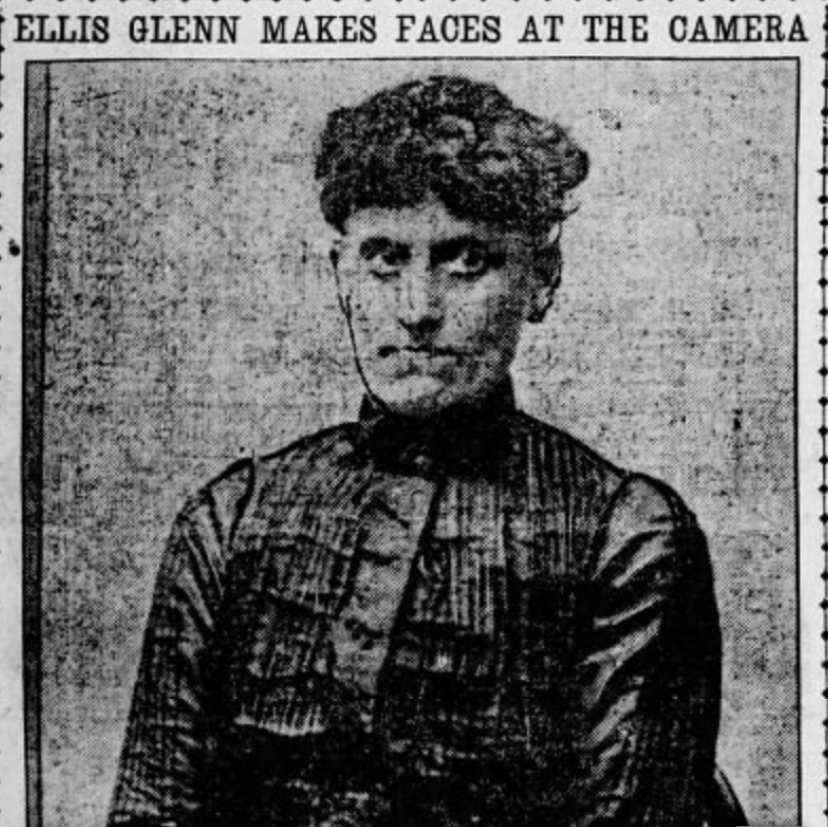 Ellis Glenn (born 1860) lived a life defined by elaborate deception, serial fraud, and gender-crossing aliases that captivated late nineteenth and early twentieth-century
American newspapers. In the summer of 1899, Glenn arrived in the small town of Butler, Illinois, posing as a handsome and charming sewing machine salesman. Quickly
establishing a prominent social standing, Glenn became a favorite among local society and successfully wooed Ella Dukes, the daughter of one of Butler's most respectable
families. As wedding plans for that October progressed, Glenn was arrested several weeks prior to the ceremony and accused of forging a $4,000 check. Despite the serious
charges, the Dukes remained fond of him, and Ella’s father even posted his bond to secure his release from jail.
Ellis Glenn (born 1860) lived a life defined by elaborate deception, serial fraud, and gender-crossing aliases that captivated late nineteenth and early twentieth-century
American newspapers. In the summer of 1899, Glenn arrived in the small town of Butler, Illinois, posing as a handsome and charming sewing machine salesman. Quickly
establishing a prominent social standing, Glenn became a favorite among local society and successfully wooed Ella Dukes, the daughter of one of Butler's most respectable
families. As wedding plans for that October progressed, Glenn was arrested several weeks prior to the ceremony and accused of forging a $4,000 check. Despite the serious
charges, the Dukes remained fond of him, and Ella’s father even posted his bond to secure his release from jail.
Shortly after being freed, Glenn traveled to St. Louis under the pretense of purchasing wedding attire. Instead of returning to Butler, a letter arrived from a sender
named T. H. Terry, claiming that Glenn had tragically drowned in the Mississippi River after falling off a wharfboat while bathing. Local law enforcement officials
immediately grew suspicious, viewing the drowning story as a transparent scheme to evade an upcoming court trial. A brief investigation successfully tracked Glenn to
Paducah, Kentucky, where he was found residing in a boarding house using the alias T. H. Terry. Extradited back to Illinois by the state attorney, Glenn entered a guilty
plea to fraud charges at the county courthouse in Hillsboro.
The case took a bizarre turn upon Glenn’s admission to the Chester penitentiary in late November 1899, when prison wardens discovered that his physical body lacked male
anatomical components. Confronted with this revelation, Glenn claimed he was not Ellis Glenn at all, but rather his twin sister, and asserted that the siblings had swapped
places in Paducah. This extraordinary twist attracted the attention of authorities in Parkersburg, West Virginia, who linked him to an individual named Elbert or E. B.
Glenn—a person bearing a striking physical resemblance to the Butler salesman—who had allegedly committed multiple forgeries in 1897. On the final day of July 1901,
newspapers nationwide reported Glenn’s acquittal, a verdict reached because a jury could not reach a unanimous decision regarding his true legal identity.
Fewer than three months after the legal proceedings were dropped, Glenn surfaced in the news once again, this time facing new legal jeopardy in Lapeer, Michigan.
Operating under male attire as a real estate agent, Glenn was accused of swindling money in a fraudulent land transaction in Clare County, Michigan. True to form, the
ensuing trial concluded in November 1905 with a conviction, resulting in a sentence of one to ten years served in the Detroit House of Correction, sealing a remarkable
legacy of identity manipulation and criminal enterprise.
References:
Other references:
- The Quincy Daily Whig
- St. Louis Post-Dispatch
- The Paducah Sun
- Parkersburg News
- Chicago Tribune
- Marietta Daily Leader
- The Evening World (New York)
- Digital Transgender Archive (Historical Newspaper and Periodical Clippings Collection)
Support this project
This website is a passion project researched, developed, and funded entirely by me. If you find the content valuable and would like to help support the ongoing research and hosting costs, any contribution is deeply appreciated.
Thank you for keeping this independent resource alive!
My books on Amazon: Elisa Rolle's books
BACK TO HOME PAGE
