Queer Places:
Dunford House, Dunford Hollow, Heyshott, Midhurst GU29 0AF, UK
St Mary Magdelene Churchyard, West Lavington, Midhurst GU29 0EH, United Kingdom
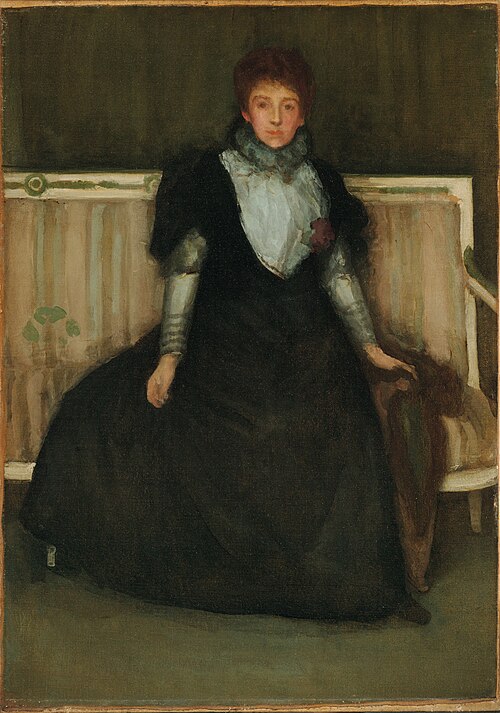 Ellen Melicent Cobden (August 18, 1848 - September 4, 1914) was a British writer, radical campaigner and suffragist. She supported the Irish Home Rule movement, South Africa
Conciliation Committee, Women's Social and Political Union and the Women's Freedom League.
Ellen Melicent Cobden (August 18, 1848 - September 4, 1914) was a British writer, radical campaigner and suffragist. She supported the Irish Home Rule movement, South Africa
Conciliation Committee, Women's Social and Political Union and the Women's Freedom League.
Born on August 18, 1848, in Manchester, Ellen "Nellie" Melicent Ashburner Cobden was the youngest daughter of Richard Cobden—the prominent Victorian radical MP,
free-trade reformer, and leader of the Anti-Corn Law League—and Catherine Anne Williams. Raised in an intellectually charged atmosphere, Ellen and her sisters (including
fellow campaigners Jane Cobden-Unwin and Anne Cobden-Sanderson) were encouraged from childhood to foster deep civic consciousness and political independence.
Supported by an annuity following her father's death, Ellen enjoyed financial independence, traveled extensively, and became active in progressive political movements.
She supported Irish Home Rule, campaigned against the Second Boer War, and became a committed suffragist, funding the Women's Social and Political Union (WSPU) and marching
with the Women's Freedom League.
In 1885, Ellen married the painter Walter Richard Sickert (11 years her junior). Her personal fortune heavily underwrote
Sickert’s early artistic career. Through Sickert, she entered the center of the London and international avant-garde:
She sat for major portraits by James McNeill Whistler, including Arrangement in Violet and Pink and Green and Violet:
Portrait of Mrs Walter Sickert.
After uncovering Sickert’s chronic infidelity in 1896, Ellen separated from him. She secured a divorce in 1900 on the grounds of "constructive desertion," setting a key
legal precedent in English matrimonial law.
In 1913, she formally repudiated Sickert’s name by deed poll, reverting to Ellen Melicent Cobden.
Writing under the pseudonym Miles Amber, Cobden produced two significant literary works:
Winstons: A Story in Three Parts (1902): A psychological narrative exploring social expectations and personal tragedy.
Sylvia Saxon: Episodes in a Life (1914): Published by T. Fisher Unwin shortly before her death, this semi-autobiographical novel critiques class dynamics, forced
domesticity, and romantic entanglements, incorporating explicit nods to the women's suffrage movement.
While Ellen Cobden’s own romantic life included a heterosexual marriage, her personal sphere, financial patronage, and legal provisions place her at the heart of
late-Victorian and Edwardian same-sex female networks.
Sylvia Saxon contains references to the suffrage movement and is dedicated to the painter Emily Osborn and her companion
Mary Elizabeth Dunn, to both of whom Ellen Cobden Sickert left a small legacy, 'as a token of love', in her will.
Painter Emily Mary Osborn (famous for proto-feminist paintings such as Nameless and Friendless) lived in a lifelong same-sex partnership (often termed a
"Boston marriage") with Mary Elizabeth Dunn.
In 1885, prior to her marriage to Walter Sickert, Ellen Cobden lived with Osborn and Dunn at their London home. Osborn and Dunn served as official witnesses at Ellen’s
1885 wedding ceremony. Ellen’s sister, Jane Cobden, also lodged with the couple in 1889 while campaigning for the London County Council.
Shortly before dying of cancer on September 4, 1914, Ellen published Sylvia Saxon under her pen name Miles Amber. She explicitly dedicated the novel to Emily Mary Osborn
and Mary Elizabeth Dunn, publicizing her affection for and solidarity with this prominent female couple.
In her final act of independence, Ellen left monetary bequests in her will to both Osborn and Dunn. Described explicitly as a "token of love," this bequest underscored
the deep emotional and financial interdependency shared among suffragist, artistic, and same-sex female households at the turn of the century.
Ellen Melicent Cobden passed away on September 4, 1914. Her family was closely tied to West Sussex, where her father, Richard Cobden, is buried in the churchyard at West
Lavington near the family home, Dunford House in Heyshott. Archived family records at the Harry Ransom Center note the existence of a memorial stone shared by Ellen Melicent
Cobden and her sister, Emma Jane Cobden Unwin.
References:
Other references:
- https://en.wikipedia.org/wiki/Ellen_Melicent_Cobden
- https://www.wikitree.com/wiki/Cobden-68
- https://www.wikidata.org/wiki/Q108424837
Support this project
This website is a passion project researched, developed, and funded entirely by me. If you find the content valuable and would like to help support the ongoing research and hosting costs, any contribution is deeply appreciated.
Thank you for keeping this independent resource alive!
My books on Amazon: Elisa Rolle's books
BACK TO HOME PAGE
