Queer Places:
Wellesley College (Seven Sisters), 106 Central St, Wellesley, MA 02481
University of Cambridge, 4 Mill Ln, Cambridge CB2 1RZ
River Bend Cemetery, 117 Beach St, Westerly, RI 02891, United States
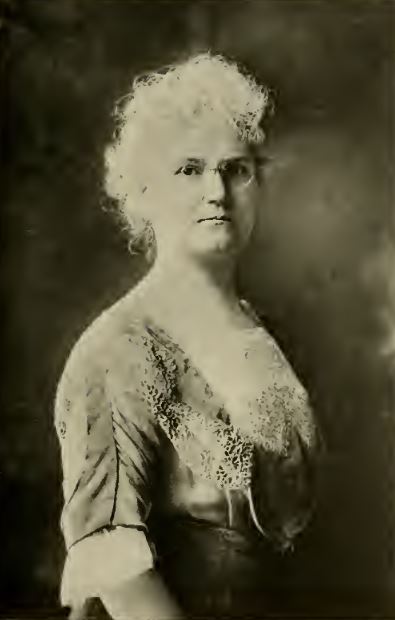 Ellen Fitz Pendleton (August 7, 1864 - July 26, 1936) was born on August 7, 1864, in Westerly, Rhode Island, as the youngest of nine children born to Enoch
Burrows Pendleton and Mary Ette Chapman Pendleton. Tracing her lineage back to Brian Pendleton, who immigrated to America from England in 1632, she grew up
in a traditional and stable New England family environment and graduated as the valedictorian of Westerly High School.
Ellen Fitz Pendleton (August 7, 1864 - July 26, 1936) was born on August 7, 1864, in Westerly, Rhode Island, as the youngest of nine children born to Enoch
Burrows Pendleton and Mary Ette Chapman Pendleton. Tracing her lineage back to Brian Pendleton, who immigrated to America from England in 1632, she grew up
in a traditional and stable New England family environment and graduated as the valedictorian of Westerly High School.
Her lifelong relationship with Wellesley College began when she enrolled as a student, earning her Bachelor of Arts degree in 1886. Following her
graduation, she immediately embedded herself in the academic community, serving first as a tutor in mathematics, Latin, and Greek until 1888, when she
transitioned into a full-time instructor of mathematics. Her commitment to scholarship took her abroad to Newnham College, Cambridge, where she pursued
post-graduate courses between 1889 and 1890, before returning to Wellesley to complete her Master of Arts degree in 1891.
Pendleton steadily rose through the administrative and academic ranks of the institution. In 1897, she became the secretary of the college, holding the
post until 1901. That year, she was named associate professor of mathematics and placed in charge of College Hall, subsequently becoming the dean of the
college in 1902. When the institution faced a leadership transition, she served as acting president in 1910 before officially assuming the presidency as
the sixth president of Wellesley College, with her formal inauguration taking place on October 19, 1911. Notably, she made history as the first alumna of
the college to be elected to its presidency.
Her quarter-century tenure as president was defined by monumental physical and financial expansion, as well as steadfast academic leadership. In March
1914, a devastating fire completely destroyed College Hall, the heart of the campus that housed classrooms, administrative offices, the library, and
student dormitories. Demonstrating extraordinary crisis management, Pendleton organized temporary quarters that allowed students to resume classes within
just three weeks. She spearheaded a massive fundraising campaign that brought in millions of dollars, resulting in a nearly eightfold increase in the
college endowment to roughly $10 million and a complete physical rebuilding of the campus, which included new dormitories, faculty apartments, and academic
structures.
As an educator, Pendleton fiercely protected academic freedom and traditional liberal arts education, instituting an honors program while actively
resisting the shift toward vocational or narrowly specialized courses. During World War I and the turbulent interwar period, she defended the intellectual
independence of her faculty, standing up for academic freedom for pacifists and opposing the restrictive Massachusetts Teachers' Oath of 1935. Her
dedication to principle was tested when she strongly opposed the Wellesley trustees' decision to terminate the contract of Nobel Peace Prize winner and
faculty member Emily Greene Balch in 1919 over her anti-war positions. Beyond the campus, Pendleton's
influence reached national platforms; she served on the Wellesley examination board, participated as a supporter of women's scientific research through the
Naples Table Association, and became the first woman to serve on the panel awarding the prestigious American Peace Prize established by Edward Bok in 1923.
In recognition of her visionary leadership, she received honorary doctoral degrees from Brown University and Mount Holyoke College.
Wellesley campus was part of a broader era in women's higher education characterized by "boston marriages" and intense, romantic female partnerships
among pioneering female academics. While Pendleton herself maintained a private personal life centered largely around her dedication to the administration
and progression of Wellesley College, the institutional spaces she helped govern provided a vital environment where early professional women and educators
formed pioneering, lifelong domestic and intellectual partnerships away from traditional heteronormative expectations.
After announcing her intentions to step down in February 1935, Pendleton officially retired from the presidency in June 1936. Her retirement was
tragically brief, as she passed away just a month later on July 26, 1936, following a paralytic stroke in Newton, Massachusetts. She was laid to rest at
River Bend Cemetery in her hometown of Westerly, Rhode Island, leaving behind a legacy as one of the most transformative leaders in the history of women's
higher education.
References:
Other references:
- Encyclopædia Britannica – "Ellen Fitz Pendleton" (biographical overview detailing her administration, academic achievements, and tenure at Wellesley College).
- Encyclopedia.com (Women in World History: A Biographical Encyclopedia) – "Pendleton, Ellen Fitz (1864–1936)" (details on her family lineage, early education in Westerly, and academic degrees).
- The National Cyclopaedia of American Biography (Vol. 26, 1926) – Entry on Ellen Fitz Pendleton.
- Dictionary of Women Worldwide: M-Z (Edited by Anne Commire, Thomson Gale, 2007).
- Dictionary of Women in Science (Marilyn Bailey Ogilvie, Taylor & Francis, 2000).
- Wellesley College Archives – Ellen Fitz Pendleton Papers (1910–1936, 1959): Contains personal papers, speeches, administrative pamphlets, news clippings, and records of honors/tributes.
- Wellesley College Archives – College Hall Fire Collection (1914–1974): Includes primary telegrams, correspondence, and administrative notes regarding the 1914 campus fire crisis management handled by Pendleton.
- Randall, Mercedes Moritz (1964). Improper Bostonian: Emily Greene Balch, Nobel Peace Laureate, 1946. New York: Twayne Publishers (documents the 1918–1919 faculty dismissal controversy and Pendleton's steadfast defense of academic freedom).
- Studies on early 20th-century women's colleges, campus networks, and the cultural context of professional academic partnerships ("Boston marriages") among early female educators.
- The New York Times (July 27, 1936) – "Miss Pendleton College Head, Dies".
- Daily Boston Globe (July 27, 1936) – "Ellen Fitz Pendleton, 71 Noted Educator, Dead".
- The Washington Post (July 28, 1936) – Obituary and career retrospective.
Support this project
This website is a passion project researched, developed, and funded entirely by me. If you find the content valuable and would like to help support the ongoing research and hosting costs, any contribution is deeply appreciated.
Thank you for keeping this independent resource alive!
My books on Amazon: Elisa Rolle's books
BACK TO HOME PAGE
