BURIED TOGETHER
Partner Hannah Kezia Clapp
Queer Places:
512 Mountain St, Carson City, NV 89703, USA
555 Lytton Ave, Palo Alto, CA 94301, USA
Mount Hope Cemetery, 1048 State Street, Bangor, Maine 04401 United States
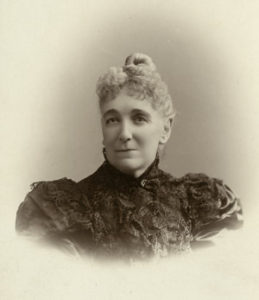 Elizabeth Cecilia Babcock (1835 – September 19, 1899) was an American educator, pioneer, and prominent suffragist whose life, work, and enduring partnership with
Hannah Kezia Clapp offer a compelling window into 19th-century LGBTQ+ history and "Boston marriages."
Elizabeth Cecilia Babcock (1835 – September 19, 1899) was an American educator, pioneer, and prominent suffragist whose life, work, and enduring partnership with
Hannah Kezia Clapp offer a compelling window into 19th-century LGBTQ+ history and "Boston marriages."
Together with Hannah Keziah Clapp, Babcock founded the Sierra Seminary in Carson City, Nevada—a co-educational private school that became a cornerstone of early Nevada
education.
When Clapp was hired by the University of Nevada in Reno, Babcock relocated with her, teaching elementary school and helping establish the city's very first
kindergarten.
Babcock and Clapp were active in both Nevada state and national women’s suffrage movements. Clapp represented Nevada in the National Woman Suffrage Association (NWSA)
and served as Vice President of the Nevada Equal Suffrage Association.
Babcock and Clapp lived and worked together for over 35 years, pooling their finances ("a common purse"), purchasing property together, and building a home in
Carson City before later moving to Reno and planning a retirement home in Palo Alto, California.
Between 1865 and 1870, Clapp and Babcock built a home on the northwestern edge of Carson City, at 512 Mountain St (Carson City, Nevada), while running the Sierra Seminary.
Known historically as the Clapp House, the property featured an extensive surrounding fence and a beautifully landscaped garden.
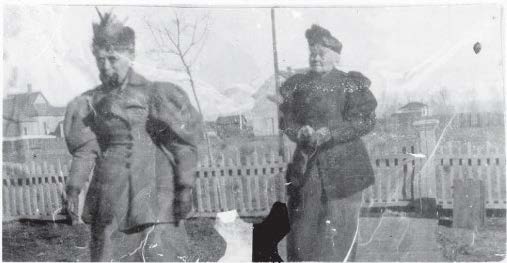
Miss Elizabeth Babcock and Miss Hannah Clapp, Photo from Mountain West Digital Library, University of Nevada Reno
Around 1896—roughly eight years before Babcock’s passing—the couple commissioned a Queen Anne home designed by architect Thomas J. Welch at 555 Lytton Ave
(Palo Alto, California), where they planned to retire together. Following Babcock’s death, Clapp moved to this dream home alone around 1901 and lived there until her death
in 1908.
Early in their relationship, Clapp gave Babcock a diamond ring as a symbol of her devotion, which Babcock wore on her engagement finger for the remainder of her
life.
Contemporary accounts—most notably by San Francisco suffragist and journalist Miriam Michelson in the San Francisco Bulletin—framed their relationship through
heteronormative lenses. Michelson described Clapp as possessing a "masculine mind" and doing household repairs, while portraying Babcock as the "dainty, exquisitely
feminine" wife who managed domestic life.
Following Babcock’s debilitating stroke in 1896 and her death on September 19, 1899, the community's response was unusually open. Rather than treating their
relationship as a private or hidden matter:
The Woman’s Guild passed a resolution expressing explicit condolences to "Miss Clapp, in particular."
The Reno Evening Gazette noted that Clapp had nursed Babcock with "a devotion that but few couples possess" and recognized Clapp's profound grief at losing a companion
of 35 years.
Michelson’s article titled them "Nevada’s Feminine David and Jonathan" (referencing the Biblical narrative of romantic male friendship), while suffragist Kate Tupper
Galpin wrote a poem celebrating their bond as a "richer and rarer" story of "a woman's love for a woman."
Historians view these coverage choices as typical of the late 19th century: journalists and friends acknowledged the romantic depth and domestic equivalence to a
marriage, yet often sanitized or mythologized it into a spiritual, non-sexual "soul marriage" to make it palatable to heteronormative audiences.
Following Babcock's death, Clapp donated funds to construct and dedicate the Babcock Memorial Kindergarten in Nevada to continue her partner's legacy.
Before her death, Babcock asked Clapp: "When I die, bury me where your ashes may be laid upon my breast." When Clapp died in 1908, her will requested cremation and that
her urn be placed on Babcock's grave. They are buried together at Mount Hope Cemetery in Bangor, Maine.
In her final years, Clapp embraced Spiritualism (a movement popular among 19th-century suffragists). Through "automatic writing," Clapp felt Babcock’s presence and
believed Babcock controlled her hand to write reassuring letters, allowing Clapp to maintain a spiritual connection with her partner until her own passing.
References:
Other references:
- https://www.nevadawomen.org/research-center/biographies-alphabetical/elizabeth-cecilia-babcock/
Support this project
This website is a passion project researched, developed, and funded entirely by me. If you find the content valuable and would like to help support the ongoing research and hosting costs, any contribution is deeply appreciated.
Thank you for keeping this independent resource alive!
My books on Amazon: Elisa Rolle's books
BACK TO HOME PAGE
