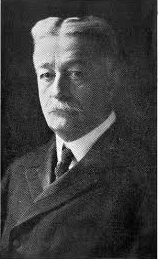
 Edwin Atlee Barber (August 13, 1851 – December 12, 1916) was an American archaeologist, museum director, and a pioneer scholar of American ceramics and decorative arts.
Queer Places:
Oaklands Cemetery, 1042 Pottstown Pike, West Chester, PA 19380, United States
Edwin Atlee Barber (August 13, 1851 – December 12, 1916) was an American archaeologist, museum director, and a pioneer scholar of American ceramics and decorative arts.
Born in Baltimore, Maryland, Barber came from a family with roots in the American Revolution and early industrial enterprises.
He attended Williston Seminary in Easthampton, Massachusetts, and subsequently studied at Lafayette College, earning his B.A., M.A. (1880), and Ph.D. (1893).
In 1874, Barber joined the U.S. Geological and Geographical Survey of the Territories, exploring Native American archaeological sites in Utah and Arizona. Examining prehistoric pottery ruins on this expedition sparked his lifelong passion for ceramics and material culture.
In 1893, Barber was appointed Honorary Curator of Pottery and Porcelain at the Pennsylvania Museum and School of Industrial Art (now the Philadelphia Museum of Art). He was appointed Secretary and Curator/Director in 1901, serving in that dual role until his death in 1916.
He wrote seminal texts on American ceramics and glass, including The Pottery and Porcelain of the United States (1893), Tulip Ware of the Pennsylvania-German Potters (1903), and Marks of American Potters (1904).
On January 21, 1910, Barber was elected as one of the original 21 charter members of the Horace Walpole Society.
Named in honor of English collector and writer Horace Walpole, the society was founded by collectors and museum professionals to promote the study and appreciation of early American decorative arts.
In 1914, Barber authored The Ceramic Collector's Glossary, published specifically by and for the Walpole Society.
Barber married Nellie Louise Parker in 1880, and the couple had one daughter. He died of pneumonia in Philadelphia on December 12, 1916.
The society took its identity from Horace Walpole, an iconic 18th-century aesthetic figure known for his bachelor lifestyle, gothic style, and intimate romantic friendships with men.
The Horace Walpole Society operated as an exclusive, all-male fraternal circle of aesthetic connoisseurs, museum directors, antiquarians, and collectors.
Because of these homosocial networks, many founding members and associates of the Walpole Society are documented within queer history archives and early 20th-century aesthetic history records. While Barber was married, his inclusion in these historical registers reflects his close placement within this influential network of art and decorative arts collectors.
West Chester, Pennsylvania held deep personal, ancestral, and professional significance for Edwin Atlee Barber throughout his life. While his career took him into field expeditions out West and into executive museum leadership in Philadelphia, West Chester served as his primary domestic anchor and regional research hub. Barber was the son of William E. Barber, an esteemed member of the Chester County Bar, and the grandson of David Townsend, a long-serving cashier of the Bank of Chester County. Rooted in the region's local elite, Barber researched and published family histories documenting Southeastern Pennsylvania lineage, including his Genealogical Record of the Atlee Family (1884). During much of his active career—including his tenure as curator and director of the Pennsylvania Museum and School of Industrial Art (now the Philadelphia Museum of Art)—Barber maintained his residence in West Chester. Contemporaries noted he worked in Philadelphia by day and retreated to his home in West Chester by night. Barber actively engaged in local civic preservation, serving as chairman of local committees (such as historical monument initiatives) in West Chester alongside other prominent Chester County citizens. West Chester and the broader Chester County countryside served as the backdrop for Barber’s groundbreaking field research on early American redware, sgraffito, and slipware. Barber closely studied historical Chester County potters, such as the famous abolitionist Quaker pottery family, the Vickers family of West Chester / Caln Township. His seminal works—such as Marks of American Potters (1904) and Tulip Ware of the Pennsylvania-German Potters (1903)—relied heavily on surviving daybooks, artifacts, and local collections housed in and around West Chester.
Oaklands Cemetery is the historic burial site for many of West Chester’s prominent 19th-century families and civic leaders, including Barber's mother's family—the Townsends—and his father, William E. Barber. Though Barber passed away in Philadelphia from pneumonia on December 12, 1916 while serving as Director of the Philadelphia Museum of Art, his funeral and burial brought him back to his long-time home in West Chester to be laid to rest alongside generations of his family.
References:
Support this project
This website is a passion project researched, developed, and funded entirely by me. If you find the content valuable and would like to help support the ongoing research and hosting costs, any contribution is deeply appreciated.
Thank you for keeping this independent resource alive!
My books on Amazon: Elisa Rolle's books