Husband George Bernard Shaw
Queer Places:
Shaw's Corner, Shaw's Corner, Bibbs Hall Ln, Welwyn AL6 9BX, United Kingdom
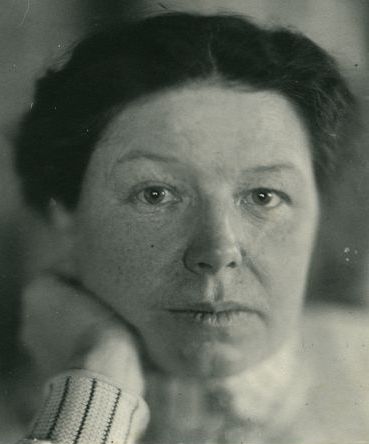 Charlotte Payne-Townshend Shaw (January 20, 1857 – September 12, 1943) was an Anglo-Irish activist, philanthropist, and intellectual whose life defied the rigid Victorian
conventions of her era. Best known as the formidable wife and intellectual anchor of the celebrated playwright
George Bernard Shaw, Charlotte was far more than a literary spouse. She was a dedicated socialist, a committed feminist, a
generous benefactor to progressive causes, and a fiercely independent woman who carved out a modern life centered on intellectual partnership and political activism.
Charlotte Payne-Townshend Shaw (January 20, 1857 – September 12, 1943) was an Anglo-Irish activist, philanthropist, and intellectual whose life defied the rigid Victorian
conventions of her era. Best known as the formidable wife and intellectual anchor of the celebrated playwright
George Bernard Shaw, Charlotte was far more than a literary spouse. She was a dedicated socialist, a committed feminist, a
generous benefactor to progressive causes, and a fiercely independent woman who carved out a modern life centered on intellectual partnership and political activism.
Born into a wealthy, landowning Anglo-Irish family in County Cork, Ireland, Charlotte experienced a privileged yet emotionally constrained upbringing. The early loss of
her father left her family financially secure, but societal expectations offered few avenues for a woman of her class to pursue independent ambition. Unwilling to settle for
the traditional path of a society debutante, Charlotte rebelled against the narrow confines of her background. She traveled extensively across Europe, absorbing progressive
European political thought, and immersed herself in the burgeoning social reform movements of the late nineteenth century.
Her intellectual awakening drew her deeply into the British socialist movement. She became a member of the Fabian Society, an organization dedicated to advancing
socialism through gradual, democratic reform rather than revolutionary upheaval. Through the Fabians, she rubbed shoulders with the leading social reformers and
intellectuals of the day, including Sidney and Beatrice Webb, Graham Wallas, and Sydney Olivier. It was within this intellectual
hothouse that she crossed paths with George Bernard Shaw, who was himself a prominent Fabian essayist and playwright.
Their relationship began as a meeting of minds, forged through shared political commitments and mutual intellectual respect. Following a period of intense
courtship—during which Shaw was recovering from a serious foot injury—they married on June 1, 1898. In a move that scandalized traditional Victorian sensibilities, the
couple famously agreed to a companionate, celibate marriage. Charlotte made it clear that she had no desire for conventional domestic servitude or the physical intimacy of
traditional matrimony, and Shaw, who held unorthodox views on sex and marriage, agreed. Instead, they built a partnership prioritized around mutual intellectual stimulation,
shared political ideals, and deep emotional loyalty.
As Mrs. Bernard Shaw, Charlotte used her considerable personal fortune and her formidable organizational skills to support her husband's career, shielding him from the
administrative distractions of daily life so he could focus entirely on his writing. Yet she maintained her own distinct identity and ideological independence. She was a
passionate advocate for women's suffrage, labor rights, and educational reform, quietly funding numerous progressive initiatives and political candidates behind the scenes
without seeking public acclaim.
While Charlotte's conventional public life was defined by her marriage to a man, her social circle, worldview, and personal relationships intersected significantly with
the broader LGBTQ+ networks of early twentieth-century Britain, largely through her association with the Fabian Society and London's avant-garde intellectual elite.
Progressive socialist circles of the era frequently attracted freethinkers, homosexuals, and gender non-conforming individuals who rejected Victorian morality regarding sex
and gender roles. Charlotte worked alongside and championed numerous prominent figures within these circles, including figures who challenged traditional heteronormative
structures.
Furthermore, her husband, George Bernard Shaw, was a vocal critic of conventional marriage laws and sexual morality, advocating for bodily autonomy and openly discussing
topics that polite society deemed taboo. Within their extended social orbit, Charlotte embraced a cosmopolitan tolerance for diverse lifestyles and unconventional
relationships, maintaining close friendships with individuals who lived outside the rigid boundaries of heteronormative respectability. Her commitment to companionate
marriage itself was part of a broader rejection of traditional patriarchal gender roles, aligning philosophically with early feminist efforts to separate female worth and
partnership from compulsory sexuality and reproduction.
Charlotte and Bernard Shaw remained companions for over four decades, weathering the turbulent political shifts of the early twentieth century, the devastation of two
World Wars, and the height of Shaw's global literary fame. Following Charlotte's death in 1943 at the age of 86, George Bernard Shaw was profoundly grief-stricken, openly
acknowledging that his life and work had depended entirely on her unwavering support, sharp intellect, and steady devotion. Though history often remembers her primarily
through the lens of her famous husband, Charlotte Payne-Townshend Shaw remains a fascinating figure in her own right: a wealthy heiress who chose socialism over luxury, an
intellectual equal in a patriarchal age, and a pioneer of modern companionate partnership.
References:
Other references:
- Holroyd, Michael. Bernard Shaw: The New Biography (Head of Zeus, 2015) and Bernard Shaw: The One-Volume Definitive Edition (W. W. Norton & Company, 2012) – The foundational modern biographical resource covering both George Bernard and Charlotte Shaw.
- Peters, Sally. Bernard Shaw: The Ascent of the Superman (Yale University Press, 1996) – Examines Charlotte's psychological profile, her independent wealth, and her dynamic with GBS.
- Greenburg, Reva Pollack. Fabian Couples, Feminist Issues (Routledge, 2019) – Explores Charlotte's role alongside other prominent figures within the Fabian Society.
- Weintraub, Stanley. The Unexpected Shaw (Ungar, 1982) – Details lesser-known aspects of the Shaws' personal lives and social circles.
- Adams, Elsie Bonita. Bernard Shaw and the Aesthetes (Ohio State University Press, 1971) – Contextualizes the Shaws within late 19th-century intellectual and artistic movements.
- Dorothy A. "Personal and Political: Feminism, Ireland, and Charlotte Shaw." SHAW: The Annual of Bernard Shaw Studies (June 2026) – Examines Charlotte's distinct political identity, Irish background, and engagement with early feminism.
- Donnelly, Sue. "An unsung heroine of LSE – Charlotte Shaw." London School of Economics History Blog (2014) – Details Charlotte's foundational philanthropic contributions to the LSE and her independent political footprint.
- The London School of Economics and Political Science (LSE): Records concerning Charlotte's role as an initial trustee, major benefactor, and founder of the historic Shaw Library.
- The Scott Polar Research Institute Archives (University of Cambridge): The Charlotte and George Bernard Shaw Collection (GB 15), housing correspondence between the Shaws and contemporary explorers and public figures.
- The British Library: Extensive collections of Bernard and Charlotte Shaw's personal correspondence, diaries, and Fabian Society papers documenting their broader social and political networks.
Support this project
This website is a passion project researched, developed, and funded entirely by me. If you find the content valuable and would like to help support the ongoing research and hosting costs, any contribution is deeply appreciated.
Thank you for keeping this independent resource alive!
My books on Amazon: Elisa Rolle's books
BACK TO HOME PAGE
