Queer Places:
Harvard University (Ivy League), 2 Kirkland St, Cambridge, MA 02138
Calais Cemetery, 94 South St, Calais, ME 04619, United States
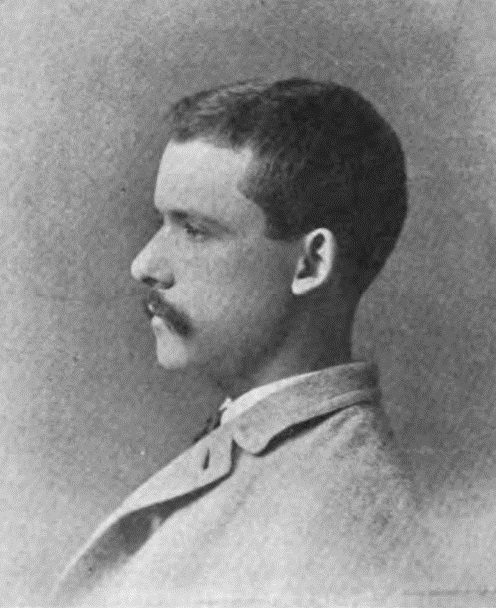 Charles Townsend Copeland (April 27, 1860 – July 24, 1952) was born on April 27, 1860, in Calais, Maine, and grew up to become one of the most legendary, charismatic, and
influential academic figures in the history of Harvard University. He entered Harvard College in 1878, where he engaged in traditional literary pursuits, including writing
for The Harvard Advocate, the university's oldest journal for creative writing. After graduating in 1882, Copeland launched a career as a drama and literary critic for the
Boston Post throughout the 1880s and 1890s. In this vibrant era of criticism, he reviewed performances by theatrical greats like Edwin Booth and
Sarah Bernhardt, and even critiqued the works of Oscar Wilde during Wilde's own
lifetime.
Charles Townsend Copeland (April 27, 1860 – July 24, 1952) was born on April 27, 1860, in Calais, Maine, and grew up to become one of the most legendary, charismatic, and
influential academic figures in the history of Harvard University. He entered Harvard College in 1878, where he engaged in traditional literary pursuits, including writing
for The Harvard Advocate, the university's oldest journal for creative writing. After graduating in 1882, Copeland launched a career as a drama and literary critic for the
Boston Post throughout the 1880s and 1890s. In this vibrant era of criticism, he reviewed performances by theatrical greats like Edwin Booth and
Sarah Bernhardt, and even critiqued the works of Oscar Wilde during Wilde's own
lifetime.
Copeland transitioned to academia in 1893 when he began teaching at Harvard, though his path to a tenured professorship was notably delayed. President Charles William
Eliot viewed Copeland with considerable wariness, and it was only after Eliot was succeeded by President Abbott Lawrence Lowell that Copeland finally achieved a tenured
professorship. Affectionately known as "Copey," he became a singular fixture of campus life as the only senior don—following
George Santayana’s departure in 1912—to live directly in Harvard Yard among his students. He settled into Hollis Hall, residing
from 1904 to 1932 in Ralph Waldo Emerson's former room, Hollis 15.
Hollis 15 served as a dynamic stage rather than a standard study, setting the backdrop for Copeland's famous weekly open houses. These gatherings drew an eclectic mix of
students—ranging from athletes and aristocrats to radicals, scholars, and obscure undergraduates—sitting shoulder-to-shoulder on the floor. While Copeland occasionally had
guests read aloud, prominent figures such as John Barrymore, Ernest Hemingway, and
Christopher Morley frequently attended. John Reed, the famous journalist who later chronicled the Russian Revolution in Ten Days That Shook the World, credited Copeland as
one of the two men who gave him confidence and inspired him to pursue noble work.
As an educator, Copeland specialized in English composition and famously functioned as a intellectual catalyst. Rather than molding traditional literary authors, he
produced a stellar generation of journalists, editors, and critics, including the longtime chief drama critic of The New York Times, Brooks Atkinson. Atkinson, among others,
credited Copeland with instilling lifelong writing maxims regarding sentence structure, paragraph transitions, and the careful elimination of colorless filler words. Despite
his immense popularity among male disciples, Copeland's pedagogical approach drew criticism from some contemporaries. George Santayana dismissively characterized him as an
elocutionist providing a spiritual debauch for waifs, while T.S. Eliot, John Dos Passos,
and Conrad Aiken expressed varying degrees of alienation, finding his intense vanity and demands for adulation difficult to tolerate. Furthermore, Copeland's teaching
triumphs were almost exclusively built within same-sex environments, experiencing notable struggles in connecting with women students, with the famous Radcliffe student
Helen Keller standing as a rare exception.
Examining Copeland through a modern historical and LGBTQ lens reveals a complex portrait of a bachelor don whose life and career have been re-evaluated regarding his
sexuality. Modern analyses point to his lifelong bachelorhood, his deep homosocial and homosocial-adjacent bonds with young male students, and his frequent outings dining in
downtown Boston haunts like Marliave's and the Parker House with his favorite male companions. Long before contemporary framing of queer history, his mannerisms and
lifestyle were fictionalized or captured by contemporaries, such as in Charles Macomb Flandrau's The Diary of a Freshman. Copeland's legendary status reached its zenith when
he was featured on the cover of Time magazine in 1927, cementing a cultural mythology that spanned decades until his death on July 24, 1952, at the age of 92.
References:
Other references:
- Adams, J. Donald. Copey of Harvard: A Biography of Charles Townsend Copeland. Boston: Houghton Mifflin, 1960.
- Copeland, Charles Townsend, ed. The Copeland Reader: An Anthology of English Poetry and Prose. New York: Charles Scribner's Sons, 1926.
- Copeland, Charles Townsend, ed. Copeland's Treasury for Booklovers: A Panorama of English and American Poetry and Prose from the Earliest Times to the Present. 5 vols. New York: Charles Scribner's Sons, 1927.
- Flandrau, Charles Macomb. Harvard Episodes (1897) and The Diary of a Freshman (1901) — fictionalized representations capturing campus life and figures akin to Copeland during the turn of the century.
- Reed, John. Letters and biographical recollections concerning Hollis 15 open houses (noted in broader collections like John Reed: The Making of a Revolutionary).
- Atkinson, Brooks. Memoir and essay reflections on English Composition 12 and Copeland's maxims.
- Encyclopaedia Britannica – "Charles Townsend Copeland" (biographical summary of his academic posts, students, and public lectures).
Support this project
This website is a passion project researched, developed, and funded entirely by me. If you find the content valuable and would like to help support the ongoing research and hosting costs, any contribution is deeply appreciated.
Thank you for keeping this independent resource alive!
My books on Amazon: Elisa Rolle's books
BACK TO HOME PAGE
