Queer Places:
Winchester School, College St, Winchester SO23 9NA, United Kingdom
University of Cambridge, 4 Mill Ln, Cambridge CB2 1RZ
3 Hare Court, Temple, London EC4Y 7BJ, UK
5 New Square, Linconl's Inn, London WC2A 3UP, UK
58 Oakley St, London SW3 5HA, United Kingdom
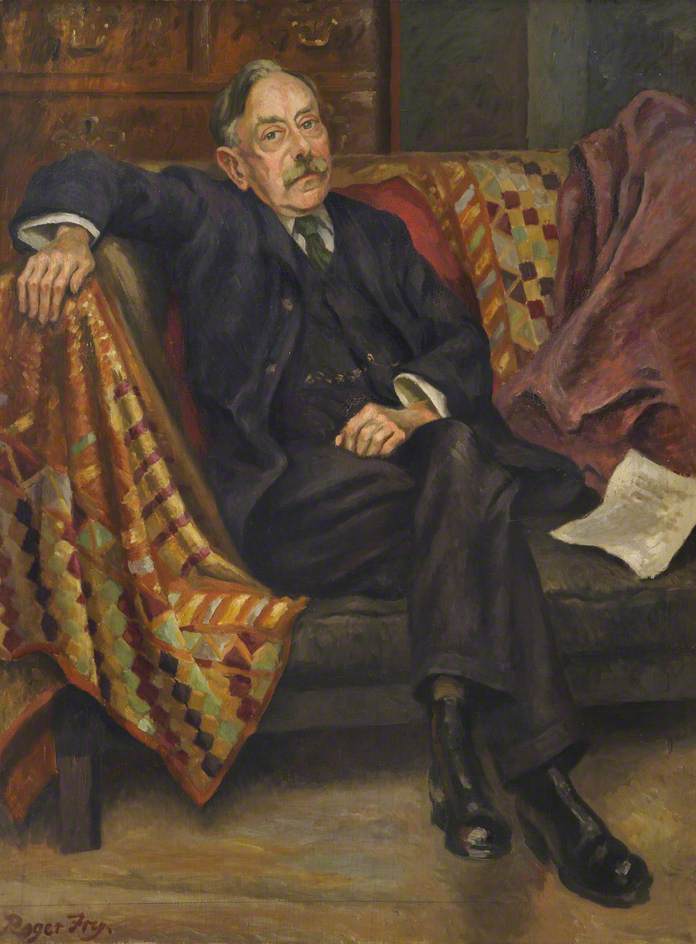 Charles Percy Sanger (December 7, 1871 – February 9, 1930) was born in Brighton, Sussex, on December 7, 1871, the eldest son of Charles Sanger of
Silverhow, Eastbourne, a wealthy chemist. He received his early education at Winchester School before entering Trinity College, Cambridge, as a pensioner on June 17, 1890. At Cambridge,
Sanger established an extraordinary academic record, earning distinction as the 2nd Wrangler in the Mathematical Tripos of 1893 and achieving a First Class
in Part II of the Moral Sciences Tripos in 1894. He completed his Bachelor of Arts in 1893, obtained his Master of Arts in 1897, and was elected a Fellow
of Trinity College from 1895 to 1901. During his university years, he became a member of the prestigious intellectual discussion society, the
Cambridge Apostles, where he formed deep, lifelong intellectual bonds with peers such as
Bertrand Russell, with whom he shared a competitive brilliance in mathematics and simultaneous election to
fellowships.
Charles Percy Sanger (December 7, 1871 – February 9, 1930) was born in Brighton, Sussex, on December 7, 1871, the eldest son of Charles Sanger of
Silverhow, Eastbourne, a wealthy chemist. He received his early education at Winchester School before entering Trinity College, Cambridge, as a pensioner on June 17, 1890. At Cambridge,
Sanger established an extraordinary academic record, earning distinction as the 2nd Wrangler in the Mathematical Tripos of 1893 and achieving a First Class
in Part II of the Moral Sciences Tripos in 1894. He completed his Bachelor of Arts in 1893, obtained his Master of Arts in 1897, and was elected a Fellow
of Trinity College from 1895 to 1901. During his university years, he became a member of the prestigious intellectual discussion society, the
Cambridge Apostles, where he formed deep, lifelong intellectual bonds with peers such as
Bertrand Russell, with whom he shared a competitive brilliance in mathematics and simultaneous election to
fellowships.
Following his time at Cambridge, Sanger turned to the legal profession and was called to the Bar at Lincoln's Inn on November 17, 1896. He established a
reputation as an erudite legal scholar and an authority on mathematical and statistical economics, eventually serving as Comptroller of the Lancaster
Chancery Court. His professional legal output included authoring The Place of Compensation in Temperance Reform and establishing himself as a foremost
authority on inheritance law through major editorial contributions to legal treatises, including Sanger on Wills, Jarman on Wills, and Hawkins on
Wills.
On July 31, 1900, Sanger married Anna Dorothea Pease, a Newnham College alumna, moral sciences scholar, and former warden and mistress of method at
Liverpool University College. The couple had one daughter, Daphne T. Sanger.
Beyond his formal legal and academic career, Sanger was an integral figure within the broader intellectual and cultural networks of early 20th-century
Britain, maintaining close associations with the Bloomsbury Group—including figures like Roger Fry, who painted his
portrait, and Virginia Woolf. His personal and professional circles frequently intersected with the era's
prominent literary, artistic, and reform-minded figures, many of whom navigated complex interpersonal dynamics and non-conforming social structures
characteristic of the Cambridge Apostles and Bloomsbury milieu. Sanger passed away on February 9, 1930, at the age of 58 in St George Hanover Square,
London.
References:
Other references:
- Census and Civil Registration Indexes: England and Wales Birth Registration Index, 1837–2008 (Recording his birth in Brighton, Sussex, 1871).
- England and Wales Marriage Registration Index, 1837–2005 (Recording his marriage to Anna Dorothea Pease in London, 1900).
- England and Wales, National Index of Wills and Administrations, 1858–1957 (Recording his probate details issued on April 4, 1930).
- Law Lists and Winchester Register.
- Cambridge University alumni and admissions records for Trinity College.
- Virginia Woolf: A Biography by Quentin Bell (Published by The Hogarth Press, Pimlico, London, 1996; ISBN: 0-7126-7450-0), which details his connections to the Bloomsbury Group and includes family trees.
- The Autobiography of Bertrand Russell (3 volumes, London: Allen & Unwin, 1967–1969), featuring correspondence and reminiscences of Sanger by Bertrand Russell.
- The Collected Papers of Bertrand Russell and The Selected Letters of Bertrand Russell (edited by Kenneth Blackwell, Andrew G. Bone, Nicholas Griffin, and Sheila Turcon; hosted via McMaster University's The Brixton Letters).
- The Times (Specifically the marriage announcement notice published on August 2, 1900, and biographical obituaries following his death on February 9, 1930).
- The Place of Compensation in Temperance Reform (1901)
- The Rules of Law and Administration Relating to Wills and Intestacies / Sanger on Wills (1914)
- England's Guarantee to Belgium and Luxemburg, with the Full Text of the Treaties (co-authored with Henry Tertius James Norton, 1915)
- The Structure of Wuthering Heights (1926)
- Editorial contributions and re-edits to standard legal texts including Jarman on Wills and Hawkins on Wills.
- Portrait of Charles Percy Sanger (1871–1930), Barrister – Painted by Roger Eliot Fry (1866–1934), housed at Trinity College, University of Cambridge.
Support this project
This website is a passion project researched, developed, and funded entirely by me. If you find the content valuable and would like to help support the ongoing research and hosting costs, any contribution is deeply appreciated.
Thank you for keeping this independent resource alive!
My books on Amazon: Elisa Rolle's books
BACK TO HOME PAGE
