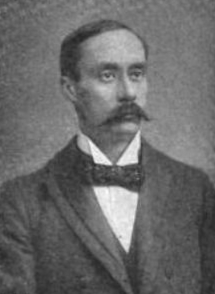
 Charles Lewis Hind (1862 - August 31, 1927) was a prominent British journalist, art critic, art historian, and editor who played a significant shaping role in late-19th- and
early-20th-century artistic culture.
Charles Lewis Hind (1862 - August 31, 1927) was a prominent British journalist, art critic, art historian, and editor who played a significant shaping role in late-19th- and
early-20th-century artistic culture.Queer Places:
All Saints Churchyard, High St, Biddenden, Ashford TN27 8AJ, United Kingdom
Charles Lewis Hind (1862 - August 31, 1927) was a prominent British journalist, art critic, art historian, and editor who played a significant shaping role in late-19th- and
early-20th-century artistic culture.
Born in England, Hind built a distinguished editorial career, serving as the deputy editor of The Art Journal between 1887 and 1892 and editing the Pall Mall Budget. In 1893, alongside publisher Charles Holme, Hind co-founded and became the initial editor of The Studio: An Illustrated Magazine of Fine and Applied Art, a critical periodical that would define the aesthetic movements of the 1890s.
Under Hind’s brief editorship and through his work on prior publications like The Art Journal and later The Academy (which he began editing in 1896), Hind engaged with cutting-edge and often avant-garde artistic expressions. This editorial stance frequently intersected with the coded or overt celebration of classical homoerotic and Greek aesthetic themes. As cultural historian Emanuel Cooper noted in the Victoria and Albert Museum catalogue for High Art and Low Life: The Studio and the Arts of the 1890s (1993), the inaugural April 1893 issue of The Studio—launched under Hind—intentionally featured articles and illustrations carrying direct or discreet references to homosexuality.
This queer-adjacent current was visible from the very beginning in the magazine's choice to spotlight Aubrey Beardsley. Beardsley provided the iconic cover for the first issue alongside an interior article detailing his striking drawings. The avant-garde nature of Beardsley's contributions was already pushing boundaries; his initial poster and cover design had to be altered because a fawn nestled in the trees was deemed too suggestive by contemporary standards. Furthermore, the premier issue featured critical attention directed toward Lord Leighton’s homoerotically charged sculptures, such as The Sluggard and Athlete Wrestling a Python.
Though Joseph Gleeson White succeeded Hind as editor shortly thereafter, The Studio maintained this underlying editorial trajectory. This was famously underscored by an unsigned article in the June 15, 1893, issue entitled "The Nude in Photography" (attributed by scholar Timothy d’Arch Smith to White), which featured three distinct illustrations captioned as being "From a photograph by Baron Corvo"—further cementing the journal's early, pioneering role in platforming homoerotic art and photography under the guise of classical and aesthetic refinement.
Following his departure from The Studio, Hind continued a prolific career in media and literature. He managed the merger of The Academy with Literature before retiring from that editorship in 1903, subsequently writing extensively on Post-Impressionism, authoring numerous books on art history (including The Post Impressionists in 1911 and Turner's Golden Visions in 1907), and publishing memoirs such as Naphtali (1926) before his death in London in August 1927.
References:
Support this project
This website is a passion project researched, developed, and funded entirely by me. If you find the content valuable and would like to help support the ongoing research and hosting costs, any contribution is deeply appreciated.
Thank you for keeping this independent resource alive!
My books on Amazon: Elisa Rolle's books