Queer Places:
Badger Hole, Custer State Park, 25151 Badger Clark Rd, Custer, SD 57730, United States
Evergreen Cemetery, Hot Springs, SD 57747, United States
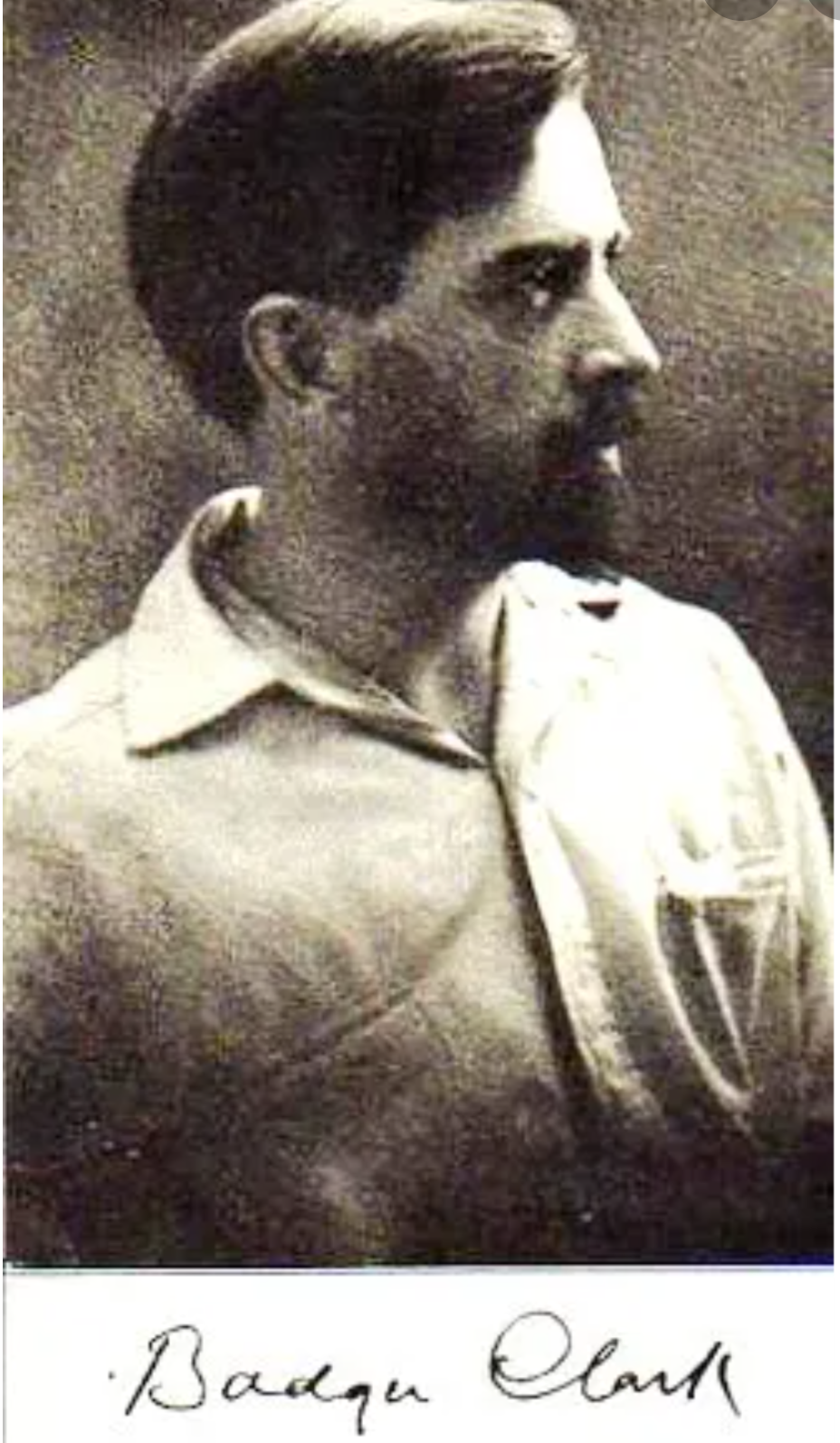 Charles Badger Clark Jr. (January 1, 1883 – September 26, 1957), born on January 1, 1883, in Albia, Iowa, became one of the American West's most enduring
literary figures as South Dakota's first poet laureate. The son of Reverend Charles Badger Clark Sr. and Mary Ellen Cleaver Clark, he moved to the Dakota
Territory when he was only three months old. His father was a prominent Methodist minister whose postings led the family through several pioneer towns,
including Plankinton, Mitchell, Huron, Deadwood, and Hot Springs, where the elder Clark famously delivered the funeral sermon for
Calamity Jane.
Growing up in the Black Hills region deeply influenced Clark's perspective, though his early adulthood was defined by restlessness and health
struggles. After attending high school, he enrolled at Dakota Wesleyan University, but his academic career ended abruptly following a clash with C. B.
Clark, one of the institution's founders. He subsequently traveled to Cuba before returning to South Dakota, where he contracted tuberculosis. Seeking
relief in a arid climate, Clark moved to Tombstone, Arizona, working for four years as a solitary caretaker on a remote ranch.
During his time in Arizona, Clark began writing letters home that frequently included original verse capturing the rhythms and atmosphere of ranch
life. Recognizing his talent, his stepmother sent one of his poems, "Ridin'," to The Pacific Monthly in 1907. The publication accepted the piece and sent
him a check for ten dollars, inspiring Clark to pursue a career as an independent writer without rigid hours or supervisors.
In 1910, Clark returned to South Dakota to care for his aging father. He published his first poetry collection, Sun and Saddle Leather, in 1917, which
included notable works like "A Cowboy's Prayer" and "The Job." He also authored short story collections such as Spike. To supplement his income, Clark
embarked on nationwide lecture tours, entertaining audiences with storytelling and poetry recitations. His writings gained broad national exposure
through prominent periodicals, including Sunset Magazine, Arizona Highways, Colliers, Century Magazine, The Rotarian, and Scribner's.
Clark established his permanent home in 1925 inside Custer State Park in the Black Hills, building a modest cabin affectionately known as "Badger
Hole." He spent thirty years living a quiet, bachelor existence in this sanctuary, surrounded by nature and devoting his days to literature. Recognizing
his contributions to regional culture, Governor Leslie Jensen named Clark the Poet Laureate of South Dakota in 1937, a title he held for the rest of his
life.
Historical records and literary scholars characterize Clark as a deeply private individual who never married and spent much of his adult life living
as a recluse at Badger Hole. While modern readers and cultural historians occasionally explore the homosocial themes, intense male camaraderie, and
idealization of bachelor life present in western cowboy poetry, there is no verified historical documentation, personal correspondence, or definitive
evidence indicating that Clark identified as LGBTQ or engaged in same-sex relationships. His choice to remain single was typically attributed by
contemporaries to his solitary nature, health challenges, and devotion to his craft.
Clark passed away on September 26, 1957, in Rapid City, South Dakota, at the age of 74, and was laid to rest at Evergreen Cemetery in Hot Springs
alongside his family. His literary legacy endured long after his death. His poem "Lead My America" was performed by the Fred Waring Chorus in 1957, and
his famous work "Spanish Is the Loving Tongue" was adapted into music and recorded by artists including Pete Seeger and Bob Dylan. Decades later, his
verse remained a touchstone of Western heritage, cited by political figures and leading to his induction into the Hall of Great Westerners at the
National Cowboy & Western Heritage Museum in 1989.
References:
- Gayday by Massimo Consoli, 2005
- Badger Clark Collection, Layne Library (Dakota Wesleyan University — Mitchell, SD)
- Badger Clark Collection, South Dakota State Archives (Pierre, SD)
- The Badger Hole Historic Landmark (Custer State Park, SD)
- Sun and Saddle Leather (Boston: Richard G. Badger, 1915/1919)
- Grass-Grown Trails (Boston: Richard G. Badger, 1917)
- Spike (Short story collection; Boston: Gorham Press, 1925)
- When Hot Springs Was a Pup (1927)
- Sky Lines and Wood Smoke (Chronicle Shop, 1935)
- Boot and Bylines (Posthumous collection; 1978)
- Singleton (Posthumous collection; 1978)
- Original poems and stories published in The Pacific Monthly, Sunset Magazine, Arizona Highways, Colliers, Century Magazine, The Rotarian, and Scribner's.
- Morganti, Helen. The Badger Clark Story. Lead, SD: Published by author, 1960.
- Lee, Bob (ed.). Gold, Gals, Guns, Guts. Deadwood: Deadwood-Lead Centennial Commission, 1976.
- Sinn, Jesse. Badger Clark: Poet Laureate of South Dakota. Independent Biographical Research, Badger Clark Memorial Society.
- Chenoweth, Richard R. "Badger Clark as 'The Prisoner of Camaquey'." South Dakota History, Vol. 7, No. 3 (Summer 1977): 271–290.
- South Dakota State Historical Society. "Of Preachers, Poets, and Pines: Badger Clark Writes to Ralph Shearer, 1929–1941." South Dakota History, Vol. 13, No. 4 (1984): 354–368.
- Vaughan, Carson. "The Cowboy Poet." Smithsonian Magazine (October 2020).
- Trimble, Marsha. "Who is Badger Clark?" True West Magazine (August 2009).
- South Dakota Public Broadcasting (SDPB). Badger Clark: Poet Among The Pines.
- Project Gutenberg & Internet Archive. Digitized public-domain texts of Sun and Saddle Leather and early periodical contributions.
Support this project
This website is a passion project researched, developed, and funded entirely by me. If you find the content valuable and would like to help support the ongoing research and hosting costs, any contribution is deeply appreciated.
Thank you for keeping this independent resource alive!
My books on Amazon: Elisa Rolle's books
BACK TO HOME PAGE