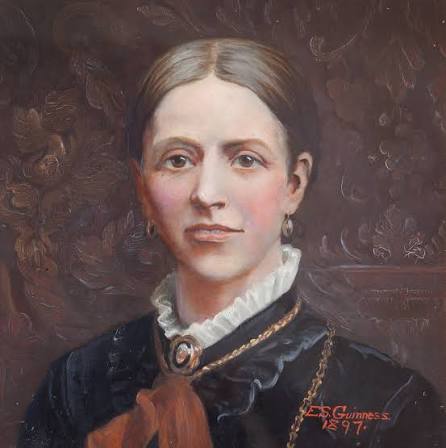
 Caroline Ashurst Biggs (August 23, 1840 – September 4, 1889) was a prominent 19th-century advocate for women's rights and a key figure in the British suffrage movement.
Queer Places:
Highgate Cemetery West, Swain's Ln, London N6 6PJ, United Kingdom
Caroline Ashurst Biggs (August 23, 1840 – September 4, 1889) was a prominent 19th-century advocate for women's rights and a key figure in the British suffrage movement.
Born in Leicester on August 23, 1840, she was the daughter of Matilda Ashurst Biggs and Joseph Biggs. She belonged to a noted family of radical activists; her maternal grandfather was the lawyer William Henry Ashurst, and her aunts were influential figures in radical causes and literature.
Biggs was a dedicated campaigner for women's suffrage. She was one of the signatories of the first women's suffrage petition in 1866 and remained an active speaker and executive committee member for the National Society for Women’s Suffrage (NSWS).
In 1871, she became the editor of the Englishwoman's Review, a position she held until her death in 1889. Under her leadership, the journal became a vital source for feminist news and activities, frequently introducing radical liberal perspectives.
Beyond suffrage, she was instrumental in broader social reforms. She co-founded the Society for Promoting the Return of Women as Poor Law Guardians in 1881 and was involved in the formation of the Local Electors Association. She also supported the education and employment rights of women, including contributing to the Apprenticeship Fund for the Society for the Promotion of the Employment of Women.
In addition to her editorial work, she authored various pamphlets, such as Ought Women to have a Vote for Members of Parliament?, wrote a chapter for the History of Women's Suffrage (Vol. III), and published a novel titled The Master of Wingbourne (1866).
Caroline Ashurst Biggs never married. 19 Notting Hill Square (no longer standing) was Caroline Ashurst Biggs's long-term home and editorial office, where she lived and worked for many years. She passed away at this address on September 4, 1889. Caroline was interred in the Ashurst family vault at Highgate Cemetery (specifically the West Cemetery). This was a family plot where other notable members of the radical Ashurst family were buried.
Caroline Ashurst Biggs and Helen Blackburn were professional contemporaries and collaborators within the British feminist and suffrage movements.
Their work intersected through the organizations and publications they served. Blackburn assisted with the collection of circulars and memoranda for suffrage societies, a project in which Biggs was also involved.
Following Biggs's death, the editorial leadership of the Englishwoman's Review transitioned to a new team. Helen Blackburn, along with Antoinette Mackenzie, assumed the editorship of the journal in June 1890, succeeding the work that Biggs had sustained for nearly two decades.
Following Biggs's death, Helen Blackburn wrote an obituary titled "Caroline Ashurst Biggs, in Memoriam," which was published in the Englishwoman's Review (September 1889). This piece serves as a formal recognition of Biggs's contributions to the movement and their shared history within the struggle for women's rights.
References:
Support this project
This website is a passion project researched, developed, and funded entirely by me. If you find the content valuable and would like to help support the ongoing research and hosting costs, any contribution is deeply appreciated.
Thank you for keeping this independent resource alive!
My books on Amazon: Elisa Rolle's books