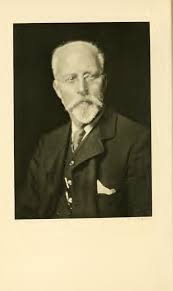
 Arthur John Butler (June 21, 1844 – February 26, 1910) was a prominent English scholar, editor, and mountaineer, best known for his academic contributions to the study of
Dante and his career in education and historical research.
Arthur John Butler (June 21, 1844 – February 26, 1910) was a prominent English scholar, editor, and mountaineer, best known for his academic contributions to the study of
Dante and his career in education and historical research.Queer Places:
Eton College, Windsor SL4 6DW, United Kingdom
University of Cambridge, 4 Mill Ln, Cambridge CB2 1RZ
Chain Hill Cemetery, Orchard Way, Wantage, Vale of White Horse District, Oxfordshire OX12 8ED England
Arthur John Butler (June 21, 1844 – February 26, 1910) was a prominent English scholar, editor, and mountaineer, best known for his academic contributions to the study of
Dante and his career in education and historical research.
Born in Putney, he was the eldest child of the Rev. William John Butler (later Dean of Lincoln) and Emma Barnett. He attended St. Andrew’s College, Bradfield, and later Eton College, where he was a notable student. He subsequently earned a scholarship to Trinity College, Cambridge, graduating in 1867 as eighth in the Classical Tripos and a junior optime in mathematics. He was elected a Fellow of Trinity College in 1867 and was part of the Cambridge Apostles.
Butler’s professional life was diverse. He served as an examiner under the Board of Education in Whitehall from 1870 until 1887. Later, he held roles in publishing with Rivington & Co. and Cassell & Co.. From 1898 until his death, he served as the Professor of Italian Language and Literature at University College London. Concurrently, he worked at the Public Record Office, editing "Calendars of Foreign State Papers".
He is highly regarded for his disciplined, scholarly approach to Dante’s Divine Comedy, producing prose translations of Purgatory (1880), Paradise (1885), and Hell (1892). He also translated and edited various historical and literary works, including those by Cavour, Sainte-Beuve, and Bismarck.
In 1875, he married Mary Caroline Humphry, with whom he had one son and six daughters. An avid mountaineer, he was a member of the Alpine Club and possessed an expert knowledge of the Oetzthal Alps. He died in Weybridge in 1910 and was buried at Wantage, his childhood home. His father, the Rev. William John Butler, became the Vicar of Wantage in 1846 when Arthur was only two years old. His father served there for over thirty years, becoming a deeply influential figure in the town as a leader of the Tractarian movement and the founder of the Community of St Mary the Virgin. Consequently, Arthur spent his formative years in the town, establishing a lifelong connection to the area before he later moved away for his own academic and professional career.
References:
Support this project
This website is a passion project researched, developed, and funded entirely by me. If you find the content valuable and would like to help support the ongoing research and hosting costs, any contribution is deeply appreciated.
Thank you for keeping this independent resource alive!
My books on Amazon: Elisa Rolle's books