Queer Places:
Chapman Branch, 577 S 900 W, Salt Lake City, UT 84104, United States
Mount Olivet Cemetery, 1342 E 500 S, Salt Lake City, UT 84102, United States
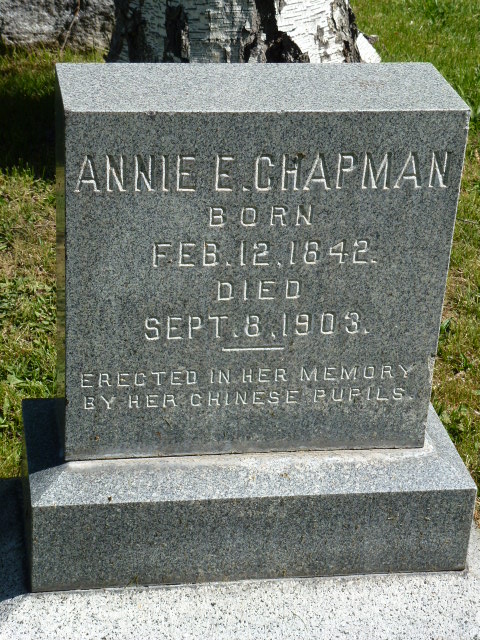 Annie E. Chapman (February 12, 1842 – September 8, 1903) was a foundational figure in Utah’s public library system. She served as the first librarian of the Salt Lake City Public Library and has
remained a significant, albeit quiet, historical presence in the city for over a century.
Annie E. Chapman (February 12, 1842 – September 8, 1903) was a foundational figure in Utah’s public library system. She served as the first librarian of the Salt Lake City Public Library and has
remained a significant, albeit quiet, historical presence in the city for over a century.
Before the creation of the municipal library system, Chapman worked for the Pioneer Library Association. When the Free Public Library of Salt Lake City was established
in 1898, she was appointed as its first head librarian to manage the transition from a private collection to a public institution.
On February 14, 1898, the library opened on the top floor of the Salt Lake City and County Building with Chapman at the helm. She was instrumental in organizing the
original collection of over 11,000 volumes.
Chapman served as the Salt Lake City librarian until her death in September 1903. Following her passing, the library board selected Joanna H. Sprague to succeed her.
In 1912, the city opened a west-side branch library that was named in her honor. When a permanent, dedicated Carnegie library building was constructed for that branch in
1918 (located in the Poplar Grove neighborhood), it retained the name Chapman Branch Library. It remains the only Carnegie library building in Salt Lake City still in use as
a library today and is listed on the National Register of Historic Places.
The detail regarding her gravesite at Mount Olivet Cemetery in Salt Lake City—specifically the inscription, "Erected in her memory by her Chinese pupils"—is a documented
historical fact.
This inscription highlights a little-known aspect of her life: her work as an educator outside of her role as a librarian. In the late 19th century, many Chinese
immigrants lived in Salt Lake City's "Plum Alley" area. Despite the period's widespread anti-Chinese sentiment and the implementation of the Chinese Exclusion Act, Chapman
offered English language instruction and support to members of the Chinese community. The monument at her grave was a gesture of profound gratitude from her students for her
advocacy and mentorship.
Her name occasionally surfaces in archival research alongside that of Edith Mary Chapman, a woman whose life was
documented in early 20th-century studies regarding lesbian subcultures in Utah. Annie was Editt's paternal aunt.
Annie E. Chapman’s legacy today is primarily defined by her role in making books accessible to the public and her pioneering efforts in providing education to
marginalized communities in Utah.
References:
- https://en.wikipedia.org/wiki/Chapman_Branch_Library
- https://www.slc.gov/district2/tour-district-2/chapman-library/
- https://joblist.ala.org/profile/salt-lake-city-public-library/975655/
- https://services.slcpl.org/125th-anniversary
Support this project
This website is a passion project researched, developed, and funded entirely by me. If you find the content valuable and would like to help support the ongoing research and hosting costs, any contribution is deeply appreciated.
Thank you for keeping this independent resource alive!
My books on Amazon: Elisa Rolle's books
BACK TO HOME PAGE