Partner Caroline Farner
Queer Places:
Villa Ehrenberg, now Lyceum Club Zürich, Rämistrasse 26, 8001 Zürich, Switzerland
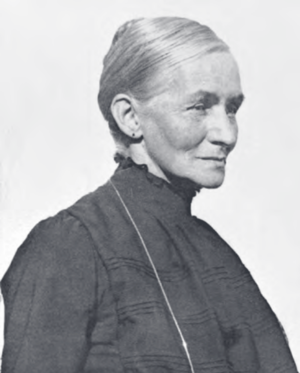 Anna Rosina Pfrunder (November 19, 1851 - May 22, 1925) was a Swiss woman best known for her lifelong partnership with Dr.
Caroline Farner, the second woman to graduate as a physician in Switzerland. Their relationship was a significant, if often
scrutinized, example of a female partnership in late 19th-century Switzerland.
Anna Rosina Pfrunder (November 19, 1851 - May 22, 1925) was a Swiss woman best known for her lifelong partnership with Dr.
Caroline Farner, the second woman to graduate as a physician in Switzerland. Their relationship was a significant, if often
scrutinized, example of a female partnership in late 19th-century Switzerland.
Anna Pfrunder was born in Männedorf in 1851, the daughter of architect Johann Pfrunder and Anna Maria Schelling. She met Caroline Farner in 1878 at one of Farner's public
lectures.
Pfrunder and Farner lived together for 35 years. Initially, they resided in the house of Pfrunder’s parents, but they eventually moved to their own home, the Villa
Ehrenberg (Rämistrasse 26) in Zurich, to escape domestic tensions and lead an independent life.
In 1892, the couple faced a high-profile legal battle. They were accused of embezzling ward funds (money belonging to Pfrunder’s nieces and nephews under their
guardianship). The trial was widely viewed by historians as a politically motivated attempt by opponents to discredit Farner, who was a prominent figure in the Swiss
women’s movement. Despite being imprisoned for several weeks, both women were eventually acquitted. The case drew significant international attention and solidarity from
women's rights advocates, including Meta von Salis, who wrote a defense for them.
Following Farner's death in 1913 and Pfrunder's own death in 1925, their estate was used to support women's education. The Villa Ehrenberg was sold to the Zurich section
of the Lyceum Club (a club for women). They also established the Anna-Caroline Foundation, which continues to provide scholarships for female students to this day.
Anna Pfrunder and Caroline Farner are frequently cited in Swiss LGBTQ history as a quintessential example of a "life partnership" (Lebensgemeinschaft) between two women
in the late 19th century.
While the term "lesbian" was not used in the modern sense by the women themselves to define their relationship, historians and researchers—such as those contributing to
Lesbengeschichte.org—recognize their bond as a committed, long-term romantic and domestic partnership. Their ability to maintain a dignified and "cosy" home life, as
described by their contemporary Meta von Salis, defied the social norms of the time. The scrutiny they faced from authorities, specifically the attempt to use their private
domestic arrangement as a basis to question their suitability for guardianship, highlights the prejudice they encountered because they existed outside the traditional
heterosexual family structure.
References:
- https://fr.wikipedia.org/wiki/Caroline_Farner
- https://grokipedia.com/page/caroline_farner
- https://kids.kiddle.co/Caroline_Farner
- https://en.wikipedia.org/wiki/Caroline_Farner
- https://dlf.uzh.ch/sites/medizingeschichte/caroline-farner-und-villa-ehrenberg/
Support this project
This website is a passion project researched, developed, and funded entirely by me. If you find the content valuable and would like to help support the ongoing research and hosting costs, any contribution is deeply appreciated.
Thank you for keeping this independent resource alive!
My books on Amazon: Elisa Rolle's books
BACK TO HOME PAGE