Queer Places:
Ban-y-Bryn, Bar Harbor, Maine, Stati Uniti
1626 Rhode Island Ave NW, Washington, DC 20036, Stati Uniti
Historic Woodland Cemetery and Arboretum, 118 Woodland Ave, Dayton, OH 45409, United States
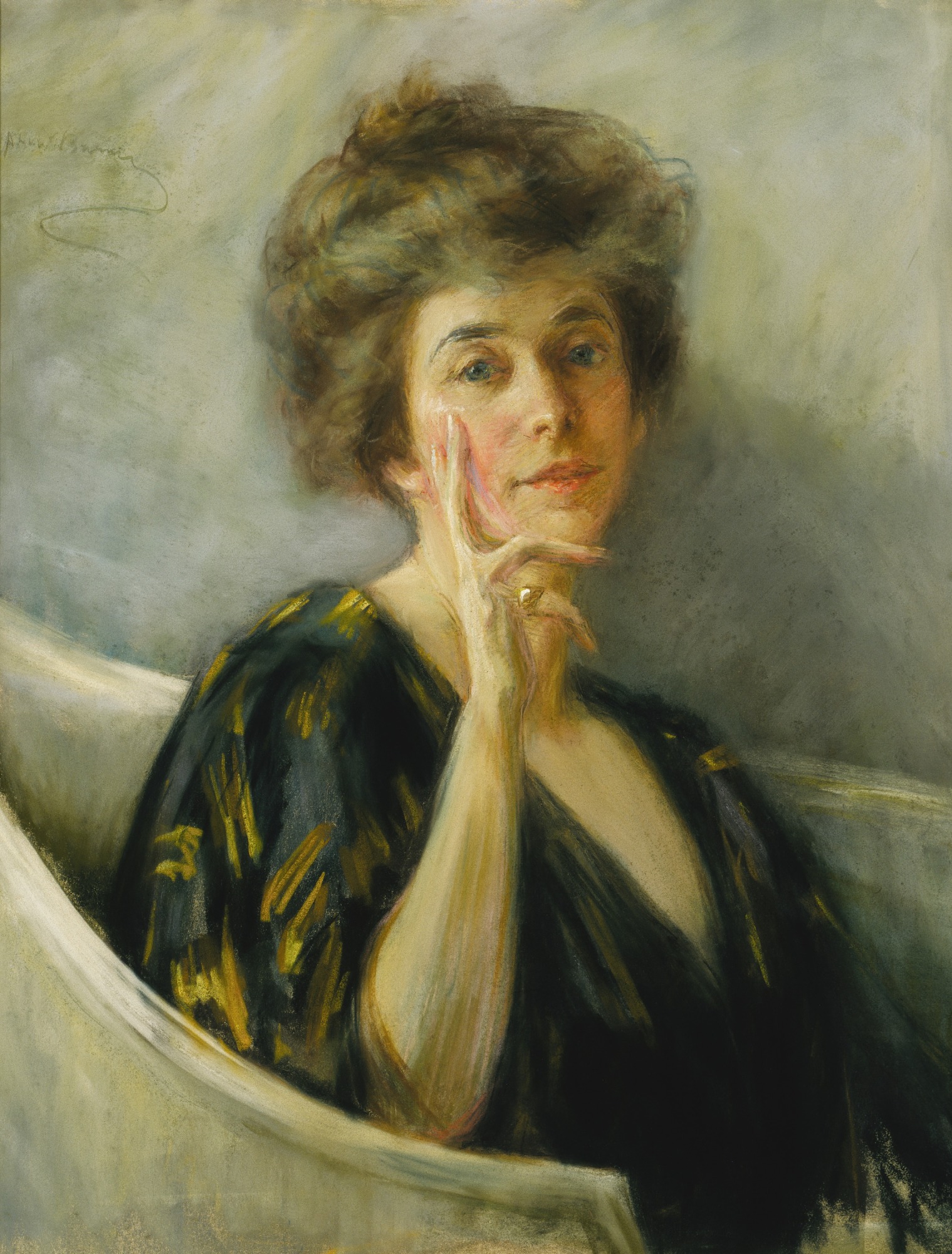 Alice Pike Barney (January 14, 1857 - July 16, 1931) was born on January 14, 1857, in Cincinnati, Ohio, into a wealthy and culturally rich family. Her father, Samuel
Napthali Pike, was a successful distiller and a prominent patron of the arts who built opera houses in both Cincinnati and New York City, while her mother, Ellen Pike, came
from a French descent background. Growing up as the youngest of four children, Alice showed early artistic talent as a singer, pianist, and creative spirit, deeply sharing
her father's passion for the arts.
Alice Pike Barney (January 14, 1857 - July 16, 1931) was born on January 14, 1857, in Cincinnati, Ohio, into a wealthy and culturally rich family. Her father, Samuel
Napthali Pike, was a successful distiller and a prominent patron of the arts who built opera houses in both Cincinnati and New York City, while her mother, Ellen Pike, came
from a French descent background. Growing up as the youngest of four children, Alice showed early artistic talent as a singer, pianist, and creative spirit, deeply sharing
her father's passion for the arts.
In her youth, at the age of 17, she became engaged to the famous explorer Henry Morton Stanley. However, her mother deemed the age gap and match unsuitable, pressing them
to wait. While Stanley was away on a multi-year expedition in Africa, Alice married Albert Clifford Barney in 1876. Albert was the wealthy son of Eliam Eliakim Barney, a
prominent railway car manufacturer from Dayton, Ohio. Together, Alice and Albert had two daughters,
Natalie Clifford Barney and Laura Clifford Barney.
Despite her marriage, Alice maintained an intense dedication to her creative ambitions. In 1877, she began studying painting in Paris under the renowned American artist
James A. McNeill Whistler. Her artistic aspirations faced heavy resistance from her husband, who disapproved of her
pursuits. A major turning point in her life occurred in 1882 during an encounter with Oscar Wilde at New York's Long Beach Hotel,
which provided her with the validation and inspiration needed to pursue her artistic career seriously despite her husband's objections.
The family eventually established a prominent presence in Washington, D.C., and spent summers at a lavish estate named Ban-y-Bryn in Bar Harbor, Maine. Unhappy with the
rigid societal expectations of a traditional Victorian wife, Alice continually rebelled against domestic constraints. She returned to Paris multiple times to further study
fine art, training under masters like Charles Emile Auguste Carolus-Duran. Back in Washington, D.C., she worked tirelessly to transform the capital into a vibrant center for
the arts, joining organizations like the Washington Water Color Club and exhibiting her work.
Following the death of her husband Albert in 1902, Alice gained financial independence and personal freedom. That same year, she established her famous Studio House in
Washington, D.C., which operated as a cultural melting pot where high-society figures, politicians, and avant-garde artists could meet, perform, and display their work.
Never limiting herself solely to painting, she expanded into playwriting, composition, and theatrical production, notably staging a wordless Greek idyll titled The
Enchantress of Streams in 1912. Later in life, at the age of 53, she surprised high society by marrying 23-year-old Christian Hemmick in 1911, a marriage that drew
international press attention before ending in divorce by 1920. Alice Pike Barney spent her final years active in the arts community and died on October 12, 1931, in Los
Angeles, California.
The LGBTQ+ connections and historical links in Alice Pike Barney's life are most profoundly tied to her family lineage and her progressive social circles. Her eldest
daughter, Natalie Clifford Barney, became one of the most famous literary figures and out lesbians of the 20th century. Known in Paris as "l'impératrice des lesbiennes" and
the modern Amazon, Natalie lived openly as a lesbian and hosted a legendary literary salon that served as a central safe haven for LGBTQ+ artists, writers, and expatriates
during the 1920s and 1930s.
While Alice herself was heterosexual—having married twice to men—her progressive approach to life, her rejection of conventional Victorian gender roles, and her creation
of open-minded artistic salons in Washington and abroad provided an environment that directly intersected with early queer history through her daughter. Biographers and
historical analyses frequently explore the complex dynamic between Alice and Natalie, noting how Alice's unconventional parenting and independent lifestyle inadvertently
mirrored the boundaries broken by her daughter, even as Natalie navigated her own path through the underground and emerging lesbian culture of Paris.
References:
Other references:
- Alice Pike Barney: Her Life and Art by Jean L. Kling (Washington, DC: Smithsonian Institution Press, 1994) – The definitive, full-length biographical text detailing her artistic career, her social initiatives in Washington, D.C., and her personal life.
- Wild Heart: A Life: Natalie Clifford Barney and the Decadence of Literary Paris by Suzanne Rodriguez (Nework: HarperCollins, 2002) – An extensive biography focusing on Alice's eldest daughter, Natalie Clifford Barney, which deeply explores the mother-daughter dynamic, family history, and the broader context of early queer literary circles.
- At Home in the Studio: The Professionalization of Women Artists in America by Laura R. Prieto (Harvard University Press, 2001) – Examines the professional challenges, training, and institutional environments navigated by American women artists like Alice Pike Barney.
- American Beauties: Women in Art and Literature edited by Charles Sullivan (New York: Henry N. Abrams, Inc., in association with the National Museum of American Art, 1993) – Features biographical commentary and works associated with Alice Pike Barney.
- Alice Pike Barney Papers, c. 1889–1995 (Record Unit 7473) – Maintained by the Smithsonian Institution Archives, this collection contains correspondence, biographical files, photographs, and personal records documenting her life and artistic endeavors.
- Friends of Alice Pike Barney Studio House, Inc. Collection – Housed at the National Museum of Women in the Arts, containing administrative history, printed materials, photographs, clippings, and records related to her famous Washington, D.C. salon space.
- Smithsonian American Art Museum (SAAM) – Holds a major permanent collection of Alice Pike Barney's paintings, pastels, and self-portraits (many gifted by her daughters Laura Clifford Barney and Natalie Clifford Barney), along with institutional artist files and catalogs.
Support this project
This website is a passion project researched, developed, and funded entirely by me. If you find the content valuable and would like to help support the ongoing research and hosting costs, any contribution is deeply appreciated.
Thank you for keeping this independent resource alive!
My books on Amazon: Elisa Rolle's books
BACK TO HOME PAGE
