Queer Places:
University of Cambridge, 4 Mill Ln, Cambridge CB2 1RZ
1 Seymour Pl, London W1H 7NN, UK
Halton House, Rosemead, Aylesbury HP22 5NN, United Kingdom
Willesden United Synagogue Cemetery, Beaconsfield Rd, London NW10 2JE, United Kingdom
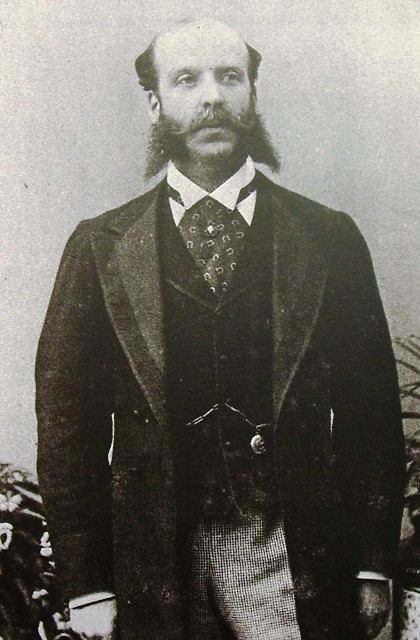 Alfred Charles de Rothschild (July 20, 1842 - January 31, 1918) was a prominent British banker, art collector, and diplomat. As the second son of Lionel de Rothschild and
Charlotte von Rothschild, he became a partner at N.M. Rothschild & Sons at the age of 21 and gained historical significance in 1868 as the first Jewish director of the Bank
of England.
Alfred Charles de Rothschild (July 20, 1842 - January 31, 1918) was a prominent British banker, art collector, and diplomat. As the second son of Lionel de Rothschild and
Charlotte von Rothschild, he became a partner at N.M. Rothschild & Sons at the age of 21 and gained historical significance in 1868 as the first Jewish director of the Bank
of England.
He attended King’s College School and Trinity College, Cambridge, where he befriended the future King Edward VII—a friendship that lasted his entire life.
He was a central figure at the family firm at New Court. Beyond banking, he served as the Consul-General for Austria in London and acted as an unofficial diplomat,
particularly in his efforts to foster better Anglo-German relations before World War I.
A noted aesthete, he was a major benefactor to the arts, serving as a trustee of the National Gallery and a founding trustee of the Wallace Collection. He lived in his
London residence, 1 Seamore Place, and built the extravagant Halton House in Buckinghamshire, which he used as a lavish venue for high-society entertaining.
Following the death of his brother, Nathaniel ("Natty") in 1915, Alfred became the head of the family firm during the difficult years of World War I. He died on
January 31, 1918, at the age of 75.
The link between Alfred de Rothschild’s personal life and his legacy remains a subject of historical interest.
Alfred maintained a long-term, public, and financially supportive relationship with a French woman named Marie Boyer (often referred to as Marie Boyer Wombwell).
It is widely accepted by historians that Almina Herbert, who married the 5th Earl of Carnarvon, was Alfred's biological daughter. He served as her godfather, provided her with a
massive £500,000 dowry, and left her a significant inheritance upon his death. This financial support was instrumental in the funding of the Earl of Carnarvon’s famous
excavation of Tutankhamun’s tomb.
Despite his long-standing relationship with Marie Boyer and his role as a father figure (and likely biological father) to Almina, there is a persistent historical
consensus that Alfred was primarily homosexual. Many scholars and biographers suggest that he never married due to his sexuality and that his association with Marie
Boyer—and the acknowledgement of Almina—served as a convenient social "cover" or a way to deflect attention from his true private life in an era where homosexuality was
strictly criminalized and socially ruinous.
While the evidence regarding his sexuality remains circumstantial—common for the period given the extreme discretion required of men in his position—it is now widely
considered an established aspect of his biography that contextualizes his decision to remain a bachelor and his unique approach to family life.
References:
- https://www.guyburch.co.uk/?p=4755
- https://kids.kiddle.co/Alfred_de_Rothschild
- https://grokipedia.com/page/Alfred_de_Rothschild
- https://en.wikipedia.org/wiki/Alfred_de_Rothschild
- https://family.rothschildarchive.org/people/62-alfred-charles-de-rothschild-1842-1918
- https://www.nationalgallery.org.uk/people/alfred-de-rothschild
- http://armorial.bibsoc.org.uk/stamp-owners/ROT002.html
- https://www.recordclick.com/family-history-researcher-visits-downton-abbeys-castle-virtually-gets-real-ancestors-story/
Support this project
This website is a passion project researched, developed, and funded entirely by me. If you find the content valuable and would like to help support the ongoing research and hosting costs, any contribution is deeply appreciated.
Thank you for keeping this independent resource alive!
My books on Amazon: Elisa Rolle's books
BACK TO HOME PAGE