Queer Places:
Garnisons Kirkegård, Dag Hammarskjölds Allé 10, 2100 København, Denmark
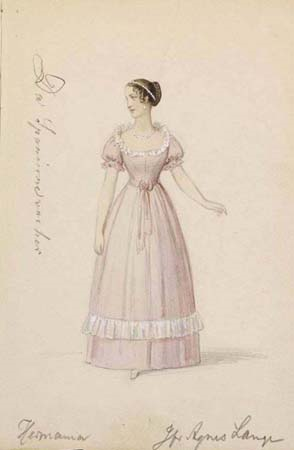 Agnes Flemmine Nyrop (November 21, 1841 - June 19, 1903) was born on November 21, 1841, in Aarhus, Denmark, and passed away on June 19, 1903, in
Skodsborg. She was a prominent Danish actress at the Royal Theatre, born to theater director Hans Wilhelm Lange and actress Juliane Marie Michaelsen.
Immersed in the theatrical world from her youth, Nyrop built a successful stage career, performing in various productions and establishing herself as a
respected figure in Danish theater during the latter half of the 19th century. In her personal life, she married Jens Larsen Nyrop (1831–1904), a former
opera singer at the Royal Theatre.
Agnes Flemmine Nyrop (November 21, 1841 - June 19, 1903) was born on November 21, 1841, in Aarhus, Denmark, and passed away on June 19, 1903, in
Skodsborg. She was a prominent Danish actress at the Royal Theatre, born to theater director Hans Wilhelm Lange and actress Juliane Marie Michaelsen.
Immersed in the theatrical world from her youth, Nyrop built a successful stage career, performing in various productions and establishing herself as a
respected figure in Danish theater during the latter half of the 19th century. In her personal life, she married Jens Larsen Nyrop (1831–1904), a former
opera singer at the Royal Theatre.
By the mid-1880s, the couple decided to dissolve their marriage, providing a detailed window into 19th-century Danish legal and administrative
processes for divorce. Having prepared meticulously—likely with the assistance of a lawyer—Agnes and Jens coauthored a formal application dated
January 14, 1885, stating that "little by little we have reached the persuasion that matrimonial cohabitation between us is an impossibility because of
the incompatibility of our tempers and therefore apply for separation with regards to table and bed." Following the required legal steps for
administrative separation, they completed mandatory clerical mediation with vicar Schepelern, who noted the futility of reconciliation in a brief
statement added a week later. They also submitted a comprehensive plan regarding their shared property, debts, and the custody of their three children:
their sixteen-year-old son, Michael, was to stay with Agnes, while their two daughters, fifteen-year-old Ida and eleven-year-old Margrethe, were to live
with Jens. Following a brief and undramatic appearance at the office of public administration, their separation was granted immediately without any
spousal support obligations assigned to either party.
Agnes Nyrop holds a notable place in literary history through her connection to author Vilhelmine Zahle.
As a young person, Zahle harbored a deep, stormy infatuation and romantic devotion to the older Nyrop, who served as a formative inspiration for Zahle's
life and creative work. Zahle later revealed that the main character, Martha Grüner, in her pioneering 1890 queer-themed novella collection Vildsomme
Veje ("Also a Love Story"—widely recognized as the first explicit depiction of same-sex female desire in Danish literature) was partly autobiographical
and directly mirrored her passionate feelings for Nyrop. Following Nyrop's death in June 1903, Zahle wrote an obituary-style tribute detailing her
intense youthful infatuation, and years later, while walking with her own daughter, pointed out Nyrop in passing with the remark, "Look, Gertrud, there
goes your mother's first love."
Agnes Nyrop was originally buried at Garnisons Kirkegård (Garrison Cemetery) in Copenhagen, though that grave site has since been
decommissioned/dissolved (nedlagt).
References:
- Dansk Kvindebiografisk Leksikon: Biographical profile and records covering Agnes Flemmine Nyrop (1841–1903).
- Det Kongelige Teater Archives & Historical Records: Employment and theatrical records detailing her career from her engagement at the Royal Theatre starting in 1864, where she worked alongside figures like Betty Hennings.
- De nye kvinder - Kærlighed og queers 1870-1920 (2025): Historical study by Rikke Andreassen and Merete Pryds Helle, featuring documentation on her marriage, separation records from 1885 (including documentation involving vicar Schepelern and administrative legal proceedings), and her connections to queer literary history.
- Vildsomme Veje (1890) by Vilhelmine Zahle: Contemporary literary text and subsequent analyses referencing Zahle's youthful infatuation with Nyrop, which inspired the character Martha Grüner in "Also a Love Story."
Support this project
This website is a passion project researched, developed, and funded entirely by me. If you find the content valuable and would like to help support the ongoing research and hosting costs, any contribution is deeply appreciated.
Thank you for keeping this independent resource alive!
My books on Amazon: Elisa Rolle's books
BACK TO HOME PAGE