Queer Places:
28 Albert Gate, London SW1X 7JU, UK
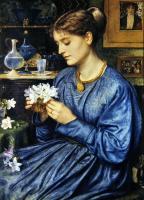 Agnes MacDonald (September 17, 1843 – June 12, 1906) was born around September 17, 1843, in Leeds, Yorkshire, England, and baptized into a remarkable and
culturally influential Victorian family. She was one of eleven children born to the Reverend George Browne Macdonald (1805–1868), a Wesleyan Methodist
minister, and Hannah Jones (1809–1875).
Agnes MacDonald (September 17, 1843 – June 12, 1906) was born around September 17, 1843, in Leeds, Yorkshire, England, and baptized into a remarkable and
culturally influential Victorian family. She was one of eleven children born to the Reverend George Browne Macdonald (1805–1868), a Wesleyan Methodist
minister, and Hannah Jones (1809–1875).
The full roster of the Macdonald children included: Mary (1834–1836), Henry "Harry" James (1836–1891), Alice Caroline (1837–1910), Caroline Elizabeth
(1838–1854), Georgiana (1840–1920), Frederic William (1842–1928), Agnes (1843–1906), Louisa (1845–1925), Walter (1847–1847), Edith (1848–1937), Herbert
(1850–1851)
Through the brilliant marriages of the Macdonald sisters, the family became deeply entwined with nineteenth-century British arts, literature, and
politics. Her sister Alice married John Lockwood Kipling and became the mother of author Rudyard Kipling;
Georgiana married the Pre-Raphaelite painter Edward Burne-Jones; and Louisa married industrialist Alfred
Baldwin, becoming the mother of British Prime Minister Stanley Baldwin and grandmother of
Oliver Baldwin.
Widely regarded as a talented pianist and traditionally thought to be the most striking-looking of the sisters, Agnes and her sister Georgiana attracted
considerable attention from prospective suitors. Many of these suitors were friends of her brother Henry and members of the "Birmingham Set"—a loose,
progressive circle of visual artists and writers that included figures like William Morris and Edward
Burne-Jones.
On August 9, 1866, Agnes married the classical and academic painter Edward John Poynter at Wolverhampton, Staffordshire, in a double wedding alongside
her quieter sister Louisa, who married Alfred Baldwin. Her husband later became the President of the Royal Academy and was created a Baronet in July 1902,
making Agnes Lady Poynter (of Albert Gate, Westminster).
The marriage balanced contrasting temperaments: Edward Poynter struggled with manic-depressive tendencies, working compulsively on his paintings until
collapsing upon completion, and remaining largely unemotional. It was Agnes who supplied warmth, affection, and emotional grounding in their household.
Together, they had two sons: Ambrose Macdonald Poynter (born September 26, 1867; later 2nd Baronet) and Hugh Edward Poynter (born 1882; later 3rd Baronet).
Agnes’s likeness and presence became immortalized in Victorian art. She, along with Jane Morris and her sisters Louisa and Georgiana, are widely
believed to be the inspirations for the figures in Edward Burne-Jones's celebrated 1864 painting Green Summer, where they are depicted listening to
Georgiana read aloud. Furthermore, her husband Edward Poynter produced intimate portraits of her and her sisters following their marriages.
Later in life, Agnes expanded her cultural footprint internationally into the Anglo-Florentine community, becoming connected to the vibrant cosmopolitan
salon at Villa Il Palmerino run by the writer Vernon Lee (Violet Paget) on the hills near Florence.
Agnes MacDonald’s primary nexus to queer history and nineteenth-century alternative social structures is defined by her close association with Vernon
Lee. Vernon Lee lived openly as a queer intellectual, adopting a male pseudonym, dressing in masculine-tailored attire, and maintaining significant,
long-term romantic and creative partnerships with women. Through her presence at Villa Il Palmerino and integration into Lee’s cosmopolitan salon, Agnes
moved among avant-garde women and non-conformist thinkers who actively challenged Victorian gender norms and domestic expectations. In modern queer
scholarship, the networks surrounding Vernon Lee, the MacDonald sisters, and their artistic collaborators illustrate how late-nineteenth-century women
built intellectual, emotional, and creative kinship structures that laid vital groundwork for modern feminist and queer identities.
After struggling with cancer and undergoing an operation in 1903, Agnes, Lady Poynter, passed away around 1906 at approximately age 62 in Middlesex,
England. Her husband survived her by over a decade, passing away on July 26, 1919, after which their son Ambrose succeeded to the baronetcy.
References:
- Cambridge University Library (ArchiveSearch): Holds extensive correspondence and papers concerning the MacDonald sisters, alongside family records for the Baldwin, Kipling, Burne-Jones, and Poynter families (including specific manuscript references for Agnes, Lady Poynter, née Macdonald (1843–1906), GBR/0012/MS Add.9774/4/1).
- The Weald Genealogy Project: Documents vital statistics, birth records (noting her birth on September 25, 1843, in Leeds, Yorkshire), marriage to Sir Edward Poynter on August 9, 1866, and death on June 12, 1906, in London.
- Wikipedia / Public Historical Overviews: Compilations detailing the MacDonald family lineage, referencing historical details of the Reverend George Browne and Hannah Macdonald household, and the Birmingham Set.
- The London Gazette: Official notices detailing public honors, including the 1902 baronetcy conferred upon Sir Edward John Poynter, establishing Agnes's title as Lady Poynter of Albert Gate, Westminster.
Support this project
This website is a passion project researched, developed, and funded entirely by me. If you find the content valuable and would like to help support the ongoing research and hosting costs, any contribution is deeply appreciated.
Thank you for keeping this independent resource alive!
My books on Amazon: Elisa Rolle's books
BACK TO HOME PAGE