Queer Places:
Oberlin College, 173 W Lorain St, Oberlin, OH 44074, United States
University of Leipzig, Augustuspl. 10, 04109 Leipzig, Germany
Wellesley College (Seven Sisters), 106 Central St, Wellesley, MA 02481
Campo Cestio, Rome, Città Metropolitana di Roma Capitale, Lazio, Italy
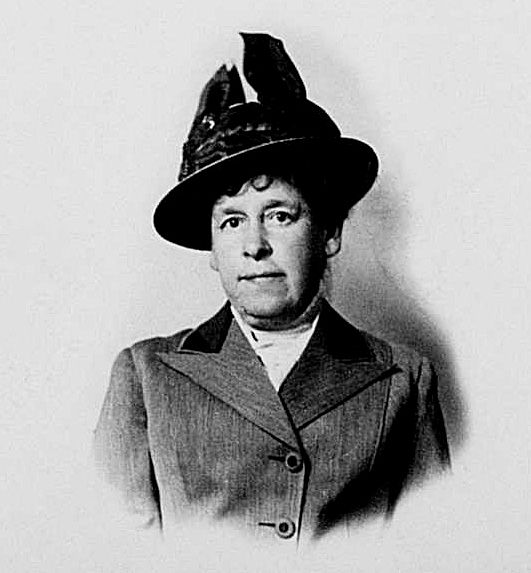 Adeline Belle Hawes (May 26, 1857 - November 12, 1932) was born on May 26, 1857, in Bridgton, Maine, to parents Josiah Taylor Hawes and Dorothy Cary Hawes. She pursued her
higher education at Oberlin College, where she earned her Bachelor of Arts degree in 1883 and later her Master of Arts degree in 1898. Her academic pursuits also took her
abroad, including studies in Leipzig during 1895 and 1896, as well as work at the American School of Classical Studies in Rome (ASCSR) in 1902 and 1903.
Adeline Belle Hawes (May 26, 1857 - November 12, 1932) was born on May 26, 1857, in Bridgton, Maine, to parents Josiah Taylor Hawes and Dorothy Cary Hawes. She pursued her
higher education at Oberlin College, where she earned her Bachelor of Arts degree in 1883 and later her Master of Arts degree in 1898. Her academic pursuits also took her
abroad, including studies in Leipzig during 1895 and 1896, as well as work at the American School of Classical Studies in Rome (ASCSR) in 1902 and 1903.
Hawes built a distinguished professional career in classical literature and academia, dedicating decades to Wellesley College. She joined the faculty as an instructor of
Latin in 1888 and steadily advanced, serving as a professor of Latin literature until her retirement in 1925. During the peak years of her career between 1900 and 1910, she
was an integral part of Wellesley’s esteemed faculty—a period marked by the arrival of a notable group of pioneering women educators and scholars who shaped the intellectual
reputation of the institution. Alongside her teaching duties, she was deeply active in the broader classical community, serving on the managing committee of the ASCSR from
1899 to 1912 and on the advisory council of the American Academy in Rome from 1919 to 1927.
Belonging to the first generation of American women classicists who were equally at home in Italy as on their home campuses, Hawes spent nearly every summer and
sabbatical traveling to Italy. There, she engaged with the latest archaeological and epigraphical discoveries, worked extensively in research libraries, and mastered the
Italian language. Her scholarly work focused primarily on two areas: literary and archaeological evidence for Roman daily life—with a particular fascination for children and
ordinary citizens known through inscriptions rather than famous historical figures—and reports on new museums and cultural events for American classicists. Her essays and
articles appeared in publications such as Classical Weekly, The Classical Journal, and The Wellesley Magazine, and her collected writings were posthumously published in 1934
under the title Citizens of Long Ago: Essays on Life and Letters in the Roman Empire.
Upon her retirement from Wellesley in 1925, Hawes moved permanently to Rome, where she spent her final years acting as an unofficial mentor, guide, and hostess to young
scholars at the Academy and visiting former students. She passed away in Rome on November 12, 1932.
Regarding historical context concerning links to LGBTQ history, women's colleges like Wellesley during the late 19th and early 20th centuries—the era when Hawes studied,
taught, and lived among a tight-knit community of unmarried female scholars and educators—frequently fostered environments where women built primary emotional, domestic, and
professional partnerships with one another. While standard biographical records emphasize her academic milestones, professional networks, and contributions to classical
scholarship, her life unfolded within the distinctive community of women academics of the period, many of whom formed lifelong Wellesley partnerships known historically as
"boston marriages" or close collegial networks that predated modern terminology.
References:
Other references:
- Database of Classical Scholars (Rutgers School of Arts and Sciences): Biographical profile on Adeline Belle Hawes detailing her education at Oberlin and Leipzig, her tenure at Wellesley College (1888–1925), committee memberships with the American School of Classical Studies in Rome (ASCSR) and the American Academy in Rome (AAR), and her residence in Rome.
- Posthumous Collection of Essays: Citizens of Long Ago: Essays on Life and Letters in the Roman Empire (New York & Oxford, 1934).
- “Charities and Philanthropies in the Roman Empire,” Classical Weekly 6 (1912–1913): 178–81.
- “Latin in the Twentieth Century,” Wellesley Alumnae Quarterly 2 (1918): 146–9.
- “Les Erinnyes at Orange,” The Classical Journal 19 (1923–1924): 172–3.
- “Similitudo non pulchritudo,” The Classical Journal 21 (1925–1926): 497–510.
- “The Kaleidoscope of Rome,” The Wellesley Magazine 10 (1926): 113–6.
- “A Journey through the Roman Empire,” The Classical Journal 23 (1928–1929): 594–600.
- “Light Reading from the Papyri,” The Classical Journal 25 (1929–1930): 535–44.
- “The New Antiquarium in Rome,” The Classical Journal 27 (1931–1932): 417–22.
- Academic & Institutional Archives: Records from Wellesley College faculty directories, the American School of Classical Studies in Rome, and Wikidata registries documenting her professional lifecycle and international scholarly engagement.
Support this project
This website is a passion project researched, developed, and funded entirely by me. If you find the content valuable and would like to help support the ongoing research and hosting costs, any contribution is deeply appreciated.
Thank you for keeping this independent resource alive!
My books on Amazon: Elisa Rolle's books
BACK TO HOME PAGE
