Partner Lucy Maynard Salmon
Queer Places:
Vassar College (Seven Sisters), 124 Raymond Ave, Poughkeepsie, NY 12604
Columbia University (Ivy League), 116th St and Broadway, New York, NY 10027
263 Mill Street, Poughkeepsie, NY 12601
Lake View Cemetery, 100-180 W Genesee St, Skaneateles, NY 13152, United States
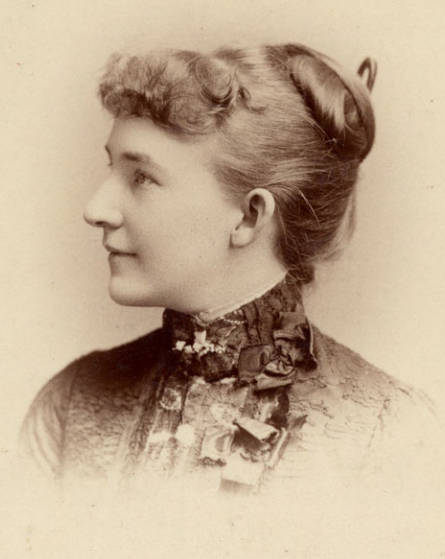 Adelaide Underhill (May 19, 1860 - April 23, 1936) was born on May 19, 1860, in Brooklyn, New York, the daughter of Robert Underhill and Charlotte Ann Haight Underhill. She
pursued her higher education at Vassar College, graduating as part of the class of 1888. During her undergraduate years, she met
Lucy Maynard Salmon, who had arrived at Vassar in 1887 as its first history professor. Underhill was profoundly inspired by
Salmon, setting the stage for a profound personal and professional partnership that would span decades. Following her graduation from Vassar, Underhill furthered her
academic training by studying library science at Columbia University, where she earned her degree in 1890 and subsequently worked as a cataloger in the Columbia College
Library until 1892. In 1892, Frances A. Wood, the Vassar librarian, brought Underhill back to her alma mater to establish a modern library system. Working largely on her
own, Underhill organized the college's 15,000-volume collection using the Dewey Decimal System. Collaborating closely with Lucy Salmon, Underhill was instrumental in
building the Vassar library into one of the most impressive and distinguished collections among American liberal arts colleges. Over the course of her distinguished career
at Vassar, she advanced to associate librarian by 1910, attended the International Congress of Librarians in Brussels that same year, and ultimately served as head librarian
until her retirement in 1928, after which she held the title of librarian emeritus. Beyond her institutional contributions, Underhill was actively engaged in civic and
professional life. She was a member of Phi Beta Kappa, served as a trustee of the Adriance Memorial Library in Poughkeepsie, acted as a director of the Mosher book fund,
directed the Alumnae Association's committee on biographical records as chairman, and built a remarkable collection of bookplates for the Vassar Library as a member of the
American Society of Bookplate Collectors and Designers. She was also a dedicated suffragist, participating in the historic suffrage parade in New York City in 1913 and
exercising her right to vote alongside Salmon in Poughkeepsie in 1916. Rooted in the Society of Friends, Underhill was a member of the New York Gramercy Park Meeting.
Adelaide Underhill (May 19, 1860 - April 23, 1936) was born on May 19, 1860, in Brooklyn, New York, the daughter of Robert Underhill and Charlotte Ann Haight Underhill. She
pursued her higher education at Vassar College, graduating as part of the class of 1888. During her undergraduate years, she met
Lucy Maynard Salmon, who had arrived at Vassar in 1887 as its first history professor. Underhill was profoundly inspired by
Salmon, setting the stage for a profound personal and professional partnership that would span decades. Following her graduation from Vassar, Underhill furthered her
academic training by studying library science at Columbia University, where she earned her degree in 1890 and subsequently worked as a cataloger in the Columbia College
Library until 1892. In 1892, Frances A. Wood, the Vassar librarian, brought Underhill back to her alma mater to establish a modern library system. Working largely on her
own, Underhill organized the college's 15,000-volume collection using the Dewey Decimal System. Collaborating closely with Lucy Salmon, Underhill was instrumental in
building the Vassar library into one of the most impressive and distinguished collections among American liberal arts colleges. Over the course of her distinguished career
at Vassar, she advanced to associate librarian by 1910, attended the International Congress of Librarians in Brussels that same year, and ultimately served as head librarian
until her retirement in 1928, after which she held the title of librarian emeritus. Beyond her institutional contributions, Underhill was actively engaged in civic and
professional life. She was a member of Phi Beta Kappa, served as a trustee of the Adriance Memorial Library in Poughkeepsie, acted as a director of the Mosher book fund,
directed the Alumnae Association's committee on biographical records as chairman, and built a remarkable collection of bookplates for the Vassar Library as a member of the
American Society of Bookplate Collectors and Designers. She was also a dedicated suffragist, participating in the historic suffrage parade in New York City in 1913 and
exercising her right to vote alongside Salmon in Poughkeepsie in 1916. Rooted in the Society of Friends, Underhill was a member of the New York Gramercy Park Meeting.
The personal life of Adelaide Underhill is historically significant within the context of late nineteenth- and early twentieth-century academic women who formed
committed, lifelong partnerships with one another, often referred to as Boston marriages or Wellesley marriages. After first connecting as professor and student at Vassar,
Underhill and Salmon established a deep, permanent romantic commitment and lived together off-campus in Poughkeepsie for more than thirty years. Their home served as an
intellectual and social hub where Salmon held history seminars and the two women jointly entertained students, faculty, and visiting scholars. Contemporary accounts and
correspondence from family members and alumnae consistently reflected the warmth, stability, and mutual devotion of their shared domestic life, noting that each provided
what the other's heart needed and that they found fulfillment, intellectual freedom, and emotional sanctuary together. Following Salmon's death in 1927, Underhill was
granted Salmon's life estate and dedicated herself to preserving her legacy by collecting and organizing materials for a biographical volume undertaken by Vassar professor
Louise Fargo Brown. Adelaide Underhill passed away following a short illness on April 23, 1936, at her home in Poughkeepsie, New York, at the age of 75, and was laid to rest
at Lake View Cemetery in Skaneateles, Onondaga County, New York, leaving behind a legacy as a trailblazing academic librarian and a central figure in the history of women's
higher education and same-sex domestic partnerships.
References:
Other references:
- Vassar College. Vassar Quarterly. Alumni historical reminiscences, architectural descriptions of the Salmon-Underhill home, and biographical records.
- New York Times. Obituary and historical death notices for Adelaide Underhill, published April 24, 1936.
- Brown, Louise Fargo. Archival collections, correspondence, and biographical source materials concerning Lucy Maynard Salmon and Adelaide Underhill housed at Vassar College Libraries.
- U.S. Federal Census Records & Vital Statistics. Birth, residence, parental lineage (Robert Underhill and Charlotte Ann Haight Underhill), and burial records at Lake View Cemetery in Skaneateles, New York.
Support this project
This website is a passion project researched, developed, and funded entirely by me. If you find the content valuable and would like to help support the ongoing research and hosting costs, any contribution is deeply appreciated.
Thank you for keeping this independent resource alive!
My books on Amazon: Elisa Rolle's books
BACK TO HOME PAGE

