Queer Places:
University of Oxford, Oxford, Oxfordshire OX1 3PA
Mrigadayavan Palace, 1281 Thanon Phet Kasem, Cha-am, Cha-am District, Phetchaburi 76120, Thailand
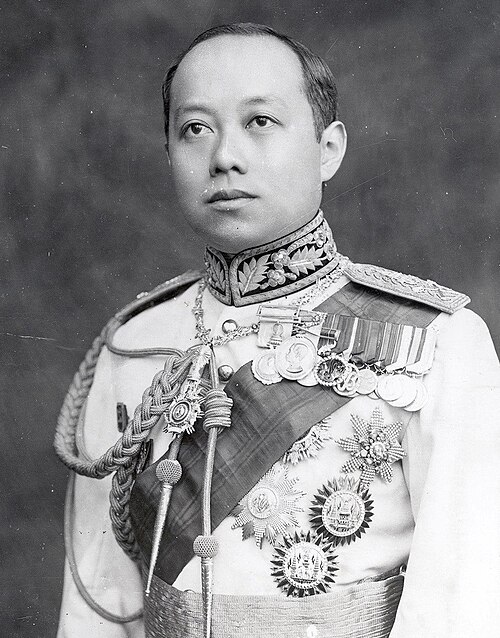 Prince Vajiravudh, later Rama VI of Siam (January 1, 1881 – November 26, 1925) was born on January 1, 1880, to King Chulalongkorn and Queen Saovabha Phongsri,
amd was designated the Crown Prince of Siam in 1895 following the death of his half-brother. Educated in Great Britain, he attended Sandhurst, served
brief military assignments, studied law and history at Oxford's Christ Church, and traveled extensively across Europe and the Americas before returning
to Siam. Upon succeeding his father in 1910 as King Rama VI of the Chakri dynasty, he focused heavily on modernization, state administration, and civil
institutions. His key achievements included founding the Royal Pages College (now Vajiravudh College) and Chulalongkorn University, establishing the Wild
Tiger Corps paramilitary organization and its youth branch (which evolved into the Thai Boy Scouts), constructing public hospitals, and overseeing
infrastructure developments such as Hua Lamphong railway station and Don Mueang Airport. During World War I, Vajiravudh made the strategic decision to
align Siam with the Allied Powers, deploying a volunteer expeditionary force to Europe to elevate Siam's international standing and facilitate the
renegotiation of unequal treaties. A prolific writer, dramatist, and translator, he actively promoted a distinct brand of Siamese nationalism through
literature, public theater, and state symbols, including the adoption of the modern tricolor flag. His reign ended when he passed away on November 26,
1925, shortly after the birth of his only child, Princess Bejaratana.
Prince Vajiravudh, later Rama VI of Siam (January 1, 1881 – November 26, 1925) was born on January 1, 1880, to King Chulalongkorn and Queen Saovabha Phongsri,
amd was designated the Crown Prince of Siam in 1895 following the death of his half-brother. Educated in Great Britain, he attended Sandhurst, served
brief military assignments, studied law and history at Oxford's Christ Church, and traveled extensively across Europe and the Americas before returning
to Siam. Upon succeeding his father in 1910 as King Rama VI of the Chakri dynasty, he focused heavily on modernization, state administration, and civil
institutions. His key achievements included founding the Royal Pages College (now Vajiravudh College) and Chulalongkorn University, establishing the Wild
Tiger Corps paramilitary organization and its youth branch (which evolved into the Thai Boy Scouts), constructing public hospitals, and overseeing
infrastructure developments such as Hua Lamphong railway station and Don Mueang Airport. During World War I, Vajiravudh made the strategic decision to
align Siam with the Allied Powers, deploying a volunteer expeditionary force to Europe to elevate Siam's international standing and facilitate the
renegotiation of unequal treaties. A prolific writer, dramatist, and translator, he actively promoted a distinct brand of Siamese nationalism through
literature, public theater, and state symbols, including the adoption of the modern tricolor flag. His reign ended when he passed away on November 26,
1925, shortly after the birth of his only child, Princess Bejaratana.
Historical scholars and biographers have frequently examined King Vajiravudh's personal life, private court circle, and sexuality. Although the king
entered into late-in-life court marriages and betrothals to secure an heir, contemporary historical analyses and biographical commentaries note that he
spent much of his adult life surrounded almost exclusively by close male companions, favorites, and pages whom he elevated to influential court titles
and administrative positions. Modern academic works, including analysis by political scientist Benedict Anderson, highlight his documented preference for
male company and personal disinterest in traditional royal marriages for the first decade of his reign. Historians studying the monarch's modern legacy
note that while formal royal histories traditionally downplayed these aspects, modern LGBTQ+ history resources and biographical studies explicitly view
Rama VI as an important historical figure whose inner court dynamics and personal life reflected a non-traditional expression of gender and sexuality
within the 20th-century Thai monarchy.
References:
- Gayday by Massimo Consoli, 2005
- Vella, Walter F. Chaiyo!: King Vajiravudh and the Development of Thai Nationalism. Honolulu: University of Hawaii Press, 1978.
- Greene, Stephen L. W. Absolute Dreams: Thai Government under Rama VI, 1910–1925. Bangkok: White Lotus Press, 1999.
- Chula Chakrabongse, Prince. Lords of Life: A History of the Kings of Thailand. London: Alvin Redman, 1960.
- Barmé, Scot. Luang Wichit Wathakan and the Creation of a Thai Identity. Singapore: Institute of Southeast Asian Studies, 1993.
- Anderson, Benedict. Imagined Communities: Reflections on the Origin and Spread of Nationalism. London: Verso, 1983.
- Jackson, Peter A. Dear Uncle Go: Male Homosexuality in Thailand. Bangkok: Banyan Tree Books, 1995 / First Queer Voices from Thailand, Hong Kong University Press, 2003.
- Loos, Tamara. Subject Siam: Family, Law, and Colonial Modernity in Thailand. Ithaca: Cornell University Press, 2006.
- Vajiravudh, King of Siam. Selected Writings and Plays (published under pseudonyms including Sri Ayudhya and Phra Khan Phet).
- Pin Malakul, M.L. King Vajiravudh, Thailand’s Prolific Writer. Bangkok: Fine Arts Department, 1981.
- Wyatt, David K. Thailand: A Short History. New Haven: Yale University Press, 2003.
- Encyclopædia Britannica. "Vajiravudh | King of Siam".
Support this project
This website is a passion project researched, developed, and funded entirely by me. If you find the content valuable and would like to help support the ongoing research and hosting costs, any contribution is deeply appreciated.
Thank you for keeping this independent resource alive!
My books on Amazon: Elisa Rolle's books
BACK TO HOME PAGE