Queer Places:
Middlecott, Ilsington, Newton Abbot TQ13 9RR, United Kingdom
University of Cambridge, 4 Mill Ln, Cambridge CB2 1RZ
The Italian Garden at Great Ambrook, Great Ambrook Ave, Ipplepen, Newton Abbot TQ12 5UL, United Kingdom
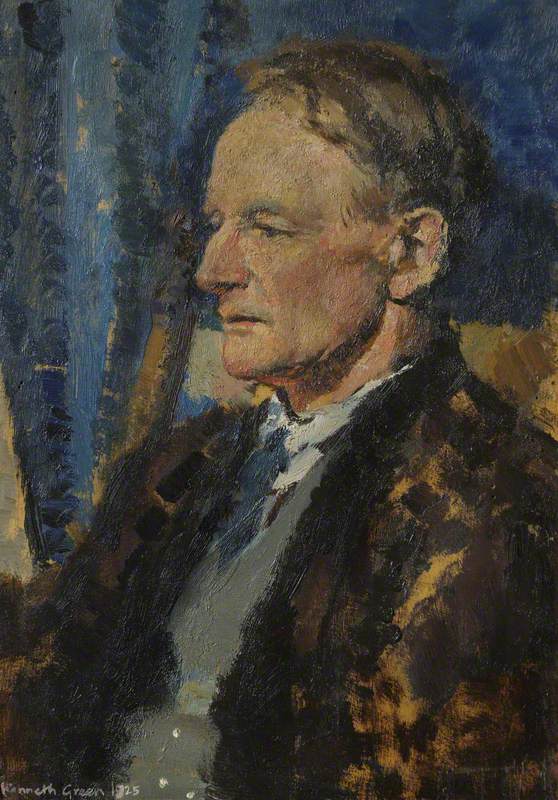 Thomas Henry Lyon (May 28, 1869 – January 25, 1953) was born on May 28, 1869, at Middlecott, near Newton Abbot, Devon, as the son of Alfred Lyon, Esq. He
received his early education at Trent College in Derbyshire before pursuing his higher education at the University of Cambridge. He was admitted as a
pensioner at Corpus Christi College on September 30, 1890, matriculated in the Michaelmas term of 1890, and subsequently graduated with a Bachelor of
Arts in 1893, later earning his Master of Arts in 1919. Professionally associated with Appleton Hall in Appleton, Cheshire, Lyon built a distinguished
career as an architect, making extensive contributions to the architectural landscape of Cambridge between the world wars while rejecting the Modernist
trends favored by many contemporaries.
His notable architectural projects included the masterly reconstruction and furnishing of the chapel at Sidney Sussex College, Cambridge, alongside
work on other college buildings, war memorials, and local residences. He also served as a Fellow of Corpus Christi College and was a valued member of the
staff at the Cambridge School of Architecture for many years, holding the position of Director of Design from 1920 to 1936. In addition to his practical
architectural work, Lyon engaged in theoretical discourse, authoring publications such as The Attribute Proper to Art: "Pure Art Value" in 1921 and Real
Architecture: The Rights and Wrongs of Taste in 1932. He exhibited at the Royal Academy between 1897 and 1923 and became a Fellow of the Royal Institute
of British Architects in 1926. Lyon spent his later years connected to his roots in Devon, passing away on January 25, 1953, at Middlecott, Devon.
Thomas Henry Lyon was a gay man living during an era of strict criminalized repression against homosexuality. Because of this hostile social climate,
he and his contemporaries often navigated a reality defined by secrecy and caution. One of the most prominent expressions of his life within a queer
historical context is his collaboration with Arthur Smith Graham, a fellow gay man who retreated from
London society to Devon. Graham commissioned Lyon to design a private sanctuary and Italian Garden at Great Ambrook in Ipplepen, Devon, between 1909 and
1912. This secluded estate, featuring a music room extension, a swimming pool, and intricate garden architecture crafted by Lyon, served as a hidden
refuge where Graham and his circle—which included other figures associated with queer histories, such as the author
Frederick Rolfe—could gather safely away from public scrutiny. Modern cultural and historical exhibitions,
such as those exploring the rediscovered grounds at Great Ambrook, highlight Lyon's work alongside Graham as a physical manifestation of early
20th-century queer spaces, reflecting how gay men forged private environments for artistic and personal expression during a period of intense legal and
social constraint.
References:
Other references:
- Alumni Cantabrigienses – University of Cambridge biographical records detailing his admission to Corpus Christi College, matriculation, and degrees.
- Directory of British Architects 1834–1914 (compiled by Antonia Brodie et al., RIBA / Continuum).
- Who's Who in Architecture 1926 (edited by Frederick Chatterton, Architectural Press).
- Historic England: Official List Entry for The Italian Garden at Great Ambrook, Ipplepen (Grade II Registered Park and Garden listing details, architectural history, and social context).
- Architects' History Research Network (AHRnet): Biographical database entry for Thomas Henry Lyon 1869–1953, compiling project lists, institutional roles, and primary bibliographic references.
- Art UK: Documentation of portraiture and artwork associated with Lyon.
- The Builder: Volume 184 (January 30, 1953, and February 20, 1953).
- RIBA Journal: Volume 60 (April 1953).
Support this project
This website is a passion project researched, developed, and funded entirely by me. If you find the content valuable and would like to help support the ongoing research and hosting costs, any contribution is deeply appreciated.
Thank you for keeping this independent resource alive!
My books on Amazon: Elisa Rolle's books
BACK TO HOME PAGE
