Queer Places:
1603 H St NW, Washington, DC 20062, USA
10 Charles St, Boston, MA 02114, USA
Harmony Grove Cemetery, 30 Grove St, Salem, MA 01970, United States
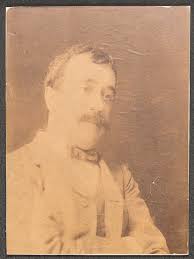 Theodore Frelinghuysen Dwight (June 11, 1846 – February 3, 1917) was a significant, albeit often behind-the-scenes, figure in late 19th-century American intellectual and
cultural circles. A librarian, archivist, and fixture of Boston’s social elite, his life was deeply intertwined with prominent figures like
Henry Adams and Isabella Stewart Gardner.
Theodore Frelinghuysen Dwight (June 11, 1846 – February 3, 1917) was a significant, albeit often behind-the-scenes, figure in late 19th-century American intellectual and
cultural circles. A librarian, archivist, and fixture of Boston’s social elite, his life was deeply intertwined with prominent figures like
Henry Adams and Isabella Stewart Gardner.
Born on June 11, 1846, Dwight became a recognized expert in historical archives. He is perhaps best known for his long-standing professional and personal association
with Henry Adams. Dwight served as the librarian for the extensive Adams family papers and was brought to Boston by Adams to assist with the research and writing of his
multi-volume History of the United States of America.
Following the tragic suicide of Henry Adams’s wife, Clover, in 1885, Dwight moved into the Adams residence at 1603 H Street in Washington, D.C., to manage the household
and provide support to the grieving historian.
In 1892, Dwight was appointed the chief librarian of the Boston Public Library. His tenure (1892–1894) was pivotal, as he oversaw the final stages of the construction
and the opening of the library’s iconic McKim Building in Copley Square. His appointment marked a moment of transition for the institution as it moved into its "palatial"
new headquarters.
Dwight was a prominent member of Boston’s exclusive male dining clubs, including:
The St. Botolph Club (est. 1879)
The Tavern Club (est. 1884)
The Club of Odd Volumes (est. 1887)
These clubs served as hubs for the city’s cultural elite—primarily Harvard graduates—and provided, according to historical accounts, a degree of "safe and convivial"
space for well-to-do gay men to express themselves within the confines of the period's social norms. Dwight’s circle included luminaries such as the painter
John La Farge, musician Charles Loeffler, and playwright
Thomas Russell Sullivan, with whom he shared a townhouse at 10 Charles Street.
Historical research, particularly by authors like Douglass Shand-Tucci and Russ Lopez, has documented Dwight’s private life in significant detail, noting his penchant
for collecting homoerotic photography, including works by the famed photographer Wilhelm von Plüschow. Dwight was an avid
photographer himself, often documenting young men in Boston. His correspondence, particularly with Isabella Stewart Gardner, reveals a complex, often melancholy romantic
life, characterized by intense attachments and a candid aesthetic sensibility regarding his peers and companions.
Theodore Dwight died on February 3, 1917. Today, his life is frequently studied by historians as a lens through which to examine the intersections of class,
intellectual production, and the covert social networks of LGBTQ individuals in 19th-century Boston.
References:
Other references:
- https://en.wikipedia.org/wiki/Theodore_Frelinghuysen_Dwight
Support this project
This website is a passion project researched, developed, and funded entirely by me. If you find the content valuable and would like to help support the ongoing research and hosting costs, any contribution is deeply appreciated.
Thank you for keeping this independent resource alive!
My books on Amazon: Elisa Rolle's books
BACK TO HOME PAGE