Queer Places:
Home of Peace Cemetery and Emanu-El Mausoleum, 1299 El Camino Real, Colma, CA 94014, United States
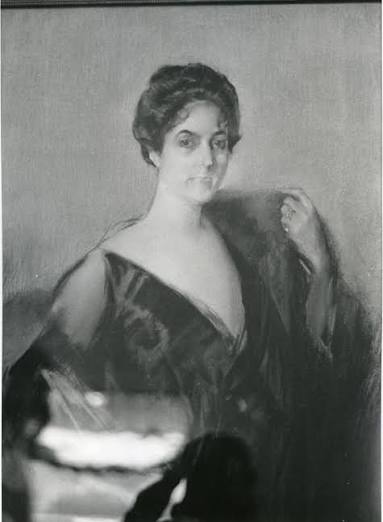 Rosalie Meyer Stern (April 21, 1869 - February 8, 1956) was born on April 21, 1869, in Los Angeles, California, as the eldest daughter of prominent
parents Marc Eugène Meyer (1842–1925) and Harriet Newmark Meyer (1851–1922). She grew up alongside a large and accomplished group of siblings, including
Elise Meyer De Souza Dantas (1872–1952), Florence Meyer Blumenthal (1875–1930), Eugene Isaac Meyer Jr. (1875–1959), Ruth Bertha Meyer Cook (1877–1967),
Aline Meyer Liebmann (1879–1966), Walter Eugene Meyer (1881–1957), and Edgar Joseph Meyer (1884–1912). In 1883, her family relocated to San Francisco,
where she established roots that defined her lifelong dedication to civic leadership, philanthropy, and cultural development. On October 3, 1892, she
married Sigmund Stern (1857–1928), a prominent businessman who later became the president of Levi Strauss & Co. Together, they had an only child, a
daughter named Elise Fanny Stern Haas (1893–1990), who later married Walter A. Haas, further entrenching the family’s legacy within Levi Strauss
leadership.
Rosalie Meyer Stern (April 21, 1869 - February 8, 1956) was born on April 21, 1869, in Los Angeles, California, as the eldest daughter of prominent
parents Marc Eugène Meyer (1842–1925) and Harriet Newmark Meyer (1851–1922). She grew up alongside a large and accomplished group of siblings, including
Elise Meyer De Souza Dantas (1872–1952), Florence Meyer Blumenthal (1875–1930), Eugene Isaac Meyer Jr. (1875–1959), Ruth Bertha Meyer Cook (1877–1967),
Aline Meyer Liebmann (1879–1966), Walter Eugene Meyer (1881–1957), and Edgar Joseph Meyer (1884–1912). In 1883, her family relocated to San Francisco,
where she established roots that defined her lifelong dedication to civic leadership, philanthropy, and cultural development. On October 3, 1892, she
married Sigmund Stern (1857–1928), a prominent businessman who later became the president of Levi Strauss & Co. Together, they had an only child, a
daughter named Elise Fanny Stern Haas (1893–1990), who later married Walter A. Haas, further entrenching the family’s legacy within Levi Strauss
leadership.
During the devastating 1906 San Francisco earthquake and fire, Stern demonstrated immense leadership by converting her family home into a Red Cross
relief factory. Her humanitarian efforts expanded significantly during World War I, when she became the first woman associate field director for military
relief in the American West, working closely with the Red Cross at the Camp Fremont Base Hospital and supporting French war relief. For her extensive
international and domestic humanitarian service, she was honored by the French government in 1938 as a Chevalier of the Legion of Honor.
Beyond emergency relief, Stern left a permanent mark on San Francisco’s civic landscape. She served on the San Francisco Playground Commission
starting in 1919 and was a driving force behind numerous cultural institutions, co-founding the San Francisco Opera Association and organizing the San
Francisco Junior Symphony. Her most enduring physical legacy came in 1931 when she purchased a 12-acre canyon tract that had previously operated as the
Trocadero Inn. She donated this property to the city of San Francisco as a memorial to her late husband, establishing Sigmund Stern Grove. She
subsequently helped create the Stern Grove Festival Association, ensuring that generations of San Franciscans could enjoy free public concerts, theater,
and dance performances in a natural outdoor setting. Her philanthropy also extended to higher education, funding the construction of Stern Hall, a
residential dormitory at the University of California, Berkeley, and actively supporting student scholarships. Following an impactful life, she passed
away on February 8, 1956, at the age of 86 in San Francisco, and was laid to rest at the Home of Peace Cemetery and Emanu-El Mausoleum in Colma, San
Mateo County, California.
Rosalie Meyer Stern's life intersected closely with prominent figures of her era, most notably
Katherine Delmar Burke. Katherine Delmar Burke originally served as a private tutor to Rosalie's
daughter, Elise, teaching her at home before Burke went on to establish the prestigious Miss Burke's School (now known as the Katherine Delmar Burke
School) in San Francisco in 1911.
The connection between Stern and Burke extended well beyond early education into close personal companionship within elite San Francisco circles.
Biographical research into queer history and prominent turn-of-the-century women figures notes that Burke was part of a network of independent, socially
prominent women educators and leaders—many of whom moved in lesbian and queer-adjacent historical spaces alongside figures like artist and educator
Ethel McAllister Grubb. The depth of Stern and Burke's relationship is marked by their travels
together; in 1926, while Burke and Rosalie Meyer Stern were touring the Mediterranean together on an extended voyage, Burke contracted a severe throat
infection and tragically passed away in Egypt. Stern accompanied her close friend's remains and final arrangements back home, cementing a poignant
historical link between Stern's family legacy and one of San Francisco's most significant early queer-associated female educators.
References:
- The Rosalie Meyer Stern Papers (1842–1977 / 1867–1996): Preserved at The Magnes Collection of Jewish Art and Life (and documented via the Online Archive of California - OAC). This extensive archival holding (Collection #BANC MSS 2010/604 / WJHC 1971.003 AR1) contains correspondence, diaries, biographical materials, family genealogies, news clippings, and photographs documenting her life, her civic leadership in San Francisco, and her extended family network (including the Meyer, Stern, Haas, and Newmark families).
- The Letters of Belle da Costa Greene to Bernard Berenson: Research resources hosted by Harvard University (The Harvard Library / Itatti) feature biographical documentation and correspondence referencing Rosalie Meyer Stern, her family connections, and her philanthropic initiatives such as Stern Hall at UC Berkeley.
- Regional Oral History Office Documentation: Transcripts and historical records from the Bancroft Library at the University of California, Berkeley, which detail the civic networks of prominent San Francisco families, educational institutions, and figures linked to the Stern and Haas households.
- Queer History and Biographical Archives: Published biographical profiles and historical compilations detailing the social networks of early 20th-century San Francisco women educators, documenting the historical ties between Rosalie Meyer Stern, Katherine Delmar Burke, and educational spaces such as Miss Burke's School.
- Vital Statistics and Cemetery Records: Official genealogical records, birth/death documentation, and interment records from the Home of Peace Cemetery and Emanu-El Mausoleum in Colma, California.
Support this project
This website is a passion project researched, developed, and funded entirely by me. If you find the content valuable and would like to help support the ongoing research and hosting costs, any contribution is deeply appreciated.
Thank you for keeping this independent resource alive!
My books on Amazon: Elisa Rolle's books
BACK TO HOME PAGE