Queer Places:
Alter Südfriedhof München, Thalkirchner Str. 17, 80337 München-Ludwigsvorstadt-Isarvorstadt, Germany
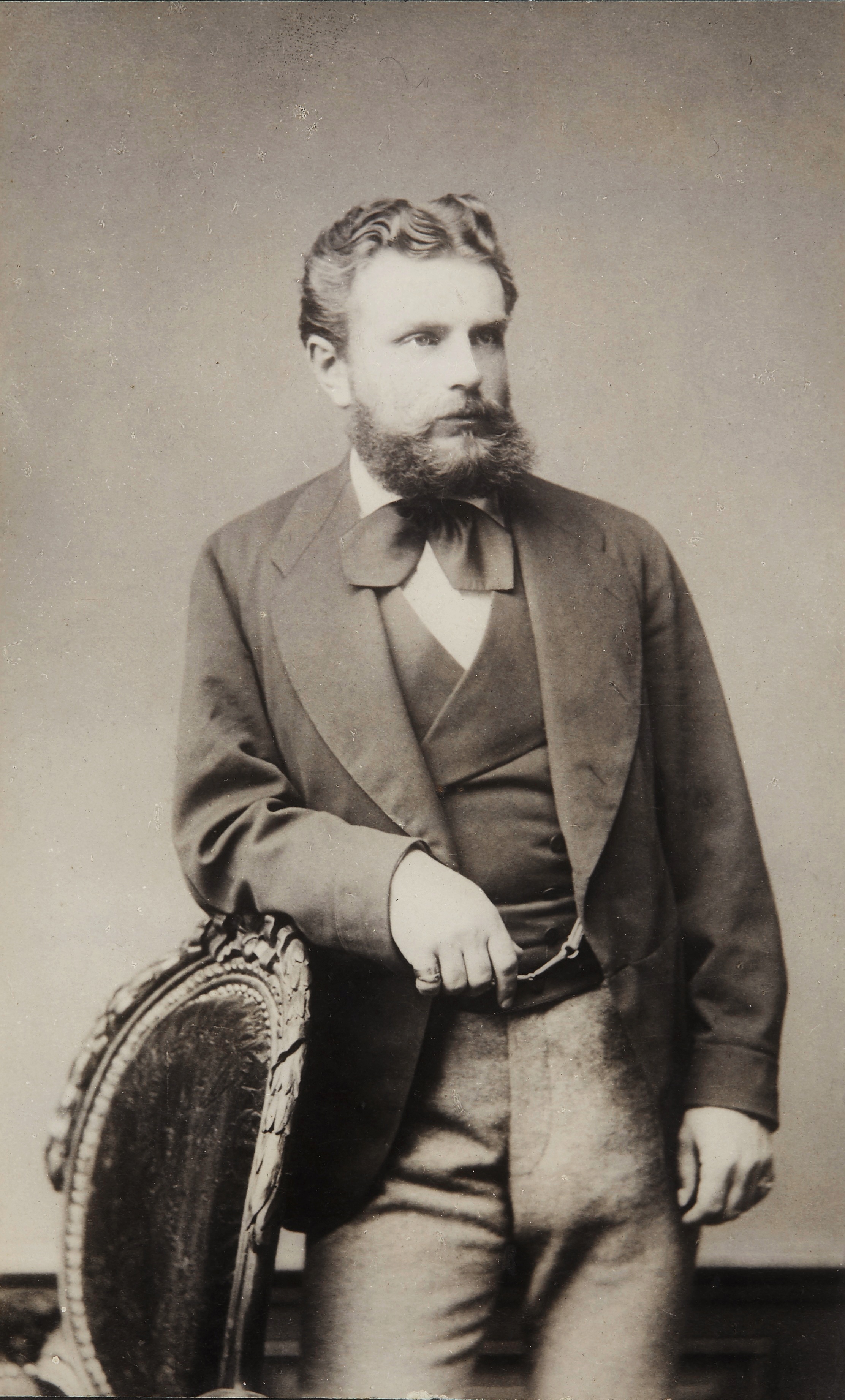 Richard Hornig (September 10, 1843 – August 2, 1911) was a close confidant and high-ranking court official to King Ludwig II of Bavaria. His life and
career were deeply intertwined with the royal court in Munich during the mid-to-late 19th century.
Richard Hornig (September 10, 1843 – August 2, 1911) was a close confidant and high-ranking court official to King Ludwig II of Bavaria. His life and
career were deeply intertwined with the royal court in Munich during the mid-to-late 19th century.
Hornig joined the military in 1859 and pursued an officer’s career.
In 1862, he was appointed to the royal stables. By 1871, he had risen to the position of equerry, eventually becoming the King’s chief equerry and Master of the Horse.
Starting in 1867, Hornig accompanied Ludwig II on his frequent rides and excursions. Over time, he took on duties similar to a private secretary, assisting the King with
personal matters, including assessing and procuring works of art.
In 1885, when construction on Ludwig’s ambitious palace projects stalled due to financial difficulties, the King blamed Hornig and ordered him back to stable service,
effectively removing him from his inner circle.
Historical accounts frequently cite Richard Hornig as one of the most significant figures in the private life of King Ludwig II.
Their constant proximity during travels and daily activities led to a deep, personal bond. Historical records and diary entries from the King indicate a strong emotional
attachment; for instance, Ludwig reportedly referred to Hornig as the "Beloved of My Soul" and expressed intense longing for him when they were separated.
The King never married and his private writings reflected his internal struggle with his sexual identity, which he often viewed through the lens of his devout Roman
Catholic faith. Historians and scholars often point to the King's correspondence and diary entries—which describe deep affection for men like Hornig—as evidence of his
same-sex desires.
Because of these well-documented emotional ties, Hornig is often discussed in historical analyses regarding the King’s personal life and the "minions" or confidants who
surrounded him. This relationship has also been a subject of cultural interest, inspiring various artistic depictions, including graphic novels and film portrayals.
References:
Other references:
- https://www.bavarikon.de/object/bav:BSB-CMS-0000000000006851?lang=en
- https://qnews.com.au/on-this-day-ludwig-ii-of-bavaria-the-swan-king/
- https://www.reddit.com/r/wikipedia/comments/1u6o7ui/ludwig_ii_never_married_nor_had_any_known/
- https://mikendavid.blog/2025/02/14/king-ludwig-iis-castles/
Support this project
This website is a passion project researched, developed, and funded entirely by me. If you find the content valuable and would like to help support the ongoing research and hosting costs, any contribution is deeply appreciated.
Thank you for keeping this independent resource alive!
My books on Amazon: Elisa Rolle's books
BACK TO HOME PAGE