Queer Places:
Schloss Berg, 82335 Berg, Germany
Rose Island, 82335, Germany
Cimetière du Grand Jas de Cannes, 2 All. du Cimetière, 06400 Cannes, France
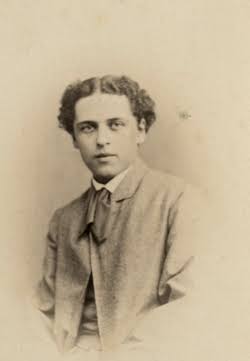 Prince Paul of Thurn and Taxis (May 27, 1843 - March 10, 1879) was a Bavarian nobleman who became a central figure in the private life of King
Ludwig II of Bavaria. His story is defined by a deep, intense bond with the monarch that eventually fractured under the
weight of social expectations and personal choices.
Prince Paul of Thurn and Taxis (May 27, 1843 - March 10, 1879) was a Bavarian nobleman who became a central figure in the private life of King
Ludwig II of Bavaria. His story is defined by a deep, intense bond with the monarch that eventually fractured under the
weight of social expectations and personal choices.
Born into the prominent Thurn and Taxis family, Paul was the third child of Maximilian Karl, 6th Prince of Thurn and Taxis. Following aristocratic tradition, he entered
the Bavarian military and was appointed as an orderly officer to Crown Prince Ludwig in 1863. After Ludwig ascended to the throne in 1864, Paul was promoted to his personal
aide-de-camp in 1865.
The friendship between Paul and Ludwig was highly intimate, characterized by a shared passion for Romanticism and the operas of
Richard Wagner.
Their bond was deeply tied to the symbolism of Wagner’s works. Notably, during celebrations for Ludwig's 20th birthday in 1865, Paul famously appeared in a performance at
Lake Alpsee dressed as Lohengrin, the mythical "Knight of the Swan," reflecting the King's obsession with Wagnerian themes.
The two spent significant time at Berg Palace and on the Roseninsel (Rose Island) in Lake Starnberg, where they would escape the rigid formalities of court life. Accounts
of their time together include staged scenes from operas, poetry readings, and shared moments of leisure, such as setting off fireworks.
Historians frequently identify this relationship as a significant romantic attachment for Ludwig, who struggled with his sexuality throughout his life. Their
correspondence was marked by deeply emotional language, with terms such as "my most beloved Angel" and "most precious Ludwig" reflecting the intensity of their connection.
The relationship began to deteriorate due to misunderstandings and Paul's inability to maintain the rigid emotional standards Ludwig required of his confidants.
Trivial social blunders and perceived failures in affection by Paul created unbearable tension for the King, leading to a final rupture.
In 1868, Paul entered a morganatic marriage with Elise Kreuzer, a commoner and actress. This choice led to his formal disownment by the Thurn and Taxis family, who
stripped him of his titles and inheritance.
Despite his later efforts to regain favor and his request for a new noble title—which resulted in Ludwig granting him the title of Herr von Fels in 1868—the two never
truly reconciled. Paul eventually settled in Cannes, where he died of tuberculosis in 1879 at the age of 35.
References:
Other references:
- https://grokipedia.com/page/Prince_Paul_of_Thurn_and_Taxis
- https://en.wikipedia.org/wiki/Prince_Paul_of_Thurn_and_Taxis
- https://military-history.fandom.com/wiki/Prince_Paul_of_Thurn_and_Taxis
- https://commons.wikimedia.org/wiki/File:Paul_von_Thurn_und_Taxis_Lohengrin.jpg
- https://gw.geneanet.org/comrade28?lang=en&n=bavaria&p=king+ludwig+ii+of
Support this project
This website is a passion project researched, developed, and funded entirely by me. If you find the content valuable and would like to help support the ongoing research and hosting costs, any contribution is deeply appreciated.
Thank you for keeping this independent resource alive!
My books on Amazon: Elisa Rolle's books
BACK TO HOME PAGE