Partner Charles Frohman
Queer Places:
Hiddenbrook Farm, Purchase, NY 10577
Murray Hill Baths, 113 W 42nd St, New York, NY 10036, USA
Woodlawn Cemetery, Bronx, Bronx County, New York, USA
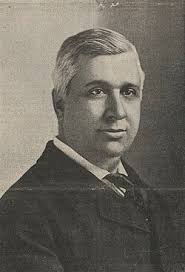 Paul Meredith Potter (June 3, 1853 - March 7, 1921) was born on June 3, 1853, in Brighton, England (though early records occasionally list alternative details or names).
He was the son of the headmaster of King Edward's School in Bath. Following his education, Potter traveled extensively, including a formative period in India.
Paul Meredith Potter (June 3, 1853 - March 7, 1921) was born on June 3, 1853, in Brighton, England (though early records occasionally list alternative details or names).
He was the son of the headmaster of King Edward's School in Bath. Following his education, Potter traveled extensively, including a formative period in India.
Before establishing himself as a fixture of the American stage, Potter carved out a successful career as an elite journalist and foreign correspondent:
He joined The New York Herald in 1876 as its foreign editor, later serving as its London correspondent.
In 1885, Potter transitioned to become the Herald's drama critic, putting him in direct contact with the inner workings of international theater.
In 1888, he left the Herald to relocate to Illinois and join the Chicago Tribune before fully committing himself to playwrighting.
Potter emerged as one of the most versatile and prolific dramatists of the late Victorian and Edwardian eras, specializing both in original light comedies and
high-profile adaptations of popular contemporary novels.
Potter achieved his greatest commercial and cultural triumph with his stage adaptation of George du Maurier's sensational novel Trilby (1895). The play became a massive
theatrical phenomenon, capturing the public imagination on both sides of the Atlantic and cementing Potter's reputation.
Other Notable Adaptations & Plays: The City Directory (1889) – His debut play. The Ugly Duckling (1890) – Noted for featuring the Broadway debut of actress Mrs. Leslie
Carter. The Conquerors (1898) – Produced by Charles Frohman, this play sparked notable controversy over its depiction of moral
themes and military conflict on stage. Under Two Flags (1901) – A successful adaptation of Ouida's 1867 military-romance novel. The Honor
of the Family (1908) and The Girl from Rector's (1909) – Part of his later string of society comedies and boulevard farces.
As a prominent playwright whose career coincided with the rise of the American "star system" and the powerful Theatrical Syndicate, Potter worked alongside the era's
major impresarios. His closest professional and personal alignment was with Charles Frohman, the dominant Broadway and West End producer who famously brought Peter Pan to
the stage.
Potter resided with Frohman in White Plains, New York, acting as his primary domestic companion and confidant. Following Frohman’s tragic death in the sinking of the RMS
Lusitania in 1915, Potter outlived his partner by nearly six years. Potter passed away on March 7, 1921, at the age of 67 while staying at the Murray Hill Baths in New York
City.
The historical Murray Hill Baths were not actually located in the Murray Hill neighborhood of Manhattan. They were located at 113 West 42nd Street, between Broadway
and Sixth Avenue (in what is present-day Times Square/Midtown). Opened in 1892, the facility was a lavish, highly popular establishment known for its Russian and Turkish
vapor baths, reading rooms, and strict privacy, which made it a frequent residence or retreat for transient New Yorkers, bachelors, and theater figures—including Paul M.
Potter, who was staying there when he passed away in March 1921. The building survived until the mid-1920s before being demolished.
References:
- The New York Times (March 8, 1921) – "Paul M. Potter, Playwright, Dead: Dramatist of 'Trilby' Stricken in His Room in Murray Hill Baths in His 68th Year".
- New York Tribune (March 8, 1921) – "Paul M. Potter, Author of Many Dramas, Is Dead".
- New York Herald (March 8, 1921) – "Paul M. Potter is Found Dead In Bed".
- Frohman, Daniel. Charles Frohman: Manager and Man.
- Standard theatrical indexes and databases, including the Internet Broadway Database (IBDB) and historical bibliographic archives detailing his journalistic career with the New York Herald and Chicago Tribune, as well as his playwriting credits (such as Trilby, The Conquerors, and Under Two Flags).
Support this project
This website is a passion project researched, developed, and funded entirely by me. If you find the content valuable and would like to help support the ongoing research and hosting costs, any contribution is deeply appreciated.
Thank you for keeping this independent resource alive!
My books on Amazon: Elisa Rolle's books
BACK TO HOME PAGE