Queer Places:
Mound Cemetery, 1147 West Blvd, Racine, WI 53405, United States
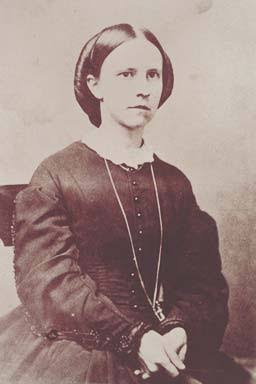 Olympia Brown (January 5, 1835 – October 23, 1926) was a pioneering American Universalist minister and a tireless leader in the women’s suffrage movement. She is recognized
as the first woman in the United States to be ordained as a minister with full denominational authority.
Olympia Brown (January 5, 1835 – October 23, 1926) was a pioneering American Universalist minister and a tireless leader in the women’s suffrage movement. She is recognized
as the first woman in the United States to be ordained as a minister with full denominational authority.
Born in Prairie Ronde Township, Michigan, to Asa and Lephia Brown, Olympia grew up in a family that deeply valued education and religion. Her parents were pioneers who
built a schoolhouse on their property to ensure their children received a proper education.
Brown's pursuit of higher education was marked by her defiance of gender discrimination:
Mount Holyoke Female Seminary: She attended for one year but left due to its rigid atmosphere and the limited view of female education.
Antioch College: She went on to graduate in 1860, where she notably insisted on memorizing her speeches for class, rejecting the lower expectations placed on female
students.
St. Lawrence University: Despite significant opposition from the university president and others who believed women should not be ministers, she was admitted to the
Theological School and graduated in 1863, becoming the first woman to earn a degree from a regularly established theological school.
In 1863, Brown was ordained by the St. Lawrence Association of Universalists. Her ministerial career included service in:
Weymouth Landing, Massachusetts: Her first full-time parish (starting in 1864).
Bridgeport, Connecticut: She faced significant opposition from a faction within the church, partly due to her vocal activism for women's rights, and eventually left the
position in 1875.
Racine, Wisconsin: She rejuvenated the Universalist society there, turning it into a vibrant center for culture and social issues.
Brown was a major figure in the fight for women's voting rights, working alongside leaders such as Susan B. Anthony,
Lucy Stone, and Elizabeth Cady Stanton. Key highlights of her activism include:
She delivered over 300 speeches during the rigorous Kansas Campaign (1867) to urge the passage of a woman suffrage amendment.
She served as president of the Wisconsin Woman Suffrage Association for 28 years (1884–1912) and was vice president of the National Woman Suffrage Association. She also
founded the Federal Woman's Suffrage Association in 1892.
In her later years, she joined Alice Paul’s National Woman's Party and was active in the push for a federal constitutional
amendment.
A defining moment in her life was being one of the few original suffragists who lived to see the passage of the 19th Amendment; she successfully cast her ballot in the
1920 presidential election.
In 1874, she married John Henry Willis, a businessman who supported her ministry and activism. Notably, she kept her maiden name, which was unusual for the time.
The couple had two children, a son born in 1874 and a daughter born in 1876.
Olympia Brown passed away on October 23, 1926, in Baltimore, Maryland, at the age of 91. She was inducted into the Michigan Women's Hall of Fame in 1999.
References:
- https://en.wikipedia.org/wiki/Olympia_Brown
- https://www.uuworld.org/articles/brown-pioneering-minister-suffragist
- https://www.stlawu.edu/offices/chaplains-office/gunnison-memorial-chapel-history/olympia-brown
- https://www.ebsco.com/research-starters/biography/olympia-brown
- https://connecticuthistory.org/americas-first-ordained-woman-minister-olympia-brown-and-bridgeports-universalist-church/
- https://miwf.org/celebrating-women/michigan-womens-hall-of-fame/olympia-brown/
- https://bportlibrary.org/hc/barnum-and-related-items/olympia-brown/
- https://www.kpl.gov/local-history/kalamazoo-history/biographies/brown-olympia-2/
Support this project
This website is a passion project researched, developed, and funded entirely by me. If you find the content valuable and would like to help support the ongoing research and hosting costs, any contribution is deeply appreciated.
Thank you for keeping this independent resource alive!
My books on Amazon: Elisa Rolle's books
BACK TO HOME PAGE