Queer Places:
University of London, Senate House, Malet St, London WC1E 7HU, United Kingdom
149 Harley St, London W1G 6BN, UK
75 Park St, London SE1 9EA, UK
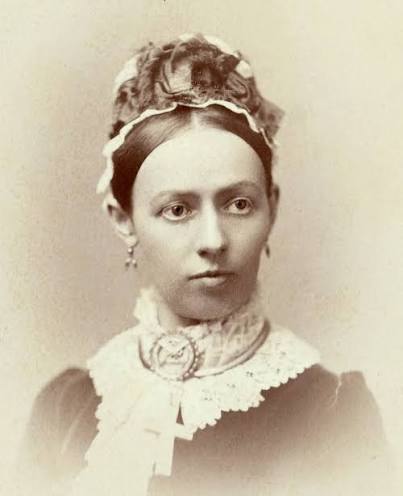 Dame Mary Scharlieb (June 18, 1845 - November 11, 1930) was a pioneering British physician, gynaecologist, and advocate for women’s medical education. Her career was marked
by extraordinary persistence in an era that deeply resisted women in the medical profession.
Dame Mary Scharlieb (June 18, 1845 - November 11, 1930) was a pioneering British physician, gynaecologist, and advocate for women’s medical education. Her career was marked
by extraordinary persistence in an era that deeply resisted women in the medical profession.
Born Mary Dacomb Bird, she married barrister William Scharlieb in 1865 and moved to Madras, India. Observing the dire lack of medical care for women—who were often barred
by cultural norms from seeing male doctors—she was inspired to pursue a medical degree.
She was one of the first four women admitted to the Madras Medical College in 1874. After qualifying, she moved to London to further her studies, graduating from the
London School of Medicine for Women in 1882. She later became the first woman to earn an MD (1888) and MS (1897) from the University of London.
Scharlieb held prestigious roles, including senior surgeon at the New Hospital for Women and consulting gynaecologist at the Royal Free Hospital. She returned to India
periodically to lecture and help establish medical infrastructure for women.
In 1920, at the age of 75, she became one of the first female magistrates in the UK. She was appointed a Commander of the Order of the British Empire (CBE) in 1917 and
created a Dame (DBE) in 1926.
While the British Society for the Study of Sex Psychology (BSSSP) is correctly identified as a forum for early 20th-century sex reform and feminist engagement,
historical records often place Mary Scharlieb in a different ideological camp than figures like Stella Browne.
Scharlieb is frequently characterized as a social conservative who emphasized traditional Christian moral standards and the preservation of the family unit. While she
engaged in public discourse surrounding public health, venereal disease, and sex education, she generally advocated for reform within the framework of marriage rather than
the more radical "sexual freedom" promoted by some BSSSP members.
Her participation in such societies often reflected her professional interest in women's health and social hygiene rather than an alignment with the radical sexological
theories of the time.
It is important to distinguish between the various wings of the feminist and reformist movements of the early 20th century. While women like Scharlieb, Browne, and
Hamilton all participated in public intellectual spaces, they often held conflicting views on sexuality, marriage, and reform. Scharlieb’s legacy is defined by her role as a
professional trailblazer who navigated and challenged the patriarchal structure of medicine from within, often maintaining a more traditionalist moral outlook than her
contemporaries in the sex reform movement.
References:
Other references:
- https://en.wikipedia.org/wiki/Mary_Scharlieb
- https://www.encyclopedia.com/women/encyclopedias-almanacs-transcripts-and-maps/scharlieb-mary-ann-1845-1930
- https://collection.sciencemuseumgroup.org.uk/people/cp84130/mary-scharlieb
- https://www.marylebonejournal.com/articles/mary-scharlieb
- https://grokipedia.com/page/mary_scharlieb
Support this project
This website is a passion project researched, developed, and funded entirely by me. If you find the content valuable and would like to help support the ongoing research and hosting costs, any contribution is deeply appreciated.
Thank you for keeping this independent resource alive!
My books on Amazon: Elisa Rolle's books
BACK TO HOME PAGE
