Queer Places:
Green Bushes, 31 St. Floras Rd, Littlehampton BN17 6BH, UK
Woking Crematorium, The Crematorium, Hermitage Rd, Woking GU21 8TJ, United Kingdom
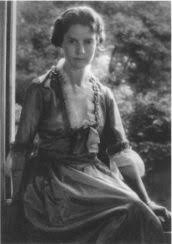 Mary Neal (June 5, 1860 – June 22, 1944) was born Clara Sophia Neal on June 5, 1860, in Edgbaston, Birmingham, into a prosperous family as the daughter of button
manufacturer David Neal and his wife Sarah Anne. Educated at Birmingham Ladies' College and later studying economics, she developed an early aversion to Victorian social
conventions and became deeply inspired by the writings of figures like John Stuart Mill, Henry David Thoreau, and
Edward Carpenter. In the late 1880s, driven by a profound desire to address social injustice, she moved to London to engage in
voluntary social work, joining the West London Methodist Mission under Hugh Price Hughes. Taking the name "Sister Mary," she took charge of a working girls' club at
Cleveland Hall, working closely with sewing girls and poor communities in Soho, Fitzrovia, and Marylebone.
Mary Neal (June 5, 1860 – June 22, 1944) was born Clara Sophia Neal on June 5, 1860, in Edgbaston, Birmingham, into a prosperous family as the daughter of button
manufacturer David Neal and his wife Sarah Anne. Educated at Birmingham Ladies' College and later studying economics, she developed an early aversion to Victorian social
conventions and became deeply inspired by the writings of figures like John Stuart Mill, Henry David Thoreau, and
Edward Carpenter. In the late 1880s, driven by a profound desire to address social injustice, she moved to London to engage in
voluntary social work, joining the West London Methodist Mission under Hugh Price Hughes. Taking the name "Sister Mary," she took charge of a working girls' club at
Cleveland Hall, working closely with sewing girls and poor communities in Soho, Fitzrovia, and Marylebone.
In 1891, Mary met fellow social worker Emmeline Pethick, initiating a profound personal and professional
partnership. Seeking freedom from the strict institutional constraints and Methodist ethos of the mission, Mary and Emmeline left in 1895 to establish their own independent
initiatives. Together, they founded the Espérance Club for working girls in Cumberland Market and launched Maison Espérance, a co-operative tailoring establishment designed
to provide fair employment and training. Their collaborative efforts extended to opening a holiday hostel for working girls in Littlehampton.
During this period, Mary integrated social reform with radical arts, drawing inspiration from William Morris,
Walt Whitman, and Christian Socialism. In 1905, she met folk music collector Cecil Sharp at the Hampstead Conservatoire, a meeting
that catalyzed the English folk dance revival. Believing that urban working-class young women could reclaim their cultural heritage through traditional arts, she integrated
Morris dancing and folk songs into the Espérance Club. She published The Espérance Morris Book in 1910 and traveled widely, including lectures in the United States, to
promote traditional English folk dance and music.
As a political activist, Mary joined the Women's Social and Political Union (WSPU) in 1906, serving on its national committee and later working as a special commissioner
for the newspaper Votes for Women. Though she shared deep ties with militant suffragettes, she preferred non-militant methods and later co-founded the United Suffragists in
1914 alongside other prominent reformers. Her later life was marked by continued civic engagement, youth work with the Kibbo Kift organization, penal reform through the
Howard League, and service as a Justice of the Peace in West Sussex focusing on child welfare. In recognition of her immense contributions to preserving and reviving English
folk song and dance, she was appointed a Commander of the Order of the British Empire (CBE) in 1937. Mary Neal spent her final years residing in Surrey and Littlehampton,
passing away on June 22, 1944.
Mary Neal’s life and social circles were deeply intertwined with figures and intellectual movements central to early queer history and
alternative lifestyle reforms. She was profoundly influenced by the writings of Edward Carpenter, a pioneering socialist visionary and early advocate for homosexual
emancipation who challenged conventional Victorian frameworks of sex and gender. Furthermore, her decades-long domestic and professional partnership with
Emmeline Pethick-Lawrence—with whom she lived and shared collaborative workspaces during their years at the West London Mission and Somerset Terrace—reflects the deeply
committed, female-centered bonds common among first-wave feminist reformers and suffrage pioneers. These close "Boston marriages" and non-traditional living arrangements
formed the social and emotional bedrock of the radical women's movement, creating spaces where women could live, work, and forge autonomous lives independent of traditional
patriarchal family structures.
References:
Other references:
- Kathryn Atherton, Mary Neal and the Suffragettes Who Saved Morris Dancing (Pen & Sword History, 2024).
- Elizabeth Crawford, The Women's Suffrage Movement: A Reference Guide, 1866–1928 (Routledge, 2001).
- Roy Judge, "Mary Neal and the Espérance Morris," Folk Music Journal, Vol. 5, No. 5 (1989).
- Georgina Boyes, The Imagined Village: Culture, Ideology and the English Folk Revival (No Masters Cooperative Limited, 2010).
- The Mary Neal Project Archive (maryneal.org), documenting her personal papers, autobiography, and historical records preserved by her family and the Vaughan Williams Memorial Library.
Support this project
This website is a passion project researched, developed, and funded entirely by me. If you find the content valuable and would like to help support the ongoing research and hosting costs, any contribution is deeply appreciated.
Thank you for keeping this independent resource alive!
My books on Amazon: Elisa Rolle's books
BACK TO HOME PAGE
