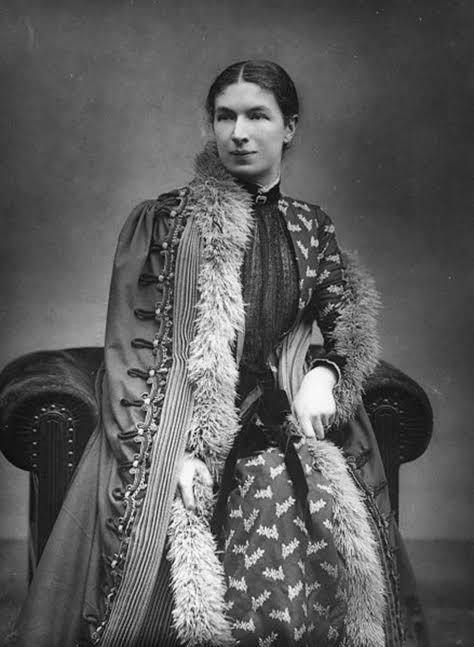
 Mary Augusta Ward (née Arnold, June 11, 1851 – March 24, 1920), widely published under her married name Mrs. Humphry Ward, was a prominent British Victorian and Edwardian
novelist, educational reformer, and social activist.
Mary Augusta Ward (née Arnold, June 11, 1851 – March 24, 1920), widely published under her married name Mrs. Humphry Ward, was a prominent British Victorian and Edwardian
novelist, educational reformer, and social activist.Queer Places:
University of Oxford, Oxford, Oxfordshire OX1 3PA
St. John the Baptist Churchyard, Station Road, Aldbury, Hertfordshire, HP23 5RW, United Kingdom, Tring, United Kingdom
Mary Augusta Ward (née Arnold, June 11, 1851 – March 24, 1920), widely published under her married name Mrs. Humphry Ward, was a prominent British Victorian and Edwardian
novelist, educational reformer, and social activist.
Born on June 11, 1851, in Hobart, Tasmania, into the intellectually renowned Arnold family.
She was the granddaughter of Thomas Arnold (the famous headmaster of Rugby School) and the niece of poet Matthew Arnold. Her sister, Julia, was the mother of the writers Julian and Aldous Huxley.
Growing up around Oxford, she gained early access to university circles. In 1872, she married Thomas Humphry Ward, an Oxford tutor and writer.
She achieved massive international fame with her 1888 novel Robert Elsmere, which detailed a young clergyman's crisis of faith. It became one of the best-selling books of the 19th century.
Ward was a key figure in expanding higher education for women, serving as the first secretary of Somerville College, Oxford.
She pioneered evening play centers for working-class children and opened England’s first school for children with physical disabilities.
She established the Passmore Edwards Settlement in London (later renamed the Mary Ward Centre), which continues to operate as an adult education college and legal advice center today.
Despite her active work expanding educational and social opportunities for women, Ward became the founding president of the Women's National Anti-Suffrage League in 1908. She believed that while women should participate in local government and social reform, national imperial defense and parliamentary politics should remain male domains. She died on March 24, 1920.
While Mary Augusta Ward herself lived a conventional heterosexual Victorian life as a married woman, several relevant points connect her history and legacy to LGBTQ+ themes:
Mary's younger sister, Ethel Arnold, was a suffragist, journalist, and photographer. Ethel never married and maintained close, passionate friendships with women throughout her life—most notably with the author E. M. Delafield and other women in suffragist networks.
Historical analysis of Ward's anti-suffrage activism shows that her opposition to votes for women was partly motivated by anxiety over the changing social dynamics of the period. Historians note that Ward harbored deep misgivings regarding the "New Woman" movement, expressive female independence, and romantic female friendships or lesbian alliances that were gaining visibility within the pro-suffrage movement.
In her fiction (such as Marcella and Delia Blanchflower), Ward frequently depicted intense emotional bonds between women. While she often framed these within traditional Victorian moral boundaries or used them to caution against radical suffragism, modern literary scholars often examine these portrayals for their homosocial and closeted queer subtexts.
The Mary Ward Centre, the London educational institution that bears her name, evolved over the late 20th and 21st centuries into an inclusive hub for diverse adult learning, community legal aid, and progressive social activism, frequently supporting LGBTQ+ initiatives and community groups in London.
References:
 Women, Peace and Welfare: A Suppressed History of Social Reform, 1880-1920 Paperback – June 1, 2019 by Ann Oakley |
Other references:
Support this project
This website is a passion project researched, developed, and funded entirely by me. If you find the content valuable and would like to help support the ongoing research and hosting costs, any contribution is deeply appreciated.
Thank you for keeping this independent resource alive!
My books on Amazon: Elisa Rolle's books