Partner Lillian Wald
Queer Places:
Harrisburg Cemetery, 521 N 13th St, Harrisburg, PA 17103, United States
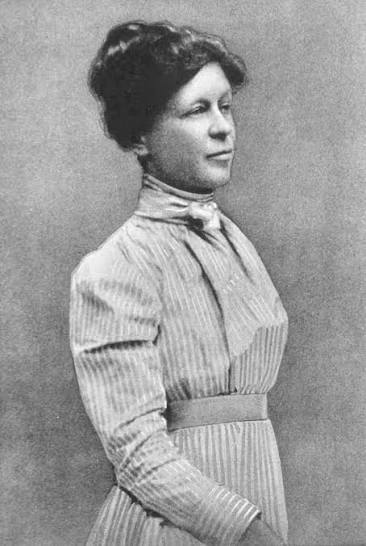 Lavinia Lloyd Dock (February 26, 1858 – April 17, 1956) was born on February 26, 1858, in Harrisburg, Pennsylvania, into a prominent and financially independent family. Her
upbringing afforded her the luxury of pursuing a vocation unhindered by economic constraints. Finding her calling in the burgeoning field of professional nursing, Dock
enrolled at the Bellevue Hospital School of Nursing in New York City, graduating in 1886. Early in her career, she demonstrated a profound commitment to humanitarian relief,
assisting with disaster recovery efforts during the devastating Johnstown flood of 1889 and providing vital care during a yellow fever outbreak in Florida alongside nursing
pioneer Clara Barton.
Lavinia Lloyd Dock (February 26, 1858 – April 17, 1956) was born on February 26, 1858, in Harrisburg, Pennsylvania, into a prominent and financially independent family. Her
upbringing afforded her the luxury of pursuing a vocation unhindered by economic constraints. Finding her calling in the burgeoning field of professional nursing, Dock
enrolled at the Bellevue Hospital School of Nursing in New York City, graduating in 1886. Early in her career, she demonstrated a profound commitment to humanitarian relief,
assisting with disaster recovery efforts during the devastating Johnstown flood of 1889 and providing vital care during a yellow fever outbreak in Florida alongside nursing
pioneer Clara Barton.
Dock quickly established herself as a titan of nursing education and organization. In 1890, she authored Materia Medica for Nurses, the very first drug manual designed
specifically for nurses, which was financed by her father and went on to become an essential, widely distributed textbook. That same year, she was appointed assistant
superintendent of nurses at the newly established Johns Hopkins Hospital under Isabel Hampton Robb, where she managed first-year instruction and shaped early curriculum
standards. A tireless organizer, Dock co-founded the American Society of Superintendents of Training Schools for Nurses (which evolved into the National League for Nursing)
and the Nurses' Associated Alumnae (later the American Nurses Association), alongside playing a foundational role in establishing the International Council of Nurses.
In 1896, Dock left Johns Hopkins to move to the Henry Street Settlement on the Lower East Side of New York City, a pivot that deeply intertwined her professional life
with radical social reform. It was here that she deepened her connection with Lillian D. Wald, the visionary Jewish public health
nurse and activist who founded the settlement. Wald and Dock shared a profound, lifelong partnership. Within the context of late-nineteenth and early-twentieth-century
progressive women's networks, their bond transcended professional collaboration to form a committed, long-term lesbian relationship. Living and working together, Wald and
Dock anchored a community of reform-minded women who found personal fulfillment, emotional sustenance, and political power outside traditional heterosexual marriage
norms.
At Henry Street, Dock immersed herself in the struggles of immigrant laborers, working tirelessly as a visiting nurse while expanding her political vision toward
socialism, pacifism, and militant feminism. She participated directly in the tumultuous labor movements of the era, supporting the historic 1909 New York shirtwaist strike.
Convinced that the elevation of the nursing profession was fundamentally tied to women's civic and political equality, Dock redirected her immense energies toward the fight
for women's suffrage. She joined the radical wing of the movement under Alice Paul's National Woman's Party, marched in cross-state
protest hikes, participated in militant White House picket lines, and was arrested and jailed multiple times for her activism.
Throughout her long life, Dock remained an uncompromising voice for social justice, advocating fiercely for birth control access, opposing state-regulated prostitution,
and later championing international peace and civil liberties well into her later years. She passed away on April 17, 1956, at the age of 98, leaving behind an indelible
legacy as a pioneer of modern nursing, a fearless suffragist, and a central figure in the lesbian-led network of progressive reformers who shaped modern American social
welfare.
References:
- Garofalo, M. E., & Fee, E. (2015). Lavinia Dock (1858–1956): Picketing, parading, and protesting. American Journal of Public Health, 105(2), 276–277. [https://doi.org/10.2105/ajph.2014.302021](https://doi.org/10.2105/ajph.2014.302021)
- Lavinia Dock Collection – The Alan Mason Chesney Medical Archives of The Johns Hopkins Medical Institutions (contains correspondence, biographical notes, and documents spanning 1947–1958).
- Lillian D. Wald Papers, 1889–1957 – New York Public Library Rare Books and Manuscripts Division (includes extensive correspondence between Lillian Wald, Lavinia Dock, and prominent social reformers, financiers, and political figures).
- National Woman's Party Records – Library of Congress (documents Dock's militant suffrage activism, arrests, and participation in the radical wing of the women's rights movement).
- Dock, L. L. (1890). Text-book of Materia Medica for Nurses. G.P. Putnam's Sons.
- Nutting, M. A., & Dock, L. L. (1907). A History of Nursing: The Evolution of Nursing Systems from the Earliest Times to the Foundation of the First English and American Training Schools (Vols. 1–2). G.P. Putnam's Sons. (Expanded to four volumes by Dock alone in 1912).
- Dock, L. L. (1910). Hygiene and Morality: A Manual for Nurses and Others, Giving an Outline of the Medical, Social, and Legal Aspects of the Venereal Diseases. G.P. Putnam's Sons.
- Dock, L. L., & Stewart, I. M. (1920). A Short History of Nursing from the Earliest Times to the Present Day. G.P. Putnam's Sons.
- Dock, L. L., & Pickett, S. E. (1922). History of American Red Cross Nursing. Macmillan.
- Burnam, M. A. B. (1998). Lavinia Lloyd Dock: An activist in nursing and social reform [Doctoral dissertation, The Ohio State University].
- Christy, T. E. (1969). Portrait of a leader: Lavinia Lloyd Dock. Nursing Outlook, 17(6), 72–73.
- James, J. W., & Stein, A. P. (1988). Lavinia Lloyd Dock, 1858–1956. In V. L. Bullough, O. M. Church, & A. P. Stein (Eds.), American Nursing: A Biographical Dictionary (Vol. 1, pp. 91–94). Garland Publishing.
- Philips, D. (1999). Healthy heroines: Sue Barton, Lillian Wald, Lavinia Lloyd Dock and the Henry Street Settlement. Journal of American Studies, 33(1), 65–82. [https://doi.org/10.1017/S0021875898006070](https://www.google.com/search?q=https://doi.org/10.1017/S0021875898006070)
- Sklar, K. K. (2000). Dock, Lavinia Lloyd (1858–1956), nurse, suffragist, and social reformer. American National Biography. [https://doi.org/10.1093/anb/9780198606697.article.1500182](https://www.google.com/search?q=https://doi.org/10.1093/anb/9780198606697.article.1500182)
Support this project
This website is a passion project researched, developed, and funded entirely by me. If you find the content valuable and would like to help support the ongoing research and hosting costs, any contribution is deeply appreciated.
Thank you for keeping this independent resource alive!
My books on Amazon: Elisa Rolle's books
BACK TO HOME PAGE