Queer Places:
Certosa di San Giacomo, Via Certosa, 10, 80073 Capri NA
Cimitero Acattolico, Capri, Città Metropolitana di Napoli, Campania, Italy
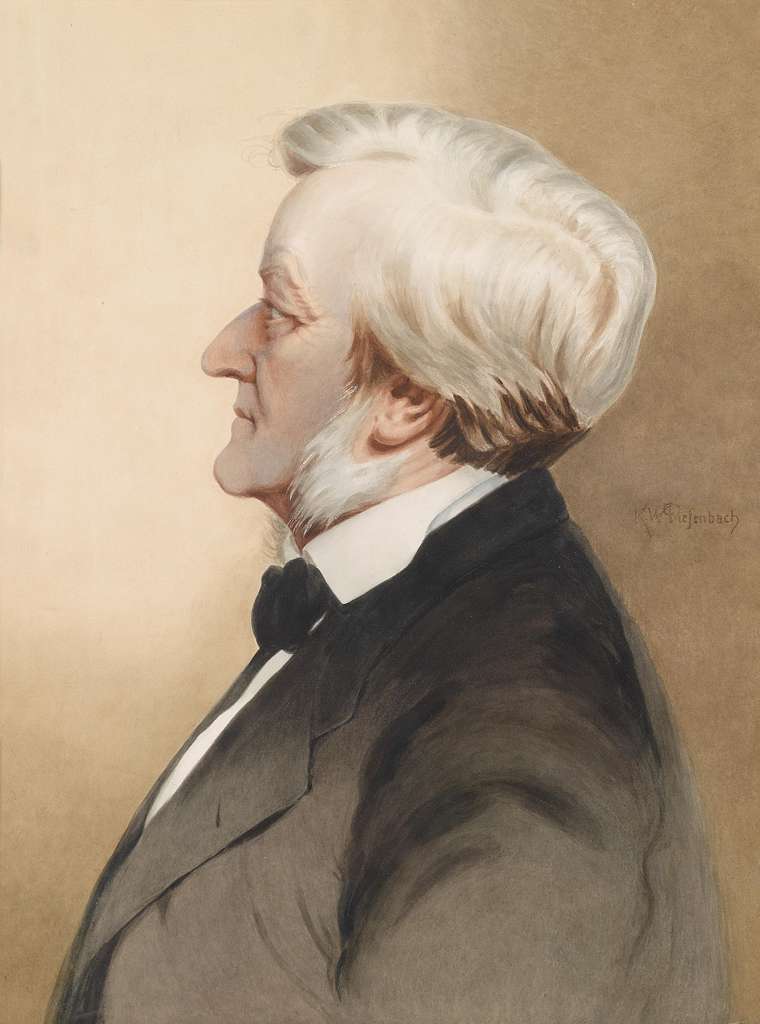 Karl Wilhelm Diefenbach (February 21, 1851 – December 15, 1913) was a German painter, sculptor, and social reformer. Widely regarded as a pioneer of the alternative
lifestyle movement (Lebensreform), he advocated for raw-food veganism, nudism, pacifism, and spiritual commune living long before these ideas entered the mainstream.
Karl Wilhelm Diefenbach (February 21, 1851 – December 15, 1913) was a German painter, sculptor, and social reformer. Widely regarded as a pioneer of the alternative
lifestyle movement (Lebensreform), he advocated for raw-food veganism, nudism, pacifism, and spiritual commune living long before these ideas entered the mainstream.
Born in Hadamar, Duchy of Nassau, Diefenbach was the son of a painter and drawing teacher, Leonhard Diefenbach. He demonstrated early artistic talent and went on to study
at the prestigious Academy of Fine Arts in Munich.
In his early adulthood, Diefenbach suffered a severe illness—likely cholera or severe typhoid—and spent an extended recovery period undergoing hydrotherapy and natural
healing. This experience altered his life trajectory. He renounced orthodox medicine, adopted strict vegetarianism, grew out his hair and beard, and began wearing long,
flowing robes and sandals year-round.
By the 1880s, Diefenbach had established himself in Munich not just as an artist, but as a public prophet of a natural way of life. His striking appearance and public
lectures drew immense public curiosity, ridicule, and frequent intervention by municipal authorities.
Artististically, he was associated with Symbolism and Art Nouveau (Jugendstil). His works frequently depicted:
Luminous, romanticized views of sea cliffs, mountains, and skies. Nude human figures dancing, praying, or moving in harmony with nature. His monumental 68-meter
silhouette frieze titled Per Aspera Ad Astra ("Through Hardships to the Stars"), depicting children, animals, and musicians in a joyful procession.
In 1897, Diefenbach founded the commune Himmelhof near Vienna, Austria. The commune served as an artistic and social experiment where members lived communally, practiced
veganism, bathed in the sun, and rejected traditional social hierarchies.
In 1887, a 19-year-old art student named Hugo Höppener joined Diefenbach as his disciple. Diefenbach bestowed upon him the pseudonym
Fidus (Latin for "faithful"). Fidus became Diefenbach's most devoted protege, assistant, and collaborator, absorbing his artistic
techniques and philosophy of life.
During their time together in Munich and the surrounding countryside, the intimate nature of their mentor-student bond—combined with their rejection of traditional social
norms and practice of communal nudism—drew heavy scrutiny from conservative Victorian-era society.
Diefenbach was accused by contemporaries and local authorities of engaging in a homosexual relationship with the young Fidus. At the time, homosexual acts were
criminalized under Paragraph 175 of the German Imperial Penal Code.
The rumors of a "same-sex affair" between the older master and his teenage student were actively weaponized by moral critics and the press to discredit Diefenbach’s
reform movement, paint his commune as degenerate, and justify police surveillance.
Although the two artists eventual suffered a bitter personal and financial falling-out around 1892 (leading Fidus to forge an independent career as a prominent
Jugendstil illustrator), Fidus maintained a complex legacy. He went on to create iconic homoerotic and youth-centric imagery—most famously Lichtgebet ("Prayer to Light"),
depicting a sun-worshipping nude youth—which became seminal touchstones in early German free-body culture (Freikörperkultur) and homoerotic aesthetic circles.
While historians debate whether their relationship was physically romantic or centered on an intense, idealist "master-disciple" devotion characteristic of the
Lebensreform ethos, the public controversy around their intimacy remains one of the notable early documentations of anti-queer moral panics targeted at avant-garde artistic
communes.
Facing mounting debts, legal trouble, and public hostility in Austria and Germany, Diefenbach left Central Europe in 1899. He settled on the island of Capri in Italy,
which was then a haven for avant-garde artists, writers, eccentrics, and queer expatriates escaping mainland social prosecution (including
Friedrich Alfred Krupp, Norman Douglas, and
Jacques d'Adelswärd-Fersen).
Diefenbach spent the final fourteen years of his life on Capri, painting dramatic coastal vistas and giant cliffs in solitude. He died suddenly in Capri on December 15,
1913, at the age of 62.
Today, a substantial collection of his works is preserved in the Museo Karl Wilhelm Diefenbach, housed inside the historic Certosa di San Giacomo on Capri.
References:
- Wagner, Claudia. Der Künstler Karl Wilhelm Diefenbach (1851–1913) – Meister und Mission (Dissertation, Freie Universität Berlin, 2007).
- Wagner, Claudia; Müller, Herrmann; Smolik, Noemi; Schuster, Marina. Karl Wilhelm Diefenbach (1851–1913): Lieber sterben, als meine Ideale verleugnen! (Munich: Minerva, 2011).
- Frecot, Janos; Geist, Johann Friedrich; Kerbs, Diethart. Fidus, 1868–1948: Zur ästhetischen Praxis bürgerlicher Fluchtbewegungen (Munich: Rogner & Bernhard, 1972).
- Whisnant, Clayton J. Queer Identities and Politics in Germany: A History, 1880–1945 (Columbia University Press, 2016).
- Buchholz, Kai et al. (eds.). Die Lebensreform: Entwürfe zur Neugestaltung von Leben und Kunst um 1900 (Darmstadt: Verlag Haeusser, 2001).
- Spaun, Paul von (ed.). Zum Fall Diefenbach (Trieste, 1899).
- Historical Periodicals & Press (1885–1900)
Support this project
This website is a passion project researched, developed, and funded entirely by me. If you find the content valuable and would like to help support the ongoing research and hosting costs, any contribution is deeply appreciated.
Thank you for keeping this independent resource alive!
My books on Amazon: Elisa Rolle's books
BACK TO HOME PAGE