Queer Places:
Mountain Grove Cemetery and Mausoleum, 2675 North Ave, Bridgeport, CT 06604, United States
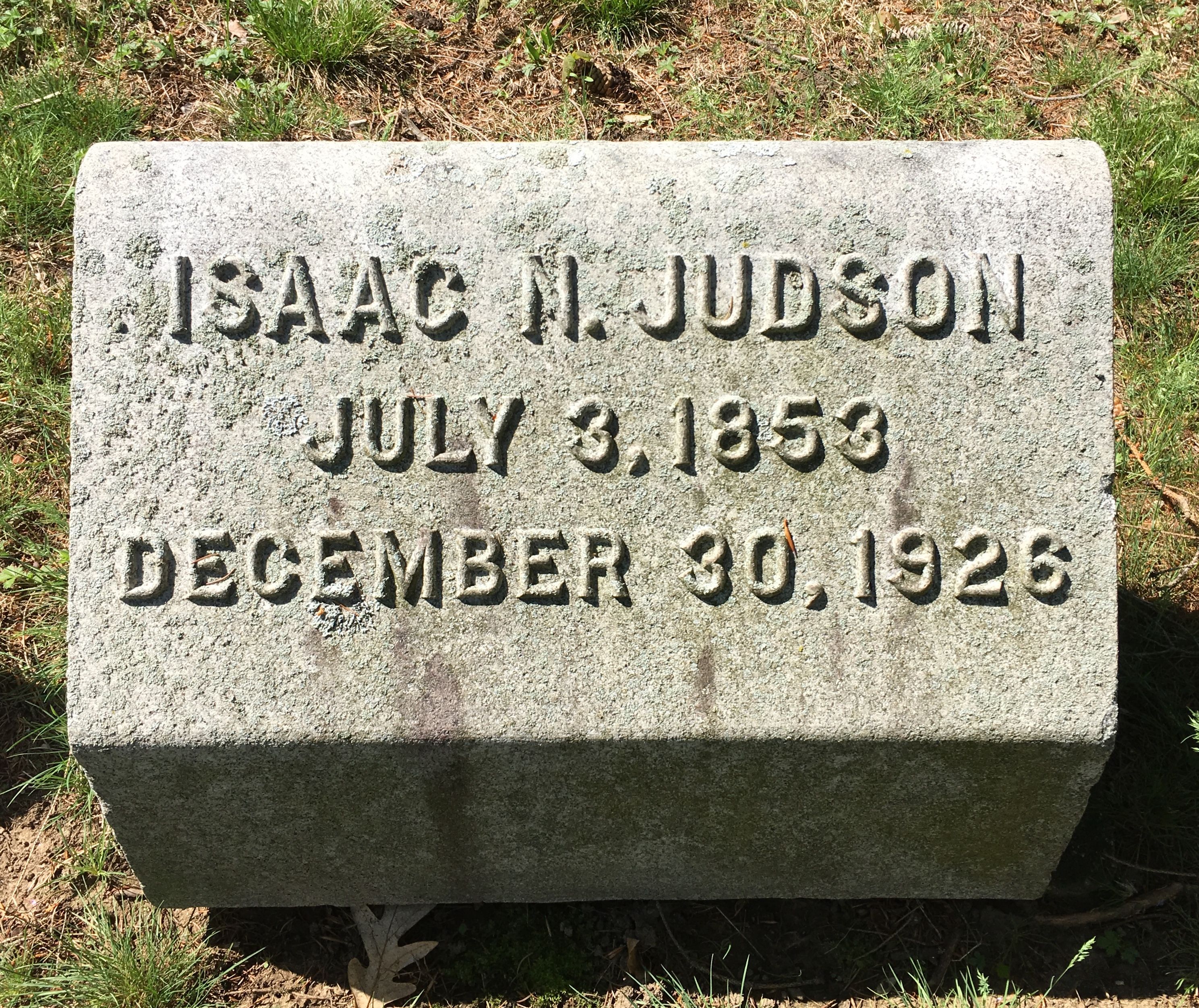 Isaac Nichols Judson (Juky 3, 1853 - December 30, 1926) was an American figure primarily known to history through a tragic, high-profile late 19th-century scandal that has
since become a notable case study in the documentation of early American LGBTQ+ history.
Isaac Nichols Judson (Juky 3, 1853 - December 30, 1926) was an American figure primarily known to history through a tragic, high-profile late 19th-century scandal that has
since become a notable case study in the documentation of early American LGBTQ+ history.
Born in 1853 in Bridgeport, Connecticut, the son of Frederick Joseph Judson and and Catherine Ann Taylor Chapelle, Judson lived much of his later life in St. Louis,
Missouri. While archival and genealogical records place various individuals named Isaac Judson in business and commercial circles during this era, Isaac Nichols Judson's
name became permanently etched into historical archives due to events surrounding his relationship with a young professional man named Dr.
Charles Breedlove.
Judson died in 1926 in Manhattan, New York, at the age of 73. He never married and is buried with his family at Mountain Grove Cemetery and Mausoleum, Bridgeport,
Fairfield County, Connecticut.
Isaac Judson is principally remembered in queer history for his connection to Dr. Charles Breedlove, a young St. Louis dentist. Their relationship and its dramatic
conclusion provide a rare, documented window into same-sex desire, intense romantic fixation, and societal attitudes toward male-male intimacy in the Victorian-era United
States.
On February 23, 1892, Dr. Charles Breedlove committed suicide by shooting himself at Hurst's Hotel in St. Louis. The event immediately generated national media attention
because of the intense, romantic infatuation Breedlove held for Isaac Judson: At the time of his death, Breedlove was wearing a locket around his neck containing a miniature
photograph of Judson. Investigators and the coroner uncovered a series of passionate, emotional letters written by Breedlove to Judson, detailing an intense romantic
dependency, heartbreak over an apparent cooling of affection, and an all-consuming devotion.
During the coroner's inquest, Isaac Judson testified regarding their relationship. It was revealed that the two men had previously roomed together before taking separate
lodgings, and that Breedlove's despondency stemmed directly from what he perceived as unrequited or waning love from Judson.
The Breedlove-Judson tragedy became a significant touchstone for early medical and psychiatric literature on same-sex desire before modern terminology like "homosexual"
was widespread: Prominent nineteenth-century alienists (early psychiatrists)—such as Dr. Charles H. Hughes, editor of the medical journal The Alienist and Neurologist—used
the case of Breedlove and Judson as a subject of study. Hughes presented aspects of the case at professional gatherings like the Pan-American Medical Congress in 1893,
citing it under early pathologizing frameworks such as "erotopathia" to discuss intense same-sex romantic attachments and their psychological toll in a hostile social
climate.
Today, the documentation surrounding Isaac Judson and Charles Breedlove is preserved by projects like the St. Louis LGBT History Project. It serves as a primary example
of how same-sex romance, heartbreak, and male intimacy manifested and were investigated—often through the lens of tragedy and coroner inquests—in nineteenth-century
America.
References:
- FamilySearch Historical Records: Vital statistics, birth, and death archives detailing the life and timeline of Charles T. Breedlove (1864–1892).
- St. Louis LGBT History Project / Regional Archives: Historical documentation preserving accounts of 19th-century same-sex dynamics, coroner inquests, and local legal-historical milestones in St. Louis.
- The Alienist and Neurologist: Period medical literature and case studies from the late 19th century (edited by figures such as Dr. Charles H. Hughes), which documented contemporary psychiatric and medical interpretations of same-sex romantic attachments and tragedies.
Support this project
This website is a passion project researched, developed, and funded entirely by me. If you find the content valuable and would like to help support the ongoing research and hosting costs, any contribution is deeply appreciated.
Thank you for keeping this independent resource alive!
My books on Amazon: Elisa Rolle's books
BACK TO HOME PAGE