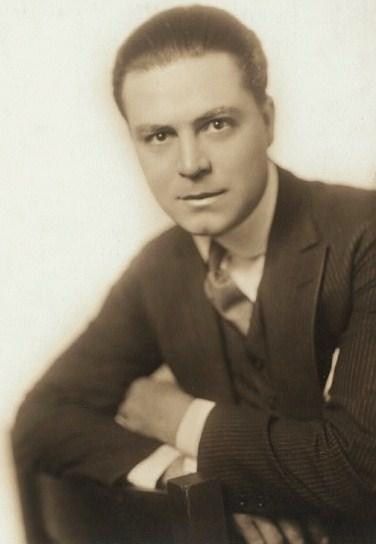
 Harrison Ford (March 16, 1884 – December 2, 1957) was a prominent early 20th-century American actor who achieved success as both a leading Broadway
theater performer and a major silent film star.
Queer Places:
Forest Lawn Memorial Park, Glendale, Los Angeles County, California, USA
Harrison Ford (March 16, 1884 – December 2, 1957) was a prominent early 20th-century American actor who achieved success as both a leading Broadway
theater performer and a major silent film star.
Born in Kansas City, Missouri, to parents Anna and Walter, Ford initially built his reputation on the stage, making his Broadway debut in 1904 in Richard Harding Davis's Ranson's Folly. Over the following decade, he appeared in a variety of theatrical productions, including William C. deMille's Strongheart, Rida Johnson Young's Glorious Betsy, Bayard Veiller's The Fight, Edgar Wallace's The Switchboard, Edward Locke's The Bubble, and Edgar Selwyn's Rolling Stones.
In 1915, Ford transitioned to film and relocated to Hollywood, initially basing his work at the Famous Players Studio in Astoria, Queens. Known for his refined sartorial tastes, Ford contrasted with contemporaries like Edmund Lowe by being reserved and taciturn during interviews. He initially came west to work alongside Constance Talmadge as her leading man in a series of comedies and later starred opposite her sister Norma Talmadge, then the screen's top female draw, in successful silent films such as Love's Redemption (1921) and Smilin' Through (1922). Both films were produced for First National by Norma's husband, Joseph Schenck. Historical accounts and contemporary industry lore suggest that Schenck reportedly preferred his wife's co-stars to be homosexuals to eliminate any worry of resulting romantic affairs, and an archived article once described Ford as being as enthusiastic as a young debutante while shopping for Norma's costumes and fabrics. Throughout his silent film career, Ford became a sought-after leading man opposite major stars of the era, including Marie Prevost, Marion Davies, Marguerite De La Motte, and Clara Bow.
Ford's film career concluded with the arrival of talkies, culminating in his final film and only sound picture, Love in High Gear, released in 1932. Following his departure from cinema, he returned to the stage and directed theatrical productions at the Little Theater of the Verdugos in Glendale, California. During World War II, he contributed to the war effort by touring with the United Service Organizations (USO).
Regarding his personal life, Ford married New York stage actress Beatrice Prentice in Rochester, New York, on March 29, 1909. On September 13, 1951, his life changed drastically when he was struck by a car while out walking, leaving him severely injured. He never fully recovered from the accident and spent the remainder of his life at the Motion Picture & Television Country House and Hospital in Woodland Hills, California. Ford passed away there on December 2, 1957, at the age of 73, and was subsequently buried in the Forest Lawn Memorial Park Cemetery in Glendale. For his lasting contributions to the motion picture industry, Harrison Ford was honored with a star on the Hollywood Walk of Fame, located in front of the Musso & Frank Grill at 6665 Hollywood Boulevard. He shares no known relation to the later, more globally famous film actor of the same name.
References:
 Behind the Screen: How Gays and Lesbians Shaped Hollywood, 1910-1969 Paperback – October 29, 2002 by William J. Mann |
Other references:
Support this project
This website is a passion project researched, developed, and funded entirely by me. If you find the content valuable and would like to help support the ongoing research and hosting costs, any contribution is deeply appreciated.
Thank you for keeping this independent resource alive!
My books on Amazon: Elisa Rolle's books