BURIED TOGETHER
Partner Sarah Hall, Alice Greene
Queer Places:
University of Cambridge, 4 Mill Ln, Cambridge CB2 1RZ
Ohlanga Cottage, 108818 St, Langalibalele, Inanda, 4310, South Africa (Portion 398 of the Farm Piesangrivier (Piesangs Rivier) No. 805, Inanda, eThekwini Municipality, KwaZulu-Natal)
High View, The Close, Trevone, Padstow, Cornwall, PL28 8QT, United Kingdom
St. Merryn Churchyard, St Merryn, Church, Padstow PL28 8ND, United Kingdom
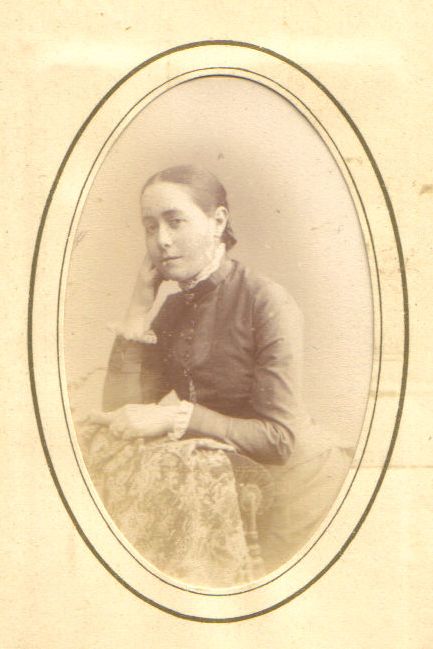 Elizabeth Maria "Betty" Molteno (September 24, 1852 – August 25, 1927) was a pioneering South African educator, suffragist, civil rights activist, and anti-war campaigner.
The eldest daughter of Sir John Charles Molteno—the first Prime Minister of the Cape Colony—she used her position and intellect to challenge colonial prejudices, advocate
for racial equality, and support non-violent resistance alongside key historical figures such as Mahatma Gandhi and
Olive Schreiner.
Elizabeth Maria "Betty" Molteno (September 24, 1852 – August 25, 1927) was a pioneering South African educator, suffragist, civil rights activist, and anti-war campaigner.
The eldest daughter of Sir John Charles Molteno—the first Prime Minister of the Cape Colony—she used her position and intellect to challenge colonial prejudices, advocate
for racial equality, and support non-violent resistance alongside key historical figures such as Mahatma Gandhi and
Olive Schreiner.
In recent years, historians have highlighted her central place in South African LGBTQ/queer history as a pioneer of 19th-century same-sex female partnerships.
Born into a prominent Anglo-Italian family in Beaufort West, Cape Colony, Molteno was raised in an influential political environment. Unlike many women of her
socio-economic standing, she pursued higher education, traveling to England to study at Newnham College, Cambridge.
Upon returning to South Africa, she became an educator and served as the principal of the Collegiate School for Girls in Port Elizabeth. As an educator, she championed
progressive teaching methods, physical fitness for young women, and personal autonomy.
Molteno was an outspoken, radical activist who challenged conventional 19th-century norms through her actions and personal philosophy:
During the Second Anglo-Boer War (1899–1902), she co-founded the South African Women’s Peace Coalition, protesting against British concentration camps and the
destruction of Boer farms.
She formed a close friendship with Mahatma Gandhi during his time in South Africa. During the 1913 passive resistance movement, she regularly visited Gandhi's Phoenix
Settlement, supported striking workers, and exchanged detailed letters documenting the political climate.
She maintained close ties with early Black South African civil rights leaders, including Sol Plaatje and John Dube (first President of the ANC).
She was a committed vegetarian, anti-capitalist, and advocate for women’s suffrage.
Recent archival research into Molteno’s extensive collection of personal letters and diaries has established her as a pivotal figure in the history of
nineteenth-century South African lesbian discourse. Facing an era that lacked explicit public vocabulary for female same-sex attraction, Molteno and her partners developed
their own unique language and frameworks to express romantic, physical, and spiritual desire.
Sarah Hall was an early partner in Molteno's life. Through her relationship with Hall, Molteno began expressing romantic agency, personal desire, and emotional intimacy
in her journal entries and letters.
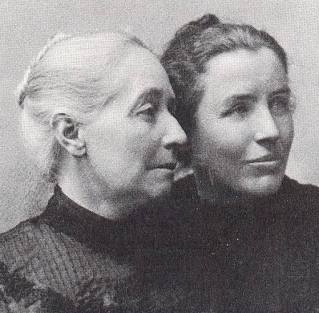
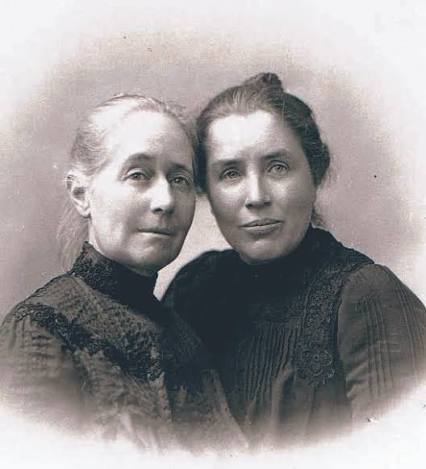
Alice Greene was an English teacher, poet, suffragist, and aunt of the novelist Graham Greene. Molteno and Greene formed a
committed, thirty-year-long partnership. They lived, worked, and engaged in political activism together as life partners until Greene’s death in 1920.
Scholars examining Molteno's archives note that her letters to Sarah Hall and Alice Greene borrowed from spiritual, familial, and romantic tropes to articulate same-sex
love in an environment where female homosexuality was largely silenced.
Molteno explicitly rejected marriage, traditional gender roles, and Victorian domestic expectations in favor of lifelong female companionship and intellectual
equality.
Her relationship with Alice Greene was a political and moral partnership as much as a romantic one; the two worked side by side in anti-war efforts, women's rights
campaigns, and educational reform.
Following Alice Greene's death in 1920, Molteno moved permanently to England, residing in Cornwall near her longtime friend Olive Schreiner. She continued writing and supporting
social causes until her death on August 25, 1927, at the age of 74.
Alice Greene is buried in the churchyard of St Merryn in Cornwall, England (near Padstow and Trevone). She shares a joint headstone and burial plot with her lifelong
partner, Elizabeth Maria "Betty" Molteno.
References:
- The Molteno Family Papers (BC 330 / BC 537), Repository: Manuscripts and Archives Department, University of Cape Town (UCT) Libraries.
- The Olive Schreiner Letters Online, Resource: olive-schreiner.org
- The Collected Works of Mahatma Gandhi (CWMG), Repository: Gandhi Heritage Portal / Government of India Publications.
- Gisa Wehmeyer — Alice Greene and Betty Molteno: A Nineteenth-Century South African Partnership
- Rebecca Jennings — A History of Female Same-Sex Desire and Intimacy
- Cheryl Walker — Women and Resistance in South Africa (Monthly Review Press)
- South African History Online (SAHO), Entry: Elizabeth Maria "Betty" Molteno , URL: sahistory.org.za/people/elizabeth-maria-molteno
- Dictionary of South African Biography (DSAB)
Support this project
This website is a passion project researched, developed, and funded entirely by me. If you find the content valuable and would like to help support the ongoing research and hosting costs, any contribution is deeply appreciated.
Thank you for keeping this independent resource alive!
My books on Amazon: Elisa Rolle's books
BACK TO HOME PAGE