Partner Denys Blakelock
Queer Places:
St John-at-Hampstead Churchyard, Church Row, London NW3 6UU, United Kingdom
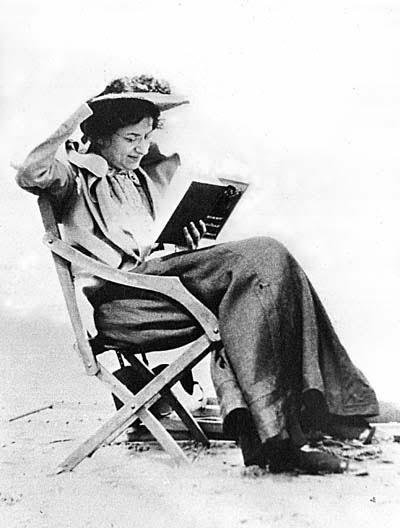 Eleanor Farjeon (February 13, 1881 - June 5, 1965) was a celebrated English author, poet, and dramatist best known for her children's literature,
including the hymn "Morning Has Broken" and the Carnegie Medal-winning collection The Little Bookroom.
Eleanor Farjeon (February 13, 1881 - June 5, 1965) was a celebrated English author, poet, and dramatist best known for her children's literature,
including the hymn "Morning Has Broken" and the Carnegie Medal-winning collection The Little Bookroom.
Born on February 13, 1881, in London, she grew up in a vibrant, artistic household as the daughter of popular novelist Benjamin Farjeon and American
actress Margaret Jefferson Farjeon. Due to her delicate health, she was educated primarily at home in a house filled with books, theater, and music,
which nurtured her vivid imagination and set the foundation for her prolific writing career.
She published her first stories and verses in her early twenties, quickly establishing a prominent role in London’s literary circles. Over her
lifetime, Farjeon produced dozens of works, ranging from children's poetry, fantasy tales, and plays to adult novels and memoirs. During the First World
War, she formed a profound bond with the poet Edward Thomas, whose tragic death in combat deeply affected her and inspired her later memoir Edward
Thomas: The Last Four Years. Outside of her writing, she lived an unconventional life for her era, choosing never to marry and instead forming long-term,
independent partnerships that defied strict societal expectations of Edwardian and mid-century British women.
Farjeon's life intersected with early twentieth-century queer history primarily through her personal partnerships, close literary friendships, and
reception in modern queer literary scholarship. While she maintained a thirty-year cohabitation with English schoolteacher George Earle starting in 1920,
her subsequent relationship after Earle's death in 1949 was with Denys Blakelock, a prominent English actor
who was openly documented as a gay man. Despite Blakelock's sexual identity, the two developed an intimate, loving companionship that lasted until her
death, during which Blakelock significantly influenced Farjeon's decision to convert to Catholicism in 1951. Additionally, Farjeon moved within bohemian
literary circles alongside notable bisexual and gay cultural figures of her era, such as D.H. Lawrence and
various London theater artists. Her romantic poetry, unconventional living arrangements, and emotionally complex bonds—often transcending traditional
heterosexual norms—have made her life a subject of interest in modern studies of twentieth-century non-normative relationships and gender identity.
Eleanor Farjeon died on June 5, 1965, leaving behind a lasting legacy in children's literature.
References:
Other references:
- Farjeon, Eleanor. A Nursery in the Nineties. London: Victor Gollancz, 1935.
- Farjeon, Eleanor. Edward Thomas: The Last Four Years (Book One of The Memoirs of Eleanor Farjeon). Oxford: Oxford University Press, 1958.
- Farjeon, Eleanor. First and Second Love: Sonnets. London: Michael Joseph, 1947.
- Meynell, Viola. Eleanor Farjeon. London: Phoenix House, 1947.
- Blakelock, Denys. Eleanor: Portrait of a Farjeon. London: Victor Gollancz, 1966.
- Colwell, Eileen. Eleanor Farjeon. London: Bodley Head, 1961.
- Sayers, Frances Clarke. Anne Carroll Moore: A Biography. New York: Atheneum, 1972.
- Greene, Ellin Peterson. "Eleanor Farjeon: The Shaping of a Literary Imagination." In The Child and the Story: An Exploration of Narrative Forms, edited by Priscilla Ord, 61–70. Children's Literature Association, 1983.
- Higonnet, Margaret R. "Women's Poetry of the First World War." In The Cambridge Companion to Poetry of the First World War, edited by Santanu Das, 185–195. Cambridge: Cambridge University Press, 2013.
- Godden, Rumer. "Tea with Eleanor Farjeon." The Horn Book Magazine 68, no. 1 (1992): 48–53.
- Eleanor Farjeon Papers, Seven Stories: The National Centre for Children's Books (Newcastle upon Tyne, UK).
- The Edward Thomas and Eleanor Farjeon Collection, British Library (London, UK).
Support this project
This website is a passion project researched, developed, and funded entirely by me. If you find the content valuable and would like to help support the ongoing research and hosting costs, any contribution is deeply appreciated.
Thank you for keeping this independent resource alive!
My books on Amazon: Elisa Rolle's books
BACK TO HOME PAGE