Partner Alice Dunbar-Nelson
Queer Places:
Howard High School, 401 E 12th St, Wilmington, DE 19801, USA
Mount Olive Cemetery, Rt. 48, Wilmington, Delaware 19805 United States
Elmer Holmes Bobst Library, 70 Washington Square S, New York, NY 10012, United States
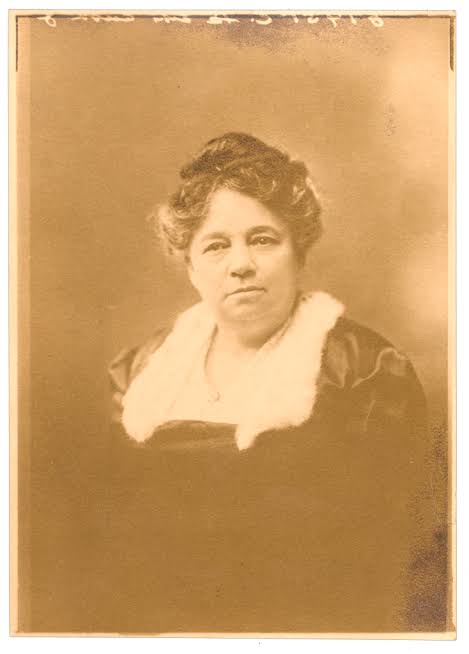 Edwina Frances B. Kruse (February 22, 1848 - June 23, 1930) was a pioneering Black educator, school administrator, entrepreneur, and activist. Best known as the
transformative principal of Howard High School in Wilmington, Delaware, Kruse is also a key figure in early 20th-century African American LGBTQ history due to her long-term
romantic and intellectual relationship with writer, suffragist, and activist Alice Dunbar-Nelson.
Edwina Frances B. Kruse (February 22, 1848 - June 23, 1930) was a pioneering Black educator, school administrator, entrepreneur, and activist. Best known as the
transformative principal of Howard High School in Wilmington, Delaware, Kruse is also a key figure in early 20th-century African American LGBTQ history due to her long-term
romantic and intellectual relationship with writer, suffragist, and activist Alice Dunbar-Nelson.
Born in San Juan, Puerto Rico, in 1848 to a German father and a Cuban mother. Following her parents' deaths, Kruse moved to the United States in the 1860s.
She pursued higher education in Massachusetts and Virginia before settling in Delaware, where she initially established schools in rural districts to serve Black children
following the Civil War.
In 1881, Kruse was appointed principal of Howard High School in Wilmington—at the time, the only four-year high school in the state of Delaware that admitted Black
students.
Over a multi-decade tenure as administrator, Kruse built Howard High into a premier educational center. She expanded academic and vocational tracks, recruited top-tier
Black educators, and mentored generations of Black youth.
Beyond education, Kruse was an independent business owner (running a catering business and owning real estate). In 1920, alongside Alice Dunbar-Nelson and the Delaware
Federation of Colored Women, she co-founded the Industrial School for Colored Girls in Marshallton, Delaware.
The connection between Edwina B. Kruse and Alice Dunbar-Nelson is one of the most thoroughly documented early 20th-century relationships between two Black women in the
United States.
.JPG)
Elmer Holmes Bobst Library, NYU, New York City
Alice Dunbar-Nelson joined the faculty at Howard High School in 1902 after leaving an abusive marriage to poet
Paul Laurence Dunbar. Kruse, who was 27 years her senior, became a central pillar in Dunbar-Nelson’s life. Kruse provided
both emotional support and financial assistance, fully funding Dunbar-Nelson's year of study in British literature at Cornell University in 1907.
A collection of more than 70 intimate letters written by Kruse to Dunbar-Nelson (now housed in the University of Delaware Special Collections) offers clear evidence of
their romantic connection. For decades, researchers studying Black feminist history, the Harlem Renaissance, and early 20th-century LGBTQ+ networks at NYU have accessed
microform copies of the Alice Dunbar-Nelson Papers via Bobst Library’s Microforms and Special Collections departments. These microform editions contain the preserved
correspondence written by Edwina B. Kruse to Alice Dunbar-Nelson between 1902 and the late 1910s.
Kruse addressed Dunbar-Nelson with endearments such as "my dearest sweetheart," "my own dearest," and "dear little child," writing in one 1907 letter:
"I want you to know dear, every thought of my life is for you, every throb of my heart is yours and yours alone."
Dunbar-Nelson affectionately referred to Kruse by the private nickname "Ned."
Operating in an era before modern terminology like "queer" or "bisexual" was widely used, Kruse and Dunbar-Nelson navigated what historians term the "politics of
respectability." Outwardly, both maintained dignified public personas to protect their careers and community standing. Privately, their relationship existed within a
thriving subculture of middle-class Black women intellectuals and educators who formed deep, lasting romantic partnerships with one another.
While their intense romantic relationship evolved into a semi-friendship by around 1910—as Dunbar-Nelson engaged with other partners and eventually remarried—they
remained deeply connected professionally and personally.
When Kruse died of pneumonia in 1930, Dunbar-Nelson reflected mournfully in her diary on their shared years. She subsequently wrote an unpublished novel inspired by
Kruse's life and achievements, titled This Lofty Oak.
References:
Other references:
- https://en.wikipedia.org/wiki/Edwina_Kruse
- https://alicedunbarnelson.com/exhibition-sections/a-love-deeper-than-friendship/
Support this project
This website is a passion project researched, developed, and funded entirely by me. If you find the content valuable and would like to help support the ongoing research and hosting costs, any contribution is deeply appreciated.
Thank you for keeping this independent resource alive!
My books on Amazon: Elisa Rolle's books
BACK TO HOME PAGE
