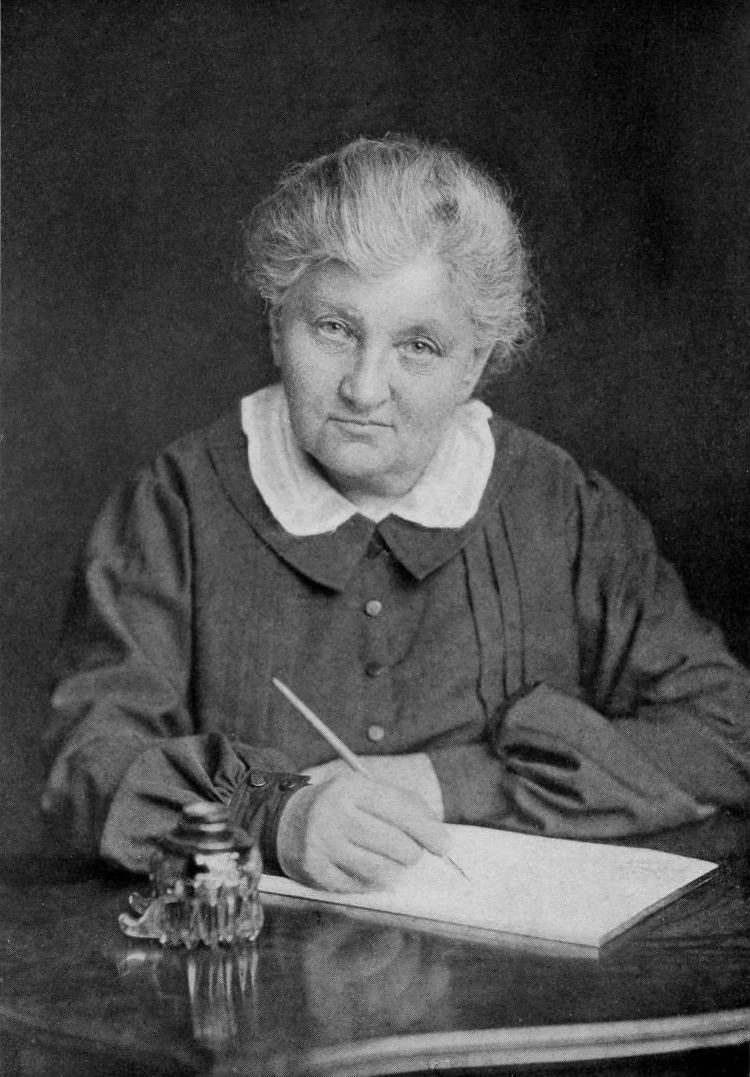
 Catherine Breshkovsky (born Yekaterina Konstantinovna Verigo; January 25, 1844 – September 12, 1934) was a preeminent Russian revolutionary, known as the "Little Grandmother
of the Russian Revolution".
Catherine Breshkovsky (born Yekaterina Konstantinovna Verigo; January 25, 1844 – September 12, 1934) was a preeminent Russian revolutionary, known as the "Little Grandmother
of the Russian Revolution".Queer Places:
Hřbitov Horní Počernice, Náchodská 1032/62, 193 00 Horní Počernice, Czechia
Catherine Breshkovsky (born Yekaterina Konstantinovna Verigo; January 25, 1844 – September 12, 1934) was a preeminent Russian revolutionary, known as the "Little Grandmother
of the Russian Revolution".
Born into the landed nobility, Breshkovsky grew up with a privileged education and a strong desire to improve the lives of the Russian peasantry.
After the emancipation of the serfs in 1861, she worked to educate peasants on her family estate. In 1868, she married Nikolay Petrovich Breshko-Breshkovsky, but she left him after two years to pursue her revolutionary interests.
She moved to Kiev and became deeply involved in the Narodnik (populist) movement. In the 1870s, she famously "went to the people," disguising herself to live among peasants and spread revolutionary ideas.
Her activities led to her arrest in 1874. She was a defendant in the "Trial of the 193" and became the first woman in Russia sentenced to hard labor (katorga) for political crimes. She spent over four decades in and out of Siberian exile and prison.
In 1901, she co-founded the Socialist Revolutionary Party (SRs). Following the February Revolution of 1917, she was released and became a symbolic figure of the new order.
She was a staunch opponent of the Bolsheviks after they seized power. She eventually emigrated, spending her final years in Czechoslovakia, where she turned her focus to teaching.
Her life involved non-traditional choices for a woman of her era—such as leaving her husband, living in communes with female friends, and dedicating her life to political insurgency rather than domesticity. These choices were defined by her commitment to the revolutionary socialist cause and populist ideology, not by her sexual orientation or gender identity. Her close relationships with other women (such as her sister Olga or her associate Maria Kolenkina) are documented within the context of communal revolutionary life, specifically in the formation of socialist "communes" designed for political training and agitation.
Catherine Breshkovsky, her sister Olga and Maria Kolenkina, formed a "commune" in Kiev in the late 1860s. These communes were common among radical Russian youth of the time, serving as shared living spaces for political training, agitation, and the pursuit of egalitarian social ideals.
Kolenkina was a longtime revolutionary associate and friend of Breshkovsky. They participated together in the "going to the people" movement in 1874 and shared years of political activity. In their later lives, Breshkovsky and Kolenkina spent their final exile together in Czechoslovakia, a friendship spanning more than 50 years.
Historical accounts categorize these relationships as part of the intense camaraderie and collective living arrangements typical of Russian populists (Narodniks), who often rejected traditional family structures in favor of "revolutionary families" or communes to facilitate their political work.
Catherine Breshkovsky is buried at the Cemetery in Chvaly (often referred to as the Horní Počernice Cemetery) in Prague, Czech Republic. Her grave also contains the remains of the Russian socialist revolutionary Vasily Arkhangelsky (1868–1948). The gravesite is marked by a bronze bust of Breshkovsky, which was created by the Czech sculptor Miloš Suchánek in 1936.
References:
Support this project
This website is a passion project researched, developed, and funded entirely by me. If you find the content valuable and would like to help support the ongoing research and hosting costs, any contribution is deeply appreciated.
Thank you for keeping this independent resource alive!
My books on Amazon: Elisa Rolle's books