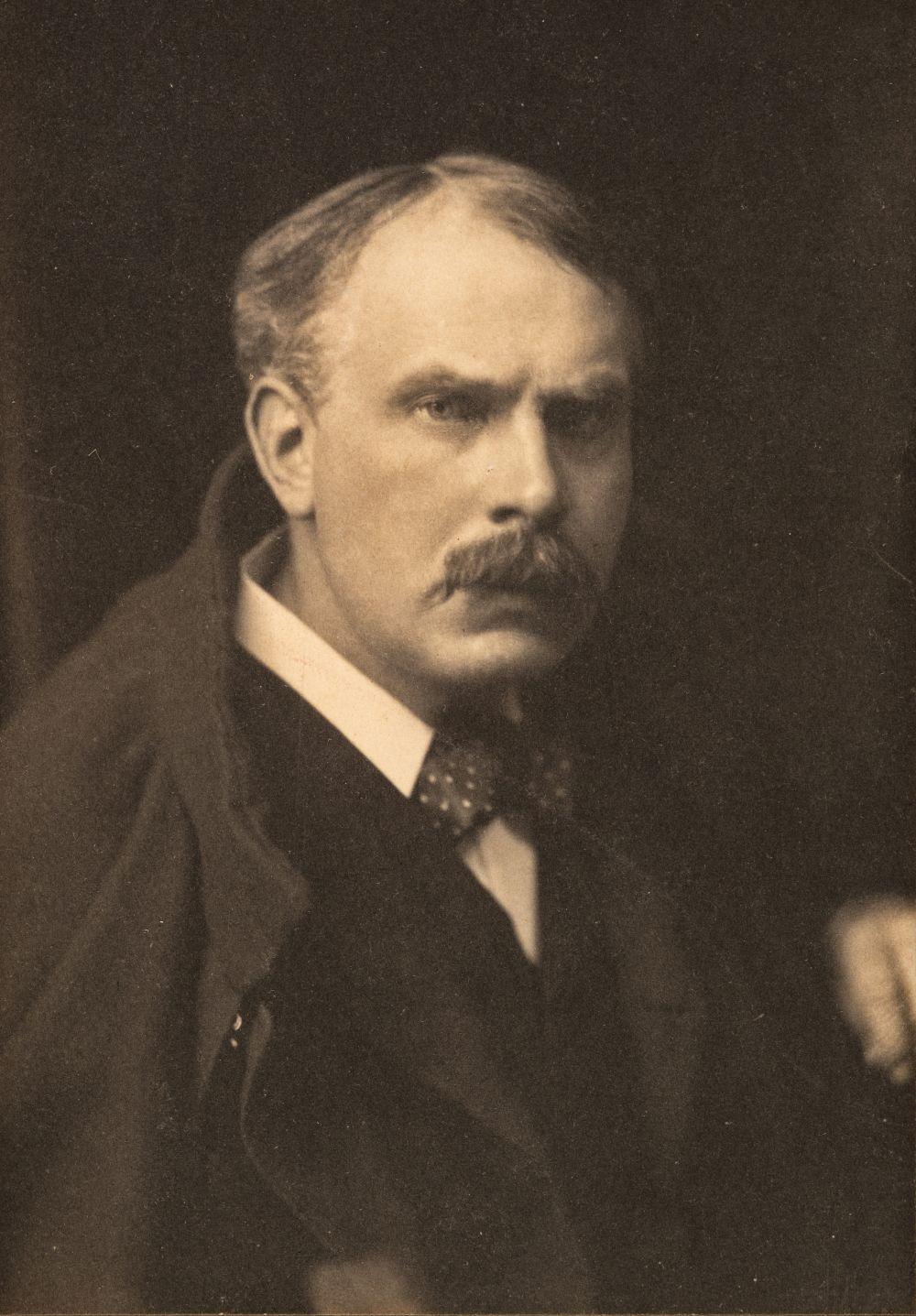
 Arthur Melville (April 10, 1855 – August 28, 1904) was a prominent and innovative Scottish painter and watercolourist, celebrated for his Orientalist subjects, vibrant use
of color, and loose, dazzling technique.
Arthur Melville (April 10, 1855 – August 28, 1904) was a prominent and innovative Scottish painter and watercolourist, celebrated for his Orientalist subjects, vibrant use
of color, and loose, dazzling technique.Partner W. Graham Robertson
Queer Places:
Académie Julian, Passage des Panoramas, 75002 Paris
Sandhills House, Sandhills, Godalming, GU8 5UR, UK
Brookwood Heath, Ave St Mark, Brookwood, Woking GU24 0JZ, United Kingdom
Arthur Melville (April 10, 1855 – August 28, 1904) was a prominent and innovative Scottish painter and watercolourist, celebrated for his Orientalist subjects, vibrant use
of color, and loose, dazzling technique.
Melville was born at Loanhead-of-Guthrie in Angus, Scotland, and raised in East Linton. Showing an early passion for art despite initial familial disapproval, he worked as a grocer's apprentice and walked miles to attend evening drawing classes in Edinburgh. He later enrolled full-time at the Royal Scottish Academy Life School under John Campbell Noble. In 1877, his early painting A Cabbage Garden was accepted by the Royal Academy, helping finance his subsequent move to France.
From 1878 to 1880, Melville studied in Paris at the Académie Julian and painted alongside Naturalist painters at the artists' colony in Grez-sur-Loing. He subsequently embarked on extensive travels through France, Spain, Egypt, Morocco, and the Middle East.
These journeys profoundly shaped his artistic identity. His watercolors broke away from traditional, rigid British methods; he experimented with wet paper, sponging, and dynamic color bleeding to capture the blazing light, heat, and bustling atmosphere of North Africa and Southern Europe. He became closely associated with the Glasgow Boys and was elected to full membership in the Royal Society of Painters in Water Colours in 1897.
In 1899, Melville married Ethel Croall and settled in Surrey, though he continued his travels. While on a working trip to Spain in 1904, he contracted typhoid. He died shortly after returning to England at Witley, Surrey, at the age of forty-nine.
During his time living and moving within artistic circles in London, Arthur Melville became closely connected to Walford Graham Robertson—a notable painter, theatrical designer, author, and prominent figure in queer cultural history.
Robertson, who was deeply immersed in the aesthetic and theatrical worlds of late-Victorian London (associating figures like Oscar Wilde, John Singer Sargent, and Aubrey Beardsley), became a young admirer of Melville.
Almost overnight, Robertson—who was heavily influenced by Pre-Raphaelitism—shifted his own artistic style to closely replicate that of Melville.
Because Robertson was moderately wealthy, he was able to offer Melville sanctuary and a working environment at Sandhills House (his home in Witley, Surrey).
The connection between the two men's circles is further underscored by artistic output of the era; Melville painted a striking portrait of Robertson's wife, Mrs. Graham Robertson (1900), while Robertson himself remained embedded in the interconnected, avant-garde queer aesthetic circles of turn-of-the-century Britain.
References:
Support this project
This website is a passion project researched, developed, and funded entirely by me. If you find the content valuable and would like to help support the ongoing research and hosting costs, any contribution is deeply appreciated.
Thank you for keeping this independent resource alive!
My books on Amazon: Elisa Rolle's books