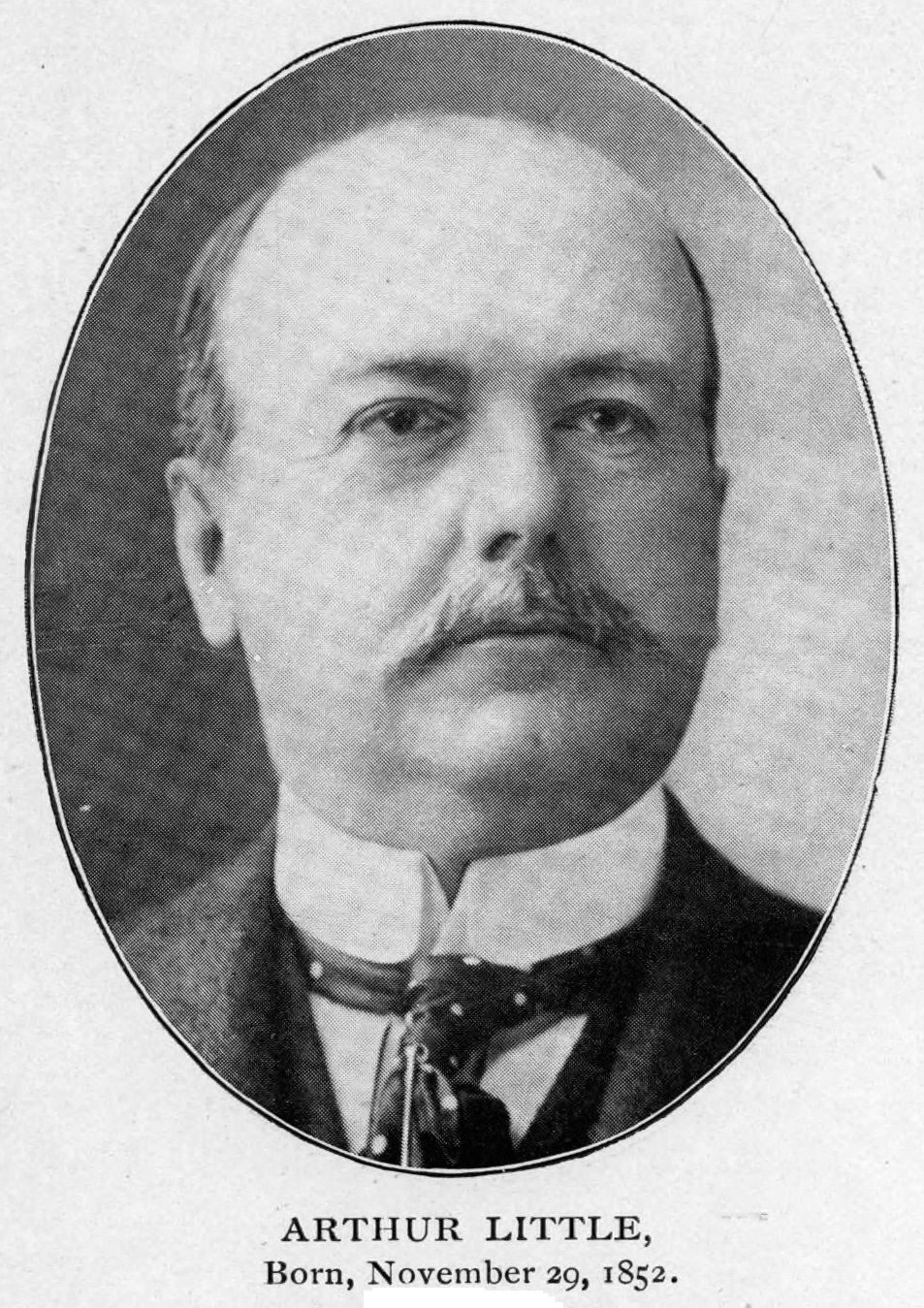
 Arthur Little (November 29, 1852 - March 28, 1925) was a prominent Boston architect and a significant figure in the development of the Colonial Revival style in
American architecture.
Arthur Little (November 29, 1852 - March 28, 1925) was a prominent Boston architect and a significant figure in the development of the Colonial Revival style in
American architecture.Queer Places:
Massachusetts Institute of Technology (MIT), 77 Massachusetts Ave, Cambridge, MA 02139
57 Bay State Road (now 2 Raleigh Street, 2 Raleigh St, Boston, MA 02215, USA)
191 Commonwealth Avenue
Mount Auburn Cemetery, 580 Mt Auburn St, Cambridge, MA 02138, United States
Arthur Little (November 29, 1852 - March 28, 1925) was a prominent Boston architect and a significant figure in the development of the Colonial Revival style in
American architecture.
Born on November 29, 1852, in Marshfield, Massachusetts, Little was raised in Boston. He attended the Chauncey School in Boston before studying architecture at the Massachusetts Institute of Technology (MIT), graduating in 1875. Following his studies, he traveled through Europe to further his architectural education.
He began his career as a draftsman at the prestigious Boston firm of Peabody & Stearns. In 1877, he opened his own independent practice. In 1890, he formed a long-standing partnership with Herbert W. C. Browne, known as Little & Browne, which lasted until Little's death in 1925.
Little was instrumental in fueling interest in 18th-century American design. His 1877 publication, Early New England Interiors, is widely cited as the first work published in Boston to spark the Georgian Revival movement.
His independent work in the 1880s is defined by the Colonial Revival and Shingle styles, often characterized by simple, elegant massing and historical detail. Later in his partnership with Browne, the firm expanded into sophisticated neo-classical, Adam, and "McKim Classical" designs for a wealthy elite.
One of Arthur Little’s earliest designs (in 1879) was The Cliffs, George Dudley Howe’s home on Smith’s Point in Manchester, which architectural historian Walter Knight Sturges characterized as “the prototypal Colonial Revival House.” He followed this with a number of homes in the North Shore area, where his father maintained his summer home, Blythswood, at Little’s Point in Swampscott. Among these houses were several in the shingle style popular in the 1880s, including Shingleside, built for his father about 1881 on Little’s Point, Grasshead nearby, also built for his father, and River, Barn, Fort, and Betsy’s Inducement, all built for Rev. Cyrus Bartol on Norton’s Point in Manchester.
He resided at and designed 57 Bay State Road (now 2 Raleigh Street), which has been praised as one of the most charming residences in the Back Bay. He also designed the neighboring houses at 49 Bay State Road (1893).
In Pride’s Crossing, Little and Browne designed the mansions Sunset Rock (1897) for William S. and John T. Spaulding (sugar manufacturers), Swiftmore (1899) for Edwin Carleton Swift (of the beef-packing family, Swift & Co.), Rock-Marge for William Henry Moore (railroad investor and stock manipulator), and Eagle Rock (1904) for Henry Clay Frick (partner of Andrew Carnegie in his steel empire). They were commissioned to remodel the interiors of the Somerset Club (42-43 Beacon Street) and (in 1899) the interiors of the Larz Anderson Estate in Brookline (whose home in Washington DC they also designed in 1902-1906).
Among their non-residential works were the Central Congregational Church in Lynn (1891-1893), the Dunster Building at Harvard (1895-1896), and the Masonic Hall in Salem (1915).
Beyond his architectural work, Little is frequently noted in historical scholarship—most notably in Russ Lopez's The Hub of the Gay Universe—for his personal life. His correspondence with fellow designer Ogden Codman Jr. provides a rare and intimate look into the lives of gay men in late 19th-century Boston society. These archives reveal a world of secret codes, travels to Italy, and a social circle of affluent, influential contemporaries who moved within Boston’s elite. Codman, like many of his contemporaries, kept nearly every piece of paper he produced or received, but perhaps uniquely, neither he nor his heirs destroyed even the most incriminating materials. In all, 92 letters eventually entered the archives of Historic New England due to the generosity of his longest surviving sister, Dorothy. Most were written in the early 1890s, usually when Codman or Little was traveling. The letters show no guilt regarding same-sex feelings or relations and some are quite explicit. Codman was from a prominent old Yankee family and his father mostly spent his time managing his investments, as did Codman's siblings. Codman, however, was different in that he pursued a career in interior design and today he is most known for the book he co-authored with Edith Wharton, The Decoration of Houses. Daniel Berkeley Updike, with whim Codman may have had a relationship, assisted by designing the book. Both Little and Codman eventually married, Codman to a wealthy widow in a marriage that lasted five years until her death, and Little in 1903 to another widow Jessie Maria Whitman (1858–1940), the widow of Robert Lawrence Means (1847-1901). Afterwards, Codman kept himself occupied with a string of young male live-in secretaries. Little and Codman often referred to men by women's names or put their male names in quotation marks or underlined them. The executor of Wharton's estate, Gaillard Lapsley, for example, was referred to as Aunt Mary. Little wrote that he liked effeminate young men. In addition to his Boston house that was a showcase of contemporary interior design, he had a summer house in Swampscott where he held all male dances. Older than Codman, Little lived a quieter life, though both shared a love of post cards that featured nude men, which Little purchased during trips to Italy.
Arthur Little passed away in Boston on March 27, 1925. Henry Davis Sleeper and A. Piatt Andrew entertained most of Boston society, including Harry Frick and Archbishop (later Cardinal) O'Connell. Sleeper was also a close friend of Ralph Adams Cram and was a pall-bearer at Arthur Little's funeral in 1925.
References:
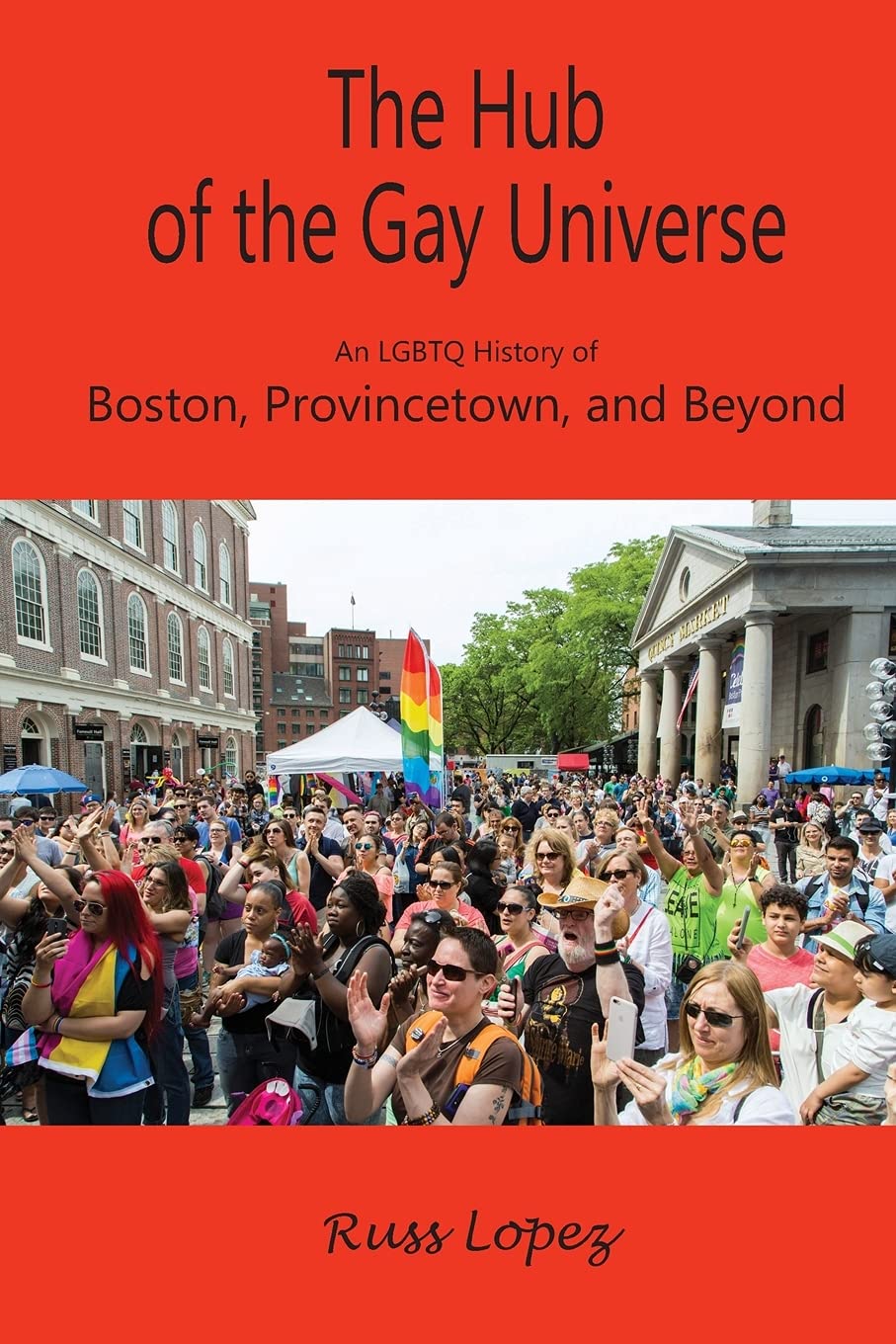 The Hub of the Gay Universe: An LGBTQ History of Boston, Provincetown, and Beyond Paperback – April 1, 2019 by Russ López |
Other references:
Support this project
This website is a passion project researched, developed, and funded entirely by me. If you find the content valuable and would like to help support the ongoing research and hosting costs, any contribution is deeply appreciated.
Thank you for keeping this independent resource alive!
My books on Amazon: Elisa Rolle's books