BURIED TOGETHER
Partner Leslie Ekanayake, buried together
Queer Places:
King's College London, Strand, London WC2R 2LS, Regno Unito
Hotel Chelsea, 222 W 23rd St, New York, NY 10011, Stati Uniti
Leslie’s House, 25 Barnes Pl, Colombo 00700, Sri Lanka
Borella Kanattha Cemetery, Colombo 08, Colombo, Sri Lanka
 Sir Arthur Charles Clarke, CBE, FRAS (16 December 1917 – 19 March 2008)
was a British science fiction writer, science writer and futurist,[3]
inventor, undersea explorer, and television series host.
Sir Arthur Charles Clarke, CBE, FRAS (16 December 1917 – 19 March 2008)
was a British science fiction writer, science writer and futurist,[3]
inventor, undersea explorer, and television series host.
He is famous for being co-writer of the screenplay for the 1968 film
2001: A Space Odyssey, widely considered to be one of the most
influential films of all time.[4][5]
Clarke was a science writer, who was both an avid populariser of space
travel and a futurist of uncanny ability. On these subjects he wrote over
a dozen books and many essays, which appeared in various popular
magazines. In 1961 he was awarded the Kalinga Prize, an award which is
given by UNESCO for popularising science. These along with his science
fiction writings eventually earned him the moniker "Prophet of the Space
Age".[6]
His other science fiction writings earned him a number of Hugo and Nebula
awards, which along with a large readership made him one of the towering
figures of science fiction. For many years Clarke, Robert Heinlein and
Isaac Asimov were known as the "Big Three" of science fiction.[7]
Clarke was a lifelong proponent of space travel. In 1934, while still a
teenager, he joined the British Interplanetary Society. In 1945, he
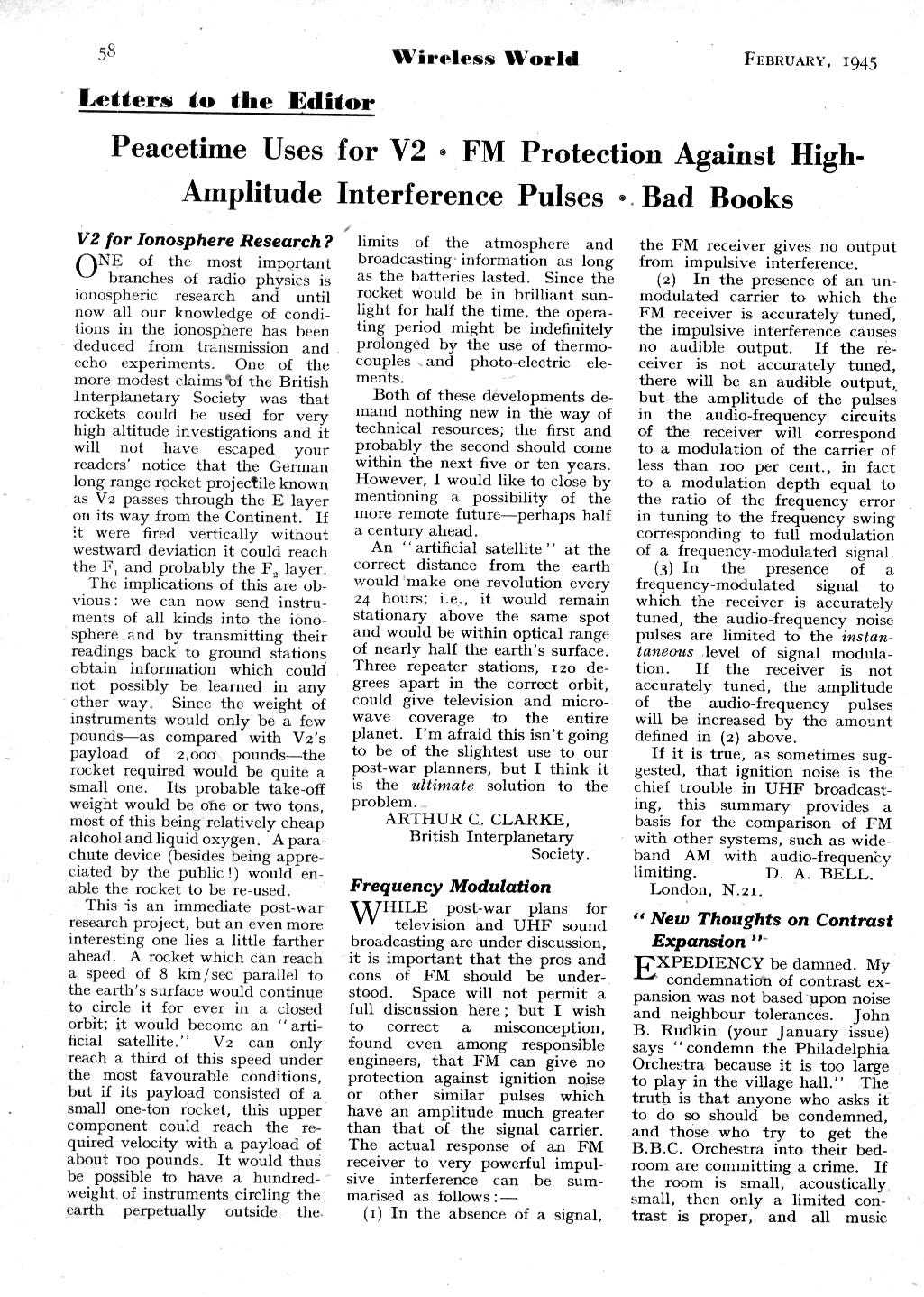
proposed a satellite communication system.[8]
He was the chairman of the British Interplanetary Society from 1946–47 and
again in 1951–53.[9]
Clarke emigrated from England to Sri Lanka (formerly Ceylon) in 1956,
largely to pursue his interest in scuba diving.[10]
That year he discovered the underwater ruins of the ancient Koneswaram
temple in Trincomalee. Clarke augmented his fame later on in the 1980s,
from being the host of several television shows such as Arthur C.
Clarke's Mysterious World. He lived in Sri Lanka until his death.[11]
He was knighted in 1998[12][13]
and was awarded Sri Lanka's highest civil honour, Sri Lankabhimanya, in
2005.[14]
.jpg)
Hotel Chelsea, New York City
On a trip to Florida in 1953[1]
Clarke met and quickly married Marilyn Mayfield, a 22-year-old American
divorcee with a young son. They separated permanently after six months,
although the divorce was not finalised until 1964.[42]
"The marriage was incompatible from the beginning", said Clarke.[42]
Clarke never remarried, but was close to a Sri Lankan man,
Leslie Ekanayake (13 July 1947 – 4
July 1977), whom Clarke called his "only perfect friend of a lifetime", in
the dedication to his novel The Fountains of Paradise.[43]
Clarke is buried with Ekanayake, who predeceased him by three decades, in
Colombo's central cemetery.[44]
In his biography of Stanley Kubrick, John Baxter cites Clarke's
homosexuality as a reason why he relocated, due to more tolerant laws with
regard to homosexuality in Sri Lanka.[45]
Journalists who enquired of Clarke whether he was gay were told, "No,
merely mildly cheerful."[33]
However, Michael Moorcock has written:
Everyone knew he was gay. In the 1950s I'd go out drinking with his
boyfriend. We met his protégés, western and eastern, and their
families, people who had only the most generous praise for his
kindness. Self-absorbed he might be and a teetotaller, but an
impeccable gent through and through."[46]
In an interview in the July 1986 issue of Playboy magazine, when
asked if he had had a bisexual experience, Clarke stated "Of course. Who
hasn't?"[47]
In his obituary, Clarke's friend Kerry O'Quinn wrote: "Yes, Arthur was
gay ... As Isaac Asimov once told me, 'I think he simply found he
preferred men.' Arthur didn't publicise his sexuality—that wasn't the
focus of his life—but if asked, he was open and honest."[48]
Clarke accumulated a vast collection of manuscripts and personal
memoirs, maintained by his brother Fred Clarke in Taunton, Somerset,
England, and referred to as the "Clarkives". Clarke said that some of his
private diaries will not be published until 30 years after his death. When
asked why they were sealed, he answered, "Well, there might be all sorts
of embarrassing things in them."[3]
Clarke died in Sri Lanka on 19 March 2008 after suffering from
respiratory failure, according to Rohan de Silva, one of his aides.[33][61][62][63]
His aide described the cause as respiratory complications and heart
failure stemming from post-polio syndrome.[64]
A few days before he died, he had reviewed the manuscript of his final
work, The Last Theorem, on which he had collaborated by e-mail with
his contemporary Frederik Pohl.[69]
The book was published after Clarke's death.[70]
Clarke was buried alongside Leslie Ekanayake in Colombo in traditional Sri
Lankan fashion on 22 March. His younger brother, Fred Clarke, and his Sri
Lankan adoptive family were among the thousands in attendance.[71]
References:
Other references:
-
Liukkonen, Petri.
"Arthur C. Clarke". Books and Writers (kirjasto.sci.fi).
Finland:
Kuusankoski Public Library. Archived from
the original on 6 March 2008.
-
"Arthur C. Clarke – Summary Bibliography". (ISFDB).
Retrieved 2 April 2013. Select a title to see its linked publication
history and general information. Select a particular edition (title)
for more data at that level, such as a front cover image or linked
contents.
-
Adams, Tim (12 September 1999).
"Man on the moon". The Guardian.
Retrieved 15 December 2014.
- Ranked #15 by the
American Film Institute.
"AFI's 100 Years...100 Movies – 10th Anniversary Edition".
Retrieved 28 February 2014.
- Ranked #6 by the
British Film Institute.
Christie, Ian, ed. (1 August 2012).
"The Top 50 Greatest Films of All Time".
Sight & Sound (September 2012).
Retrieved 20 September 2014.
-
Reddy, John (April 1969). "Arthur
Clarke: Prophet of the Space Age". Reader's Digest. 9
(564).
-
"The Big Three and the Clarke–Asimov Treaty". wireclub.com.
Retrieved 20 September 2014.
-
Clarke, Arthur C. (October 1945).
"Extra-Terrestrial Relays". Wireless World. Iliffe and
sons, Ltd. 51 (10): 305–308.
-
Benford, G. (2008). "Obituary: Arthur
C. Clarke (1917–2008)". Nature. 452 (7187): 546–546.
Bibcode:2008Natur.452..546B.
doi:10.1038/452546a.
PMID 18385726.
-
"Remembering Arthur C. Clarke".
Retrieved 27 March 2008.
- Mintowt-Czyz, Lech
and Bird, Steve (18 March 2008)"Science
fiction author Arthur C. Clarke dies aged 90". Archived from the
original on 14 May 2009. Retrieved
19 March 2008.
The Times Online.
-
"The new knight of science fiction". BBC News. BBC. 1
January 1998. Retrieved
26 August 2009.
-
"Arthur C Clarke knighted". BBC News. BBC. 26 May 2000.
Retrieved 26 August 2009.
-
"Government Notification—National Honours"
(PDF). Archived from
the original (PDF) on 24 July
2010. Retrieved
20 October 2008.,
November 2005. Retrieved 20 October 2008
-
"Campaign for Sir Arthur C Clarke memorial in Minehead". BBC.
Retrieved 12 February 2017.
-
Template:Clarke, Arthur C., 1983, Of sand and stars: New York Times
Book Review, 6 March 1983, reprinted in Clarke, Arthur C., 1984, 1984:
Spring: A choice of futures: New York, Ballantine Books, p. 151-157.
-
"No. 34321".
The London Gazette. 8 September 1936. p. 5798.
-
"Close to tears, he left at the intermission": how Stanley Kubrick
upset Arthur C Clarke
-
Arthur C. Clarke: Out of the Ego Chamber | The New Yorker
-
"No. 36089".
The London Gazette (Supplement). 9 July 1943. pp. 3162–3163.
-
"No. 36271".
The London Gazette (Supplement). 30 November 1943. p. 5289.
-
"Arthur C. Clarke". Harper Collins.
Retrieved 12 February 2017.
-
International Biographical Dictionary of Computer Pioneers, page 166
-
Notable figures from Natural and Mathematical Science at Kings College
London
-
Journal of the British Interplanetary Society Vol 6 (1946)
- Parkinson, B.
(2008) (Ed.)'Interplanetary – A History of the British Interplanetary
Society', p.93
-
"Arthur C. Clarke Extra Terrestrial Relays". Archived from
the original on 5 February 2007.
Retrieved 8 February 2007.
-
"Peacetime Uses for V2" (JPG).
Wireless World. February 1945.
Archived from the original on 15 March 2007.
Retrieved 8 February 2007.
-
"Extra-Terrestrial Relays Can Rocket Stations Give World-wide Radio
Coverage?". Wireless World. October 1945. Archived from
the original on 7 November 2006.
Retrieved 8 February 2007.
-
"Clarke Foundation Biography". Archived from
the original on 25 July 2011.
Retrieved 19 March 2008.
-
Mondo Cult Presents Walter Cronkite Apollo 11
Interview with Robert A. Heinlein & Arthur C. Clarke on
YouTube
-
Neil McAleer. "20".
Sir Arthur C. Clarke: Odyssey of a Visionary: A Biography.
Clarke Project.
ISBN 978-0615-553-22-1.
-
Jonas, Gerald (18 March 2008).
"Arthur C. Clarke, Premier Science Fiction Writer, Dies at 90".
New York Times.
Archived from the original on 18 January 2014.
Retrieved 19 March 2008.
Arthur
C. Clarke, a writer whose seamless blend of scientific expertise and
poetic imagination helped usher in the space age, died early Wednesday
in Colombo, Sri Lanka, where he had lived since 1956. He was 90. He
had battled debilitating post-polio syndrome for years.
-
"Sir Arthur Clarke dies at age 90". Arthur Clark Foundation. 19
March 2012. Archived from
the original on 9 May 2008.
Retrieved 21 March 2012.
-
Pournelle, Jerry (April 1982).
"The Osborne 1, Zeke's New Friends, and Spelling Revisited".
BYTE. p. 212. Retrieved
19 October 2013.
-
"Clarke, Arthur C."
Archived 20 September 2012 at the
Wayback Machine. The Locus Index to SF Awards: Index of
Literary Nominees.
Locus Publications. Retrieved 24 March 2013.
-
"SFWA Grand Masters". Archived from the original on 21 June 2009.
Retrieved 4 January 2013.
-
British Polio Fellowship – Home
-
"No. 51772".
The London Gazette (Supplement). 16 June 1989. p. 16.
-
"Gorilla Organization mourns loss of patron Sir Arthur C Clarke – a
true champion for gorillas". London: Gorilla Organization. 27
March 2008. Retrieved
5 May 2010.
-
"Campaign for gorilla-friendly mobiles - News - This is London".
Archived from
the original on 26 June 2009.
Retrieved 20 March 2008.
- McAleer,
Neil. "Arthur C. Clarke: The Authorized Biography", Contemporary
Books, Chicago, 1992.
ISBN 0-8092-3720-2
- Full dedication
reads: "To the still unfading memory of LESLIE EKANAYAKE (13 JuIy 1947
– 4 July 1977) only perfect friend of a lifetime, in whom were
uniquely combined Loyalty, Intelligence and Compassion. When your
radiant and loving spirit vanished from this world, the light went out
of many lives."
-
Baxter, John (1997). Stanley Kubrick: A
Biography. New York: Carroll & Graff. p. 203.
ISBN 0-7867-0485-3.
But Clarke and Kubrick made a match. ... Both had a streak of
homoeroticism ...
-
Michael Moorcock (22 March 2008).
"Brave New Worlds". The Guardian. London.
Retrieved 25 August 2008.
-
"Clarke's interview in Playboy magazine". Archived from
the original on 6 June 2011.
Retrieved 12 August 2009.
-
"In honor of Sir Arthur C. Clarke".
Retrieved 18 March 2008.
-
Letters Patent were issued by
Elizabeth II of the United Kingdom on 16 March 2000 to authorise
this. (see
"No. 55796".
The London Gazette. 21 March 2000. p. 3167.)
-
"No. 54993".
The London Gazette (Supplement). 30 December 1997. p. 2.
-
It doesn't do any harm ... most of the damage comes from fuss made.
Sunday Mirror, 1 February 1998 Retrieved 24 March 2008
-
Smirk of a pervert and a liar.,
Sunday Mirror, 8 February 1998 Retrieved 24 March 2008
-
"Sci-fi novelist cleared of sex charges". BBC News. 6 April
1998. Retrieved
11 February 2008.
-
"Child sex file could close on sci-fi writer". Irish Examiner.
Archived from
the original on 29 June 2011.
Retrieved 19 March 2007.
-
"Sir Arthur C Clarke". The Daily Telegraph. London. 20
March 2008.
Archived from the original on 26 March 2008.
Retrieved 27 March 2008.
-
Timesonline.co.uk (Login required)
-
Portrait: Arthur C Clarke | Books | The Guardian
-
Arthur C. Clarke (February 2005).
"Letter from Sri Lanka". Wired. 13.02. San Francisco: Condé
Nast.
ISSN 1059-1028.
Retrieved 17 August 2009.
-
Video greeting to NASA JPL by Arthur C. Clarke
Archived 12 October 2007 at the
Wayback Machine.. Retrieved 24 September 2007
-
"Sir Arthur C Clarke 90th Birthday reflections". 10 December 2007.
Retrieved 22 February 2008.
-
Writer Arthur C Clarke dies at 90, BBC News, 18 March 2008
-
Sci-fi guru Arthur C. Clarke dies at 90, MSNBC, 18 March 2008
-
"Arthur C. Clarke: The Wired Words".
Wired Blog Network. 18 March 2008.
Archived from the original on 20 March 2008.
Retrieved 22 March 2008.
-
Gardner, Simon (19 March 2008).
"Sci-fi guru Arthur C. Clarke dies at 90". Reuters India.
Retrieved 6 February 2010.
-
"NASA Satellite Detects Naked-Eye Explosion Halfway Across Universe".
NASA. 21 March 2008. Retrieved
21 March 2008.
-
"Why not the Clarke Event?". EarthSky Blogs. March 21, 2008.
Archived from
the original on 28 March 2008.
Retrieved 17 April 2011.
-
The Arthur C. Clarke Gamma Ray Burst, K. Dawson, 25 March 2008
-
American Atheist Magazine, May / June 2008, p21
-
Pohl, Frederik (5 January 2009).
"Sir Arthur and I". The Way the Future Blogs.
Archived from the original on 23 January 2009.
Retrieved 22 January 2009.
-
"Last odyssey for sci-fi guru Arthur C. Clarke". Agence
France-Presse. 18 March 2008.
Retrieved 6 February 2010.
Just
a few days before he died, Clarke reviewed the final manuscript of his
latest novel, "The Last Theorem" co-written with American author
Frederik Pohl, which is to be published later this year.
-
"Sci-fi writer Clarke laid to rest". BBC. 22 March 2008.
Archived from the original on 25 March 2008.
Retrieved 22 March 2008.
Support this project
This website is a passion project researched, developed, and funded entirely by me. If you find the content valuable and would like to help support the ongoing research and hosting costs, any contribution is deeply appreciated.
Thank you for keeping this independent resource alive!
My books on Amazon: Elisa Rolle's books
BACK TO HOME PAGE