Queer Places:
Eton College, Windsor SL4 6DW, Regno Unito
University of Oxford, Oxford, Oxfordshire OX1 3PA
Dalmeny Churchyard, Main Street, Dalmeny, City of Edinburgh EH30 9TT Scotland
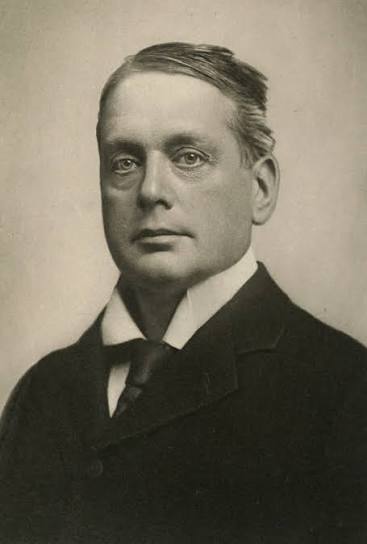 Archibald Philip Primrose, 5th Earl of Rosebery (May 7, 1847 – May 21, 1929), was a prominent British Liberal statesman who served as Prime Minister of the United Kingdom
from March 1894 to June 1895. While his public legacy is defined by his imperialist foreign policy, his legendary wealth, and his success in horse racing, his private life
has long been a subject of intense historical scrutiny regarding his sexuality.
Archibald Philip Primrose, 5th Earl of Rosebery (May 7, 1847 – May 21, 1929), was a prominent British Liberal statesman who served as Prime Minister of the United Kingdom
from March 1894 to June 1895. While his public legacy is defined by his imperialist foreign policy, his legendary wealth, and his success in horse racing, his private life
has long been a subject of intense historical scrutiny regarding his sexuality.
Born in London to an aristocratic Scottish family, Rosebery inherited his grandfather's earldom and immense wealth in 1868 at the age of 21. He was educated at Eton and
Christ Church, Oxford, though he left Oxford without a degree after refusing to sell a racehorse. He is famously said to have harbored three life goals: to marry an heiress,
to win the Derby, and to become Prime Minister—all of which he accomplished.
In 1878, he married Hannah de Rothschild, the richest heiress in England. They had four children and enjoyed a stable, affectionate relationship. Her sudden death from
typhoid in 1890 devastated Rosebery, plunging him into a lifetime of severe insomnia and depression.
Following William Gladstone’s retirement in 1894, Rosebery became Prime Minister. However, his cabinet was deeply fractured, and his government collapsed after just 15
months.
While Rosebery was publicly a married family man, rumors that he was homosexual or bisexual persisted throughout his lifetime and have been extensively detailed by modern
biographers. He was known to dislike the company of women (aside from his wife) and preferred to surround himself with charming, intellectual younger men. His name is
frequently tied to historical LGBTQ networks through several key figures:
Samuel Ward was an American lobbyist, intellectual, gourmet, and adventurer who was known as the "King of the Lobby". During
Rosebery's travels to the United States in the 1870s, the young aristocrat formed an intense and highly affectionate friendship with the much older Ward.
Their surviving correspondence reveals a deep, emotionally charged bond.
Rosebery affectionately referred to him as "Uncle Sam", and family members noted that Rosebery's devotion to Ward was fierce and lifelong.
The most tragic and politically explosive link in Rosebery’s life was his relationship with
Francis Douglas, Viscount Drumlanrig.
In 1892, Rosebery (then Foreign Secretary) hired the 25-year-old Drumlanrig as his assistant private secretary. Rosebery rapidly elevated the young man, securing him a UK
peerage (as Baron Kelhead) and a seat in the House of Lords.
This elevation infuriated Drumlanrig’s father, the famously combative John Douglas, 9th Marquess of Queensberry (the same man who created the Queensberry Rules of boxing
and later prosecuted Oscar Wilde). Queensberry believed that "Snob Queers like Rosebery" were corrupting his sons. Crucially,
Queensberry's other son, Lord Alfred "Bosie" Douglas, was the lover of Oscar Wilde.
In August 1893, Queensberry arrived in Germany intending to publicly horsewhip Rosebery, only to be stopped by the Prince of Wales. On October 18, 1894, with rumors of
exposure swirling, Drumlanrig died of a gunshot wound during a shooting party. Though officially ruled accidental, it was widely believed to be a suicide to prevent a public
homosexual scandal that would ruin Rosebery’s premiership.
Many historians argue that the British government’s relentless prosecution of Oscar Wilde in 1895 was a calculated move to protect Rosebery. By vigorously prosecuting
Wilde, the government aimed to signal its intolerance of homosexuality, thereby deflecting Queensberry's threats to expose the Prime Minister’s own relationship with
Drumlanrig.
Because of these strong historical associations and the tragic circumstances surrounding Drumlanrig's death, Rosebery is featured in Michel Larivière’s Dictionnaire
historique des homosexuel.le.s célèbres (published by La Musardine).
Larivière, a French historian who has dedicated decades to uncovering the hidden histories of LGBTQ figures, includes Rosebery to highlight how Victorian social
repression, censorship, and the threat of blackmail directly shaped late 19th-century British political history. Larivière’s work positions Rosebery not just as a failed
Prime Minister, but as a deeply closeted man whose private life was inexorably tangled in the same web of Victorian homophobia that destroyed Oscar Wilde.
References:
Other references:
- https://en.wikipedia.org/wiki/Archibald_Primrose,_5th_Earl_of_Rosebery
- https://victorianweb.org/history/pms/rosebery.html
- https://www.britannica.com/biography/Archibald-Philip-Primrose-5th-earl-of-Rosebery
- https://archives.nypl.org/mss/3221
- https://readingroo.ms/3/8/6/4/38648/38648-8.txt
- https://medium.com/@tamsinblaxter/perhaps-were-wrong-about-the-history-of-the-word-queer-938b4c394e16
- https://www.oxforddnb.com/view/article/35612
- https://en.wikipedia.org/wiki/Francis_Douglas,_Viscount_Drumlanrig
Support this project
This website is a passion project researched, developed, and funded entirely by me. If you find the content valuable and would like to help support the ongoing research and hosting costs, any contribution is deeply appreciated.
Thank you for keeping this independent resource alive!
My books on Amazon: Elisa Rolle's books
BACK TO HOME PAGE
