Queer Places:
St. Mary's Roman Catholic Cemetery, Harrow Rd, White City, London NW10 5NU
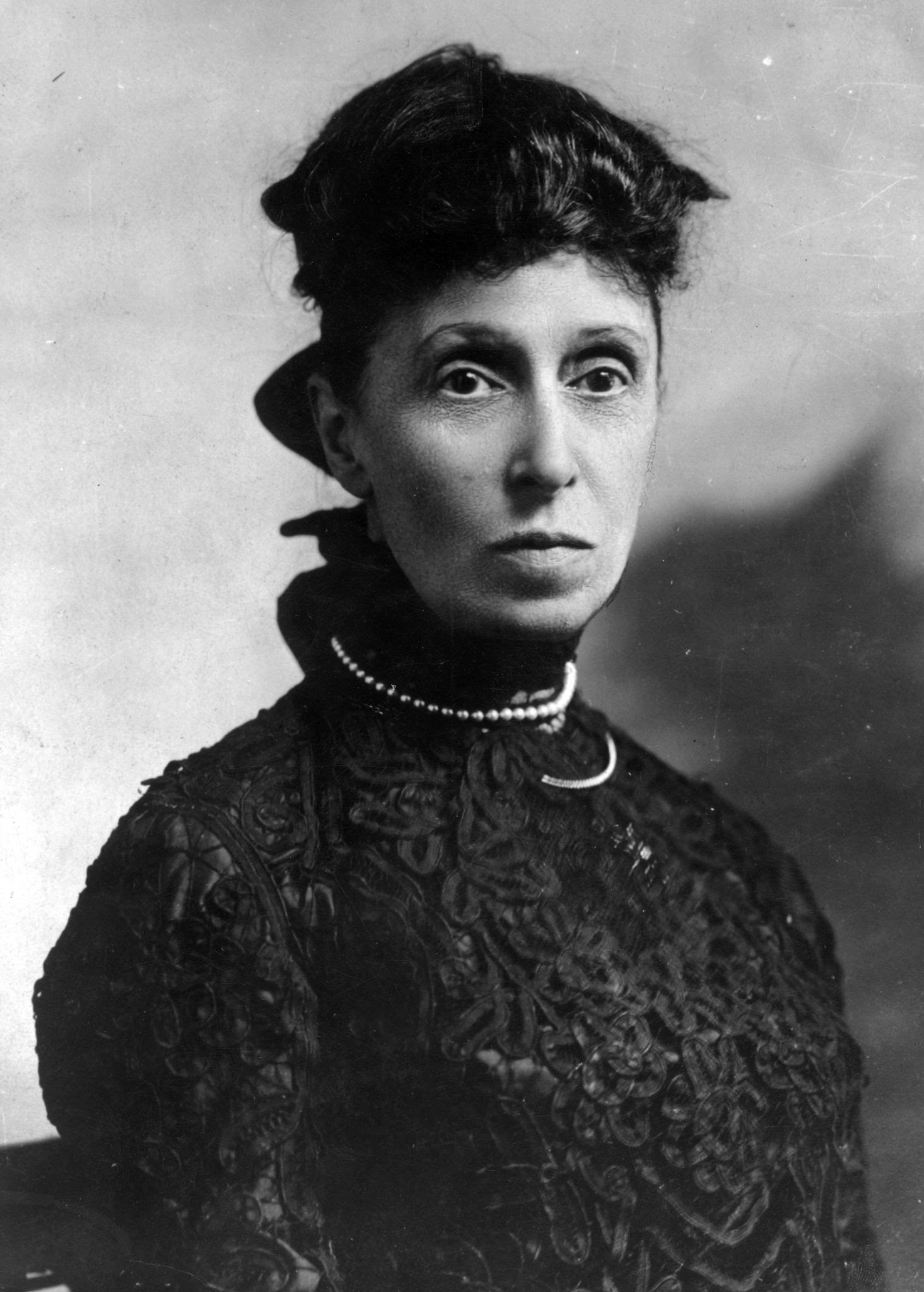 Alice Meynell (born Alice Christiana Gertrude Thompson, October 11, 1847 - November 27, 1922) was one of the most prominent British poets, essayists, and suffragists of the
late-Victorian and Edwardian eras. Highly respected for her intellectual, precise, and emotionally restrained style, she was twice considered for the position of British
Poet Laureate—first in 1892 following the death of Alfred, Lord Tennyson, and again in 1913.
Alice Meynell (born Alice Christiana Gertrude Thompson, October 11, 1847 - November 27, 1922) was one of the most prominent British poets, essayists, and suffragists of the
late-Victorian and Edwardian eras. Highly respected for her intellectual, precise, and emotionally restrained style, she was twice considered for the position of British
Poet Laureate—first in 1892 following the death of Alfred, Lord Tennyson, and again in 1913.
Born in Barnes, London, Alice spent much of her youth traveling through Europe, living a bohemian lifestyle primarily in Italy with her sister, the celebrated military
painter Elizabeth Thompson (Lady Butler).
In 1868, during a period of recovery from chronic ill health, Alice converted to Roman Catholicism. Her faith became the bedrock of both her personal philosophy and her
poetic style, which prioritized spiritual discipline and formal restraint.
In 1877, she married the Catholic journalist and editor Wilfrid Meynell. Together, they established a vibrant literary salon in London and edited influential Catholic
journals, including Weekly Register and Merry England. Through these platforms, they famously rescued and mentored the destitute poet Francis Thompson. Alice successfully
balanced her professional writing and editing with raising seven surviving children.
Meynell used her platform to advocate for women's rights. She served as the vice-president of the Women Writers’ Suffrage League, advocating for equal franchise "with the
pen".
While Alice Meynell lived a conventional married life, her biographical ties to the LGBTQ+ community manifest through her close integration with queer literary networks,
suffragist circles, and the passionate "romantic friendships" she inspired among other women of her era.
In 1908, Alice became an active member of the Women Writers’ Suffrage League (WWSL), founded by Cicely Hamilton and
Bessie Hatton. The league became a prominent hub for several notable queer, lesbian, and bisexual writers of the early 20th
century, including: Ivy Compton-Burnett, Violet Hunt,
Charlotte Despard, Olive Schreiner.
Scholars Adrienne Munich and Melissa Bradshaw have noted that when Alice Meynell was included in the landmark 1917 anthology The New Poetry, she was situated alongside a
network of women poets—including Amy Lowell, H.D. (Hilda Doolittle), and
Edna St. Vincent Millay—who were bound together by their shared participation in a trans-Atlantic "queer sisterhood."
In the fin-de-siècle literary landscape, Meynell emerged as a magnetic figure for several younger, queer, and modern-leaning female writers. To her female intimates, she
was not just a mentor but a "romantically charged figure of adoration."
The beautiful American poet and translator Agnes Tobin became one of Meynell's most passionate devotees after they met in London
in 1895. Tobin, whom Meynell affectionately called "Lily," adored Alice, constantly seeking her company and dedicating translations to her.
The Irish writer Katharine Tynan shared a deeply intimate, lifelong friendship with Meynell. This circle of Catholic women
writers explored emotional, spiritual, and artistic boundaries that often crossed into romantic friendship.
Meynell's literary and aesthetic criticism frequently intersected with the work of Michael Field—the joint pseudonym of the lesbian couple
Katharine Harris Bradley and Edith Emma Cooper. Recent feminist literary
scholarship (such as Sarah Parker's Form and Modernity in Women’s Poetry) highlights how Meynell, Michael Field, and Katharine Tynan actively used traditional poetic forms
to interrogate Victorian expectations around maternity, female desire, and sexuality, laying crucial groundwork for modern queer and feminist poetics.
References:
- https://en.wikipedia.org/wiki/Alice_Meynell
- https://poets.org/poet/alice-meynell
- https://www.britannica.com/biography/Alice-Meynell
Support this project
This website is a passion project researched, developed, and funded entirely by me. If you find the content valuable and would like to help support the ongoing research and hosting costs, any contribution is deeply appreciated.
Thank you for keeping this independent resource alive!
My books on Amazon: Elisa Rolle's books
BACK TO HOME PAGE