Queer Places:
The Knapp, now St James' Park Care Home, Higher St, Bridport DT6 3UR, United Kingdom
Holy Trinity Churchyard, Village Rd, Bridport DT6 3EP, United Kingdom
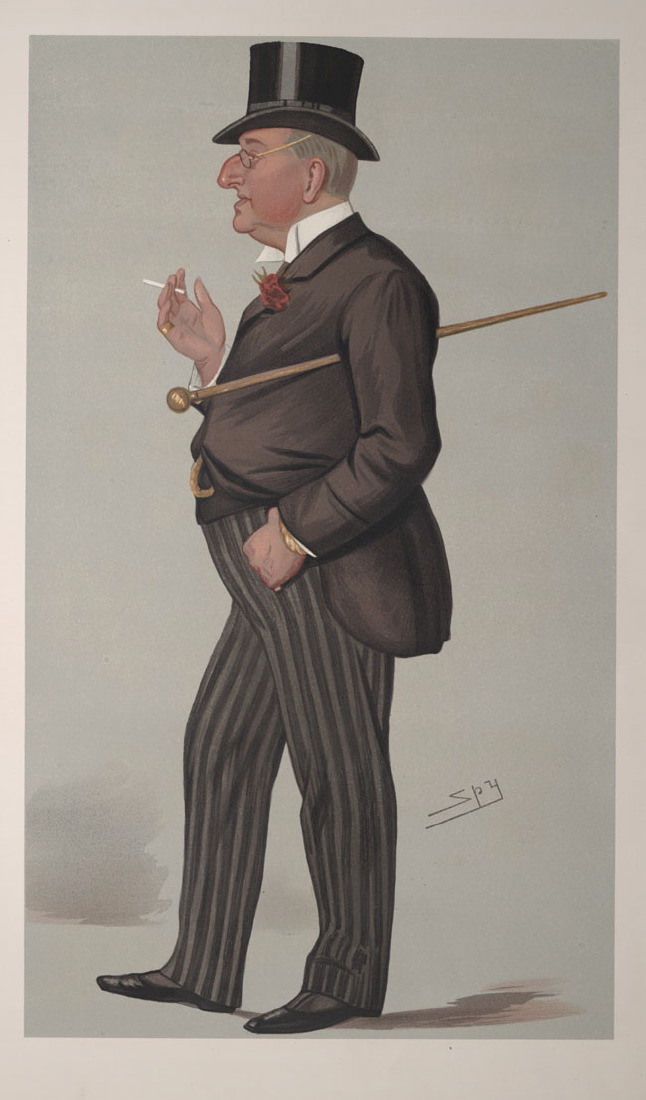 Alexander Meyrick Broadley (July 19, 1847 – April 16, 1916) was a brilliant yet highly controversial British barrister, author, war correspondent, and high-society figure.
Known to late-Victorian society as "Broadley Pasha," his life was a rollercoaster of immense professional triumph punctuated by major societal downfalls.
Alexander Meyrick Broadley (July 19, 1847 – April 16, 1916) was a brilliant yet highly controversial British barrister, author, war correspondent, and high-society figure.
Known to late-Victorian society as "Broadley Pasha," his life was a rollercoaster of immense professional triumph punctuated by major societal downfalls.
Crucially, Broadley’s biography is deeply intertwined with LGBTQ history; he was one of the most prominent men of his era to be repeatedly implicated in high-profile
homosexual scandals during a time when same-sex acts were strictly criminalized in the British Empire.
Born in Bradpole, Dorset, Broadley was the son of a local vicar. He studied law at Lincoln's Inn and qualified as a barrister before passing the highly competitive exams
to enter the Indian Civil Service (ICS) in 1869.
Sent to Patna, Bengal, Broadley quickly made a name for himself as an exceptionally clever, albeit argumentative, administrator. He was also a passionate antiquarian; in
1872, he conducted a major archaeological survey of the ancient Buddhist ruins at Nālandā, creating a magnificent collection of sculptures that helped form local museums.
Broadley's promising colonial career ended abruptly in late 1872. After clashing publicly with the Lieutenant-Governor of Bengal over educational policies, Broadley
became the subject of an investigation. Contemporary newspapers vaguely termed the problem as "charges of a serious nature," but the true reason soon emerged: a warrant was
issued for his arrest for homosexual offences.
To escape imprisonment under colonial sodomy laws, Broadley absconded from India. The scandal left him a persona non grata in mainstream British circles, and his name
became a taboo subject in European clubs across Malta and Egypt.
Unable to return safely to England, Broadley spent the next decade in North Africa, primarily in Tunis. He utilized his sharp legal intellect and multilingual skills
(mastering English, French, Italian, and Arabic) to reinvent himself as a journalist and international lawyer. He served as the special correspondent for The Times and
became the standing counsel to Muhammad III as-Sadiq, the Bey of Tunis.
Broadley’s defining legal triumph arrived in 1882 following the failure of the 'Urabi Revolt in Egypt. He was hired to defend the captured Egyptian nationalist leader
Ahmed 'Urabi (Orabi Pasha). Facing an inevitable death sentence under martial law, Broadley brilliantly engineered a diplomatic compromise that commuted 'Urabi’s sentence to
a comfortable, pensioned exile in Ceylon (now Sri Lanka). The case earned Broadley an astronomical fee of 10,000 guineas and the lifelong nickname "Broadley Pasha."
Riding high on his newfound wealth and international fame, Broadley confidently returned to London in 1883. He embedded himself into the highest echelons of society,
becoming a prominent Freemason and serving as the unofficial editor of the popular society gossip periodical The World. He was renowned for hosting some of the most opulent,
stylish, and sought-after parties in the West End.
Broadley's glittering social life collapsed spectacularly in late 1889 due to his involvement in the Cleveland Street scandal.
In July 1889, London police uncovered a male brothel operating out of a house at 19 Cleveland Street. The brothel employed teenage telegraph boys from the General Post
Office as rentboys for wealthy, upper-class men.
Broadley was identified as one of the primary, prominent patrons of the house.
The scandal shook the British establishment because it implicated several high-ranking aristocrats, including Lord
Arthur Somerset (major to the Prince of Wales's own regiment), and carried intense rumors regarding the Prince of Wales's eldest
son, Prince Albert Victor.
Under the Criminal Law Amendment Act 1885—the exact legislation used to imprison Oscar Wilde a few years later—Broadley faced up
to two years of hard labor. As the police began issuing warrants, Broadley fled England in late 1889, initiating a second, four-year exile in France and Belgium.
The depth of animosity toward him was profound. The future King Edward VII (then Prince of Wales) actively intervened to ensure Broadley was entirely cast out of society.
When Vanity Fair published Broadley’s caricature in December 1889, the Prince of Wales took immense offense, forcing the magazine to print an apology and completely
blacklisting Broadley from royal circles. The Prince even stepped in to purchase an estate near Sandringham simply to prevent Broadley from ever being hosted as a guest near
the royal family.
Broadley quietly slipped back into England in 1894 after the dust from the Cleveland Street affair had settled. He briefly fell into financial scandal again as a business
promoter for the notorious serial fraudster Ernest Terah Hooley, narrowly avoiding severe punishment for perjury and contempt of court in 1898.
Retiring completely from public and financial life, Broadley spent his final decades as a reclusive country gentleman at his estate, "The Knapp," in his birthplace of
Bradpole, Dorset.
Broadley built this picturesque, towered country mansion in the late 1890s following his return to his home village of Bradpole after years in exile. During World War II
(1941–1942), the estate was used as a "German Army HQ" for Allied forces rehearsing for the Dieppe Raid. The main house has been subdivided and functions today as a 31-bed
professional nursing home, while its former gatehouse and adjacent properties (such as "The Knapp Cottage" on nearby Middle Street) have been converted into private
residential homes.
Broadley died unmarried on 16 April 1916 at Gerrards Cross, Buckinghamshire. Within LGBTQ history, he remains a striking example of a highly resilient, exceptionally
talented individual who navigated the perilous, underground world of the late-Victorian queer elite—surviving two separate legal exiles to ultimately be remembered as a
scholar rather than a convict.
References:
- https://en.wikipedia.org/wiki/Alexander_Meyrick_Broadley
- https://news.dorsetcouncil.gov.uk/dorset-history-centre-blog/2020/07/29/a-m-broadley-the-grangerising-master/
- https://grokipedia.com/page/alexander_meyrick_broadley
Support this project
This website is a passion project researched, developed, and funded entirely by me. If you find the content valuable and would like to help support the ongoing research and hosting costs, any contribution is deeply appreciated.
Thank you for keeping this independent resource alive!
My books on Amazon: Elisa Rolle's books
BACK TO HOME PAGE